Asset Allocation Committee Outlook

Beyond the Conflict

The Middle East conflict has made the investment calculus harder, but not enough to alter our constructive outlook or justify a material shift in strategic asset allocation.

Executive Summary

Looking through the significant near-term disruption of the Middle East conflict, the Asset Allocation Committee retains its broadly constructive medium-term outlook on growth and risk assets. In a more complex investment environment, traditional diversifiers have not performed as expected, policy expectations have repriced, and war-driven fiscal and inflation pressures have pushed government bond yields higher. The range of potential outcomes is wide, yet the structural case for selective exposure to risk assets remains intact with the Committee upgrading segments where valuations and themes are compelling and trimming where the risk-reward has become harder to justify.

Key Observations:

  • Macro—Constructive, But Less Room for Error: The macro outlook remains constructive, but the Middle East conflict has narrowed the margin for error—with slightly slower growth and higher inflation raising the premium on intentional, precise risk-taking.
  • Equities—Valuation Reset: Valuation multiple contraction has restored compelling entry points in U.S. large caps and select emerging markets.
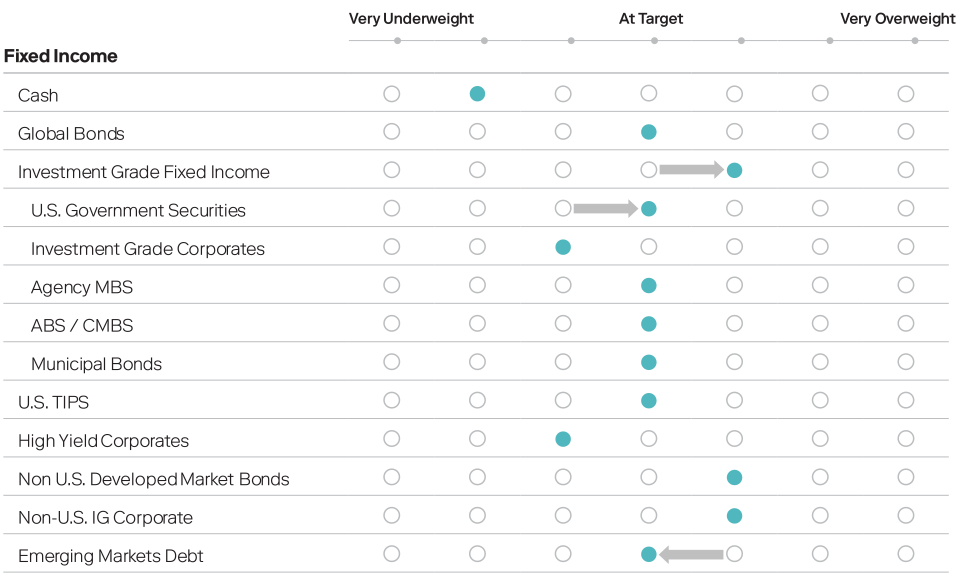
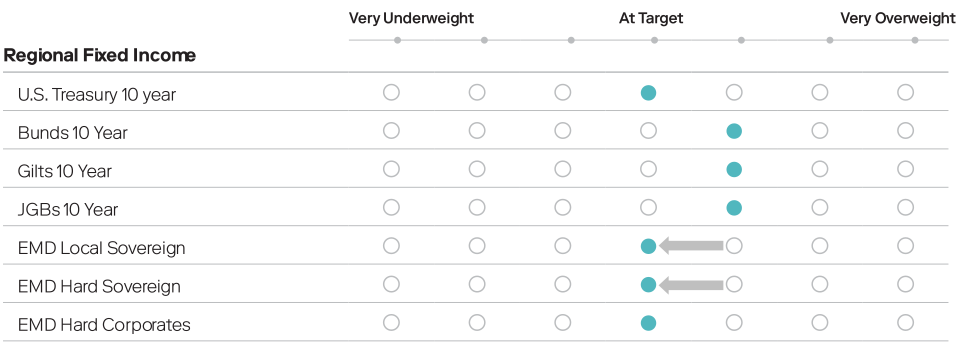
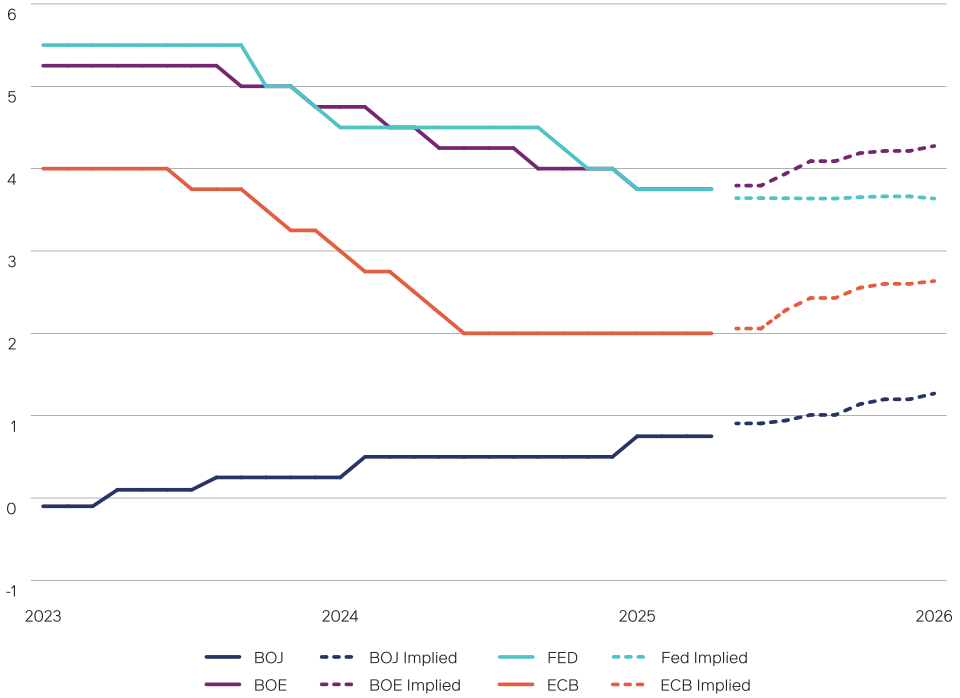
  • Fixed Income—Rates Mispricing: Markets are pricing in more tightening than central banks are likely to deliver, making short-duration bonds one of the more compelling contrarian opportunities available.
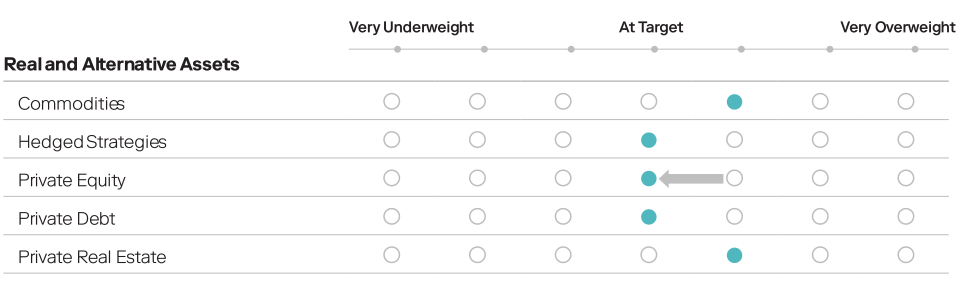
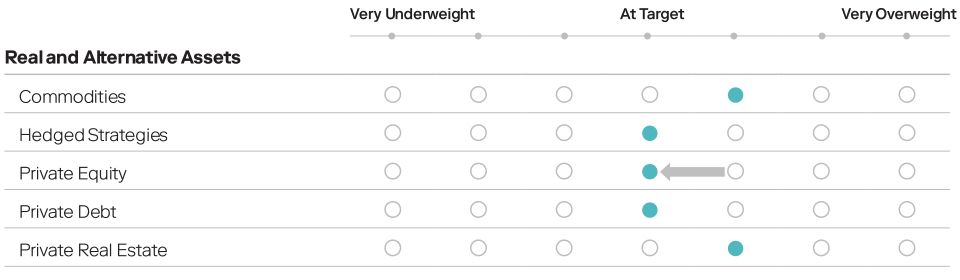
  • Alternatives—Rethinking Protection: With traditional diversifiers failing and energy structurally repriced, commodities and hedged strategies deserve greater attention for managing tail risk.

Market Views

Based on Six- to 12-Month Outlook for Each Asset Class as of 2Q 2026
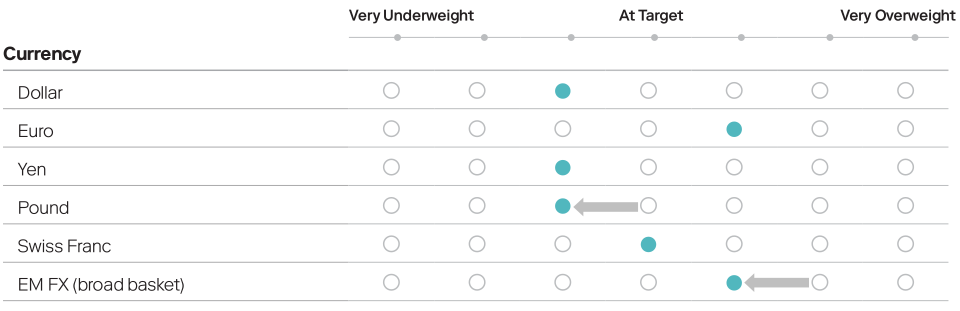
AAC 2Q 2026 AAC 2Q 2026 AAC 2Q 2026

As of 2Q 2026. Views shown reflect near-term tactical asset allocation views and are based on a hypothetical reference portfolio. Nothing herein constitutes a recommendation, investment advice or a suggestion to engage in or refrain from any investment-related course of action. See disclosures at the end of this publication, which include additional information regarding the Asset Allocation Committee and the views expressed.
Download Our Outlook

Asset Allocation Committee Outlook

2Q 2026

Asset Allocation Committee Outlook

Beyond the Conflict

AAC 2Q 2026

Valuation Reset

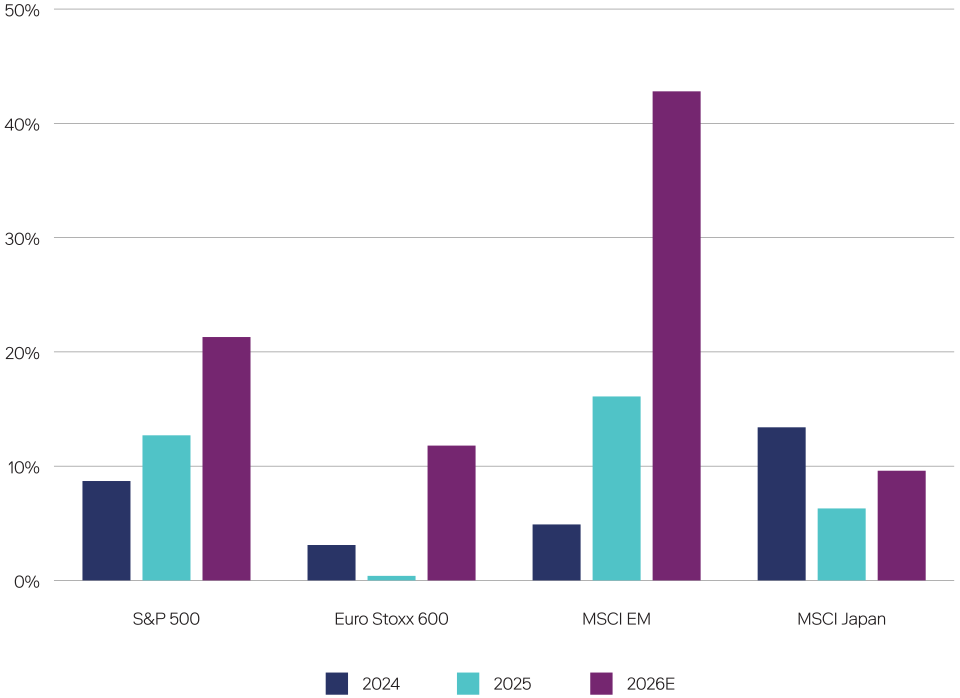
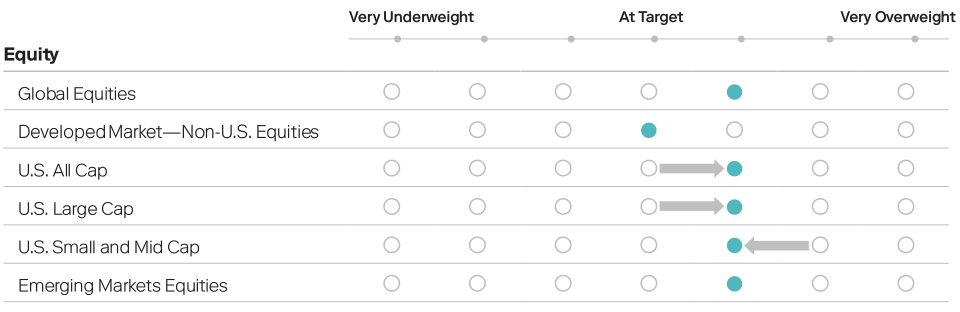
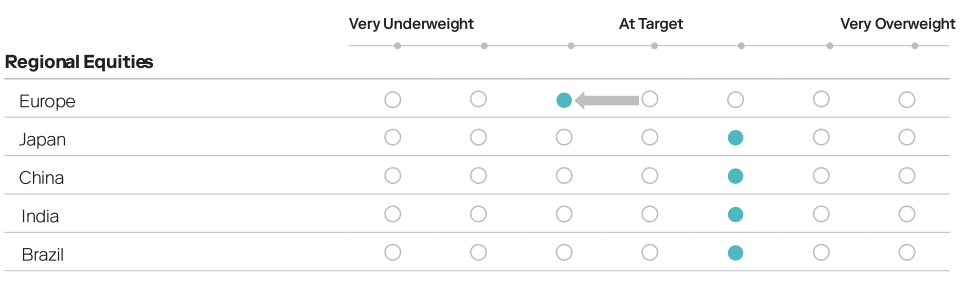
Despite significant market volatility and rising economic risk from the Middle East conflict, the Committee remains broadly constructive on global equities, underpinned by the U.S. and emerging markets. Valuation multiple contraction and strengthening earnings estimates have created compelling entry points in U.S. large caps, but also in small and mid-caps where the broadening-out thesis—while not yet fully assured—remains a credible and increasingly attractively priced opportunity. However, Europe is confronted with starkly different headwinds; acute energy vulnerability, rising fiscal pressures and deteriorating growth prospects make it the most exposed developed equity market. Japan is better positioned given ongoing structural reform momentum. In emerging markets, compelling structural growth themes and attractive valuations across China, India and Brazil support the Committee's continued positive stance. China and India's energy import reliance creates near-term sensitivity, but the fundamental investment view in both markets remains sufficiently robust to maintain conviction, reinforcing a broader view that, even in a more complex and demanding environment, the structural case for selective equity exposure remains intact.

Key Positional Changes vs. 1Q 2026

  • The AAC remains broadly constructive on equities, maintaining an overall overweight in global stocks—including in emerging markets and U.S. small and mid-caps—and upgrading U.S. all cap and large caps to overweight from at target.
  • The Committee maintains its at target view on developed market non-U.S. equities, and continues to hold an overweight in Japan, but has downgraded European equities to underweight from at target.
  • In emerging markets, the AAC maintains its overweights in China, India and Brazil.
AAC 2Q 2026 AAC 2Q 2026

Related Insights

Connect with us

Timely insights, delivered to you

Get perspectives that help you navigate today’s markets—customized to your interests and delivered directly to your inbox.