Asset Allocation Committee Outlook

Embracing Risk in a Shifting Macro Regime

The Asset Allocation Committee (AAC) continues to see opportunity in growth and risk assets over the medium term, even as elevated risks and increasingly divergent policy paths make the investment landscape more complex. We believe this environment rewards disciplined, selective risk-taking.

Executive Summary

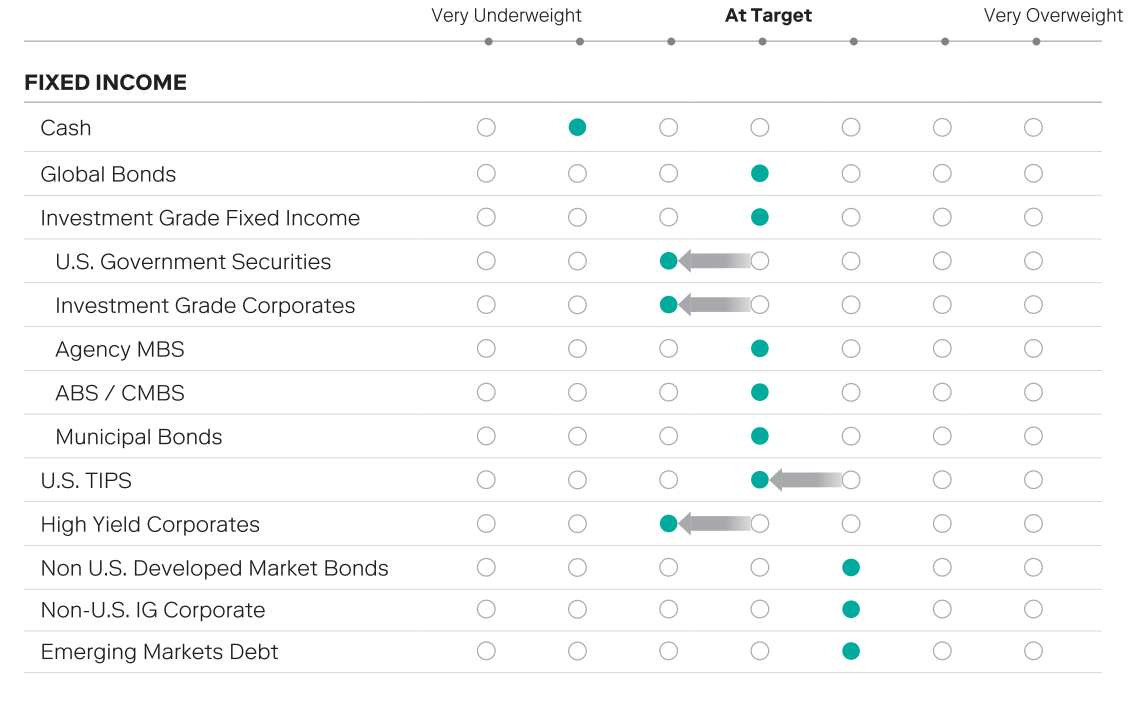
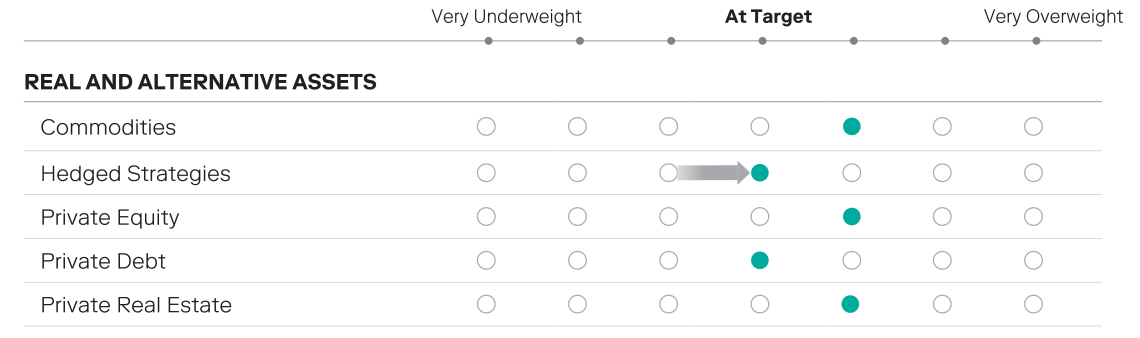
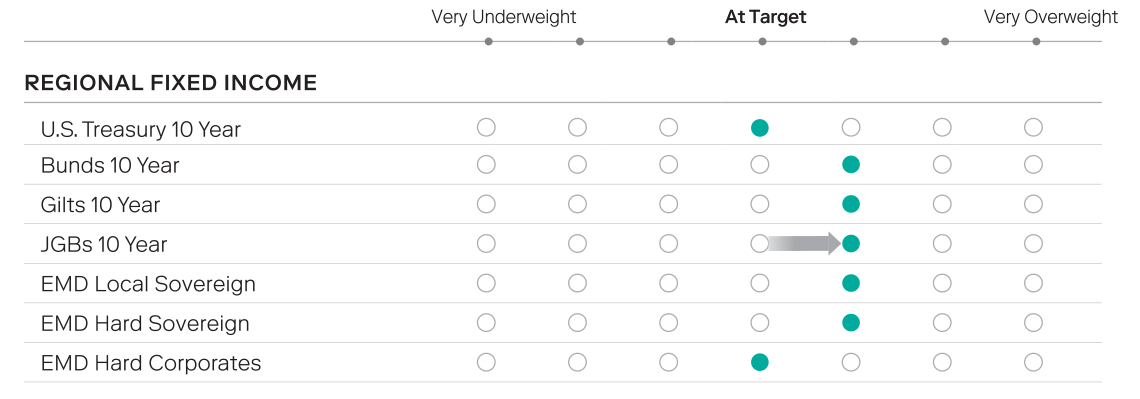
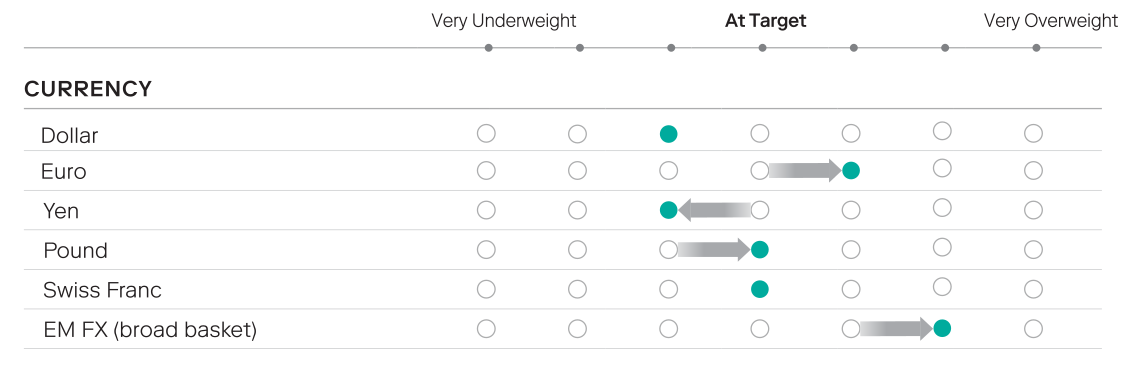
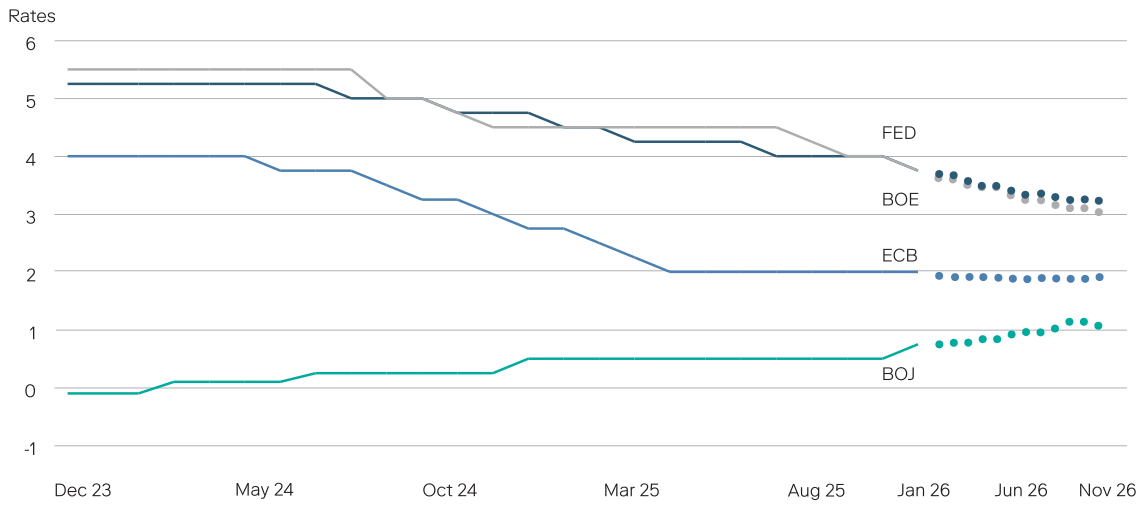
The AAC continues to see opportunities in growth and risk assets over the medium term, even as elevated risk and increasingly divergent monetary, fiscal and industrial policy paths make the investment landscape more complex. Stronger anticipated economic growth, a broad monetary easing bias and robust corporate earnings underpin our constructive view, encouraging a selective increase in risk-taking across asset classes and markets. This includes a more bullish cross-asset stance on emerging markets—led by an upgrade of EM equities to overweight—and on non-U.S. developed market fixed income, particularly in Europe and Japan. At the same time, the Committee continues to favor commodities, private markets and, increasingly, absolute return strategies as effective ways to capitalize on and hedge risks and potential value dislocations stemming from geopolitical turbulence and diverging policy regimes.

Key Observations:

  • Dispersion dominates: With policies, growth and valuations increasingly diverging across markets, outcomes hinge on more precise risk selection versus broad market exposure.
  • Equity expansion: The story continues to shift from U.S. mega-caps toward small/mid caps, emerging markets and regional rotation.
  • Global fixed income: Best opportunities sit in non U.S. duration and emerging markets, complementing selective U.S. credit.
  • Core alternatives: Commodities, private markets and absolute return strategies are playing an increasingly central role in driving returns and providing downside protection.

Market Views

Based on Six- to 18-month Outlook for Each Asset Class as of 1Q 2026
AAC 1Q 2026 AAC 1Q 2026 AAC 1Q 2026

As of 1Q 2026. Views shown reflect near-term tactical asset allocation views and are based on a hypothetical reference portfolio. Nothing herein constitutes a recommendation, investment advice or a suggestion to engage in or refrain from any investment-related course of action. See disclosures at the end of this publication, which include additional information regarding the Asset Allocation Committee and the views expressed.

In Case You Missed It

On January 20, Jeff Blazek, Co-Chief Investment Officer, Multi-Asset was joined by joined by Elizabeth Traxler, Managing Director, Private Markets – PIPCO, to share their perspectives on the economic outlook moving forward.

Asset Allocation Committee Outlook

Embracing Risk in a Shifting Macro Regime

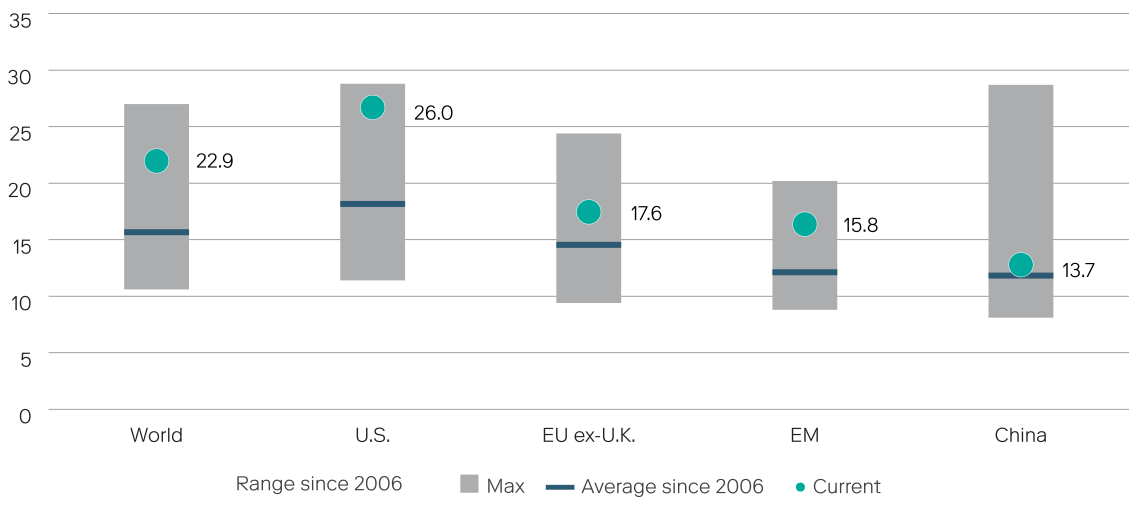
After a volatile yet strong year, the Committee believes the backdrop still favors stocks: earnings growth is robust, global activity is firming and most central banks are shifting—albeit unevenly—into easing mode. That combination helps explain why sizable geopolitical shocks, most recently related to Venezuela, have so far failed to break the uptrend. Within this context, we have become more constructive on emerging markets, where we see scope for cyclical catch up and a broader rerating. India stands out, with improved valuations relative to recent history, improving macro momentum and the prospect of continued foreign inflows. Brazil offers a different but complementary path, supported by monetary easing, commodity demand and more compelling valuation support. These changes sit alongside a still positive stance on U.S., European and Japanese equities, though we are tempering expectations for developed ex-U.S. markets given how far valuations have already recovered. In the U.S., in particular, we expect leadership to continue to broaden beyond mega-caps, with small- and mid-cap stocks better placed to participate as the cycle matures.

Key Positional Changes vs. 4Q 2025

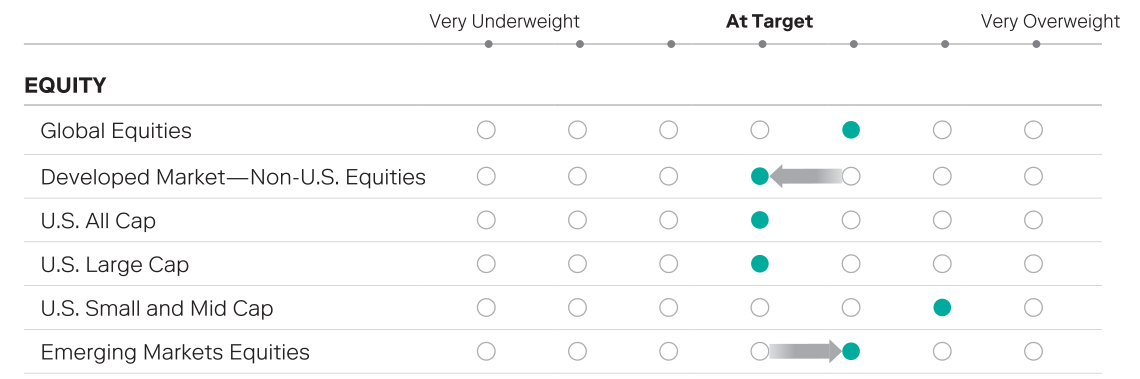
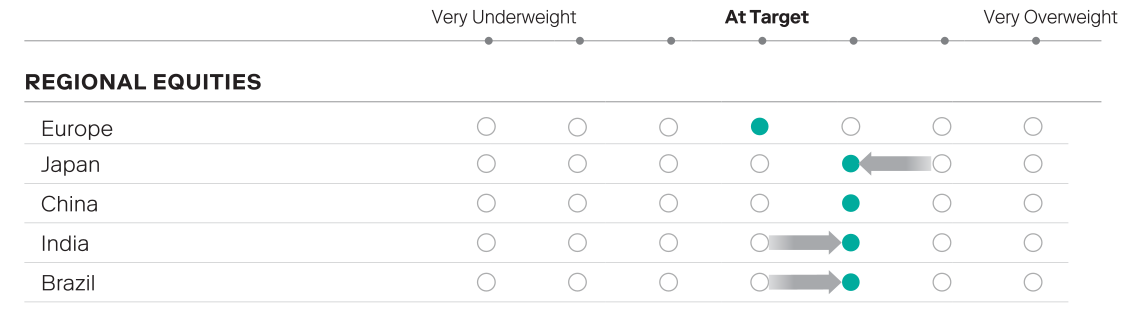
  • The AAC remains broadly positive on equities, maintaining at target in U.S. all caps and an overweight in global stocks while upgrading emerging markets—led by India and Brazil—to overweight.
  • While constructive on non-U.S. developed markets, particularly Europe and Japan, the Committee has downgraded its view to at target, and altered its posture on Japan to a moderate overweight.
  • The upgrade to emerging market equities largely reflects India’s elevation to overweight from underweight and Brazil’s move to overweight from at target.
AAC 1Q 2026 AAC 1Q 2026

Related Insights