Hyperscalers Look Beyond Cash
The past few months have seen massive offerings of AI-related debt—roughly $93 billion or more than 5% of investment grade debt issuance this year—close to triple the sector’s average annual issuance of $32 billion between 2015 and 2024, according to Bank of America. The borrowers are a “who’s who” of hyperscalers, such as Meta, Alphabet and Oracle, looking to build out data centers while seeking to secure captive energy sources to keep them running. According to Morgan Stanley, we could see an additional $3 trillion in AI-related capital expenditures over the next three years, potentially accelerating already aggressive issuance levels.
AI Data Center Borrowing Has Soared
U.S. Investment Grade Supply From Large Tech Firms ($ Billions)
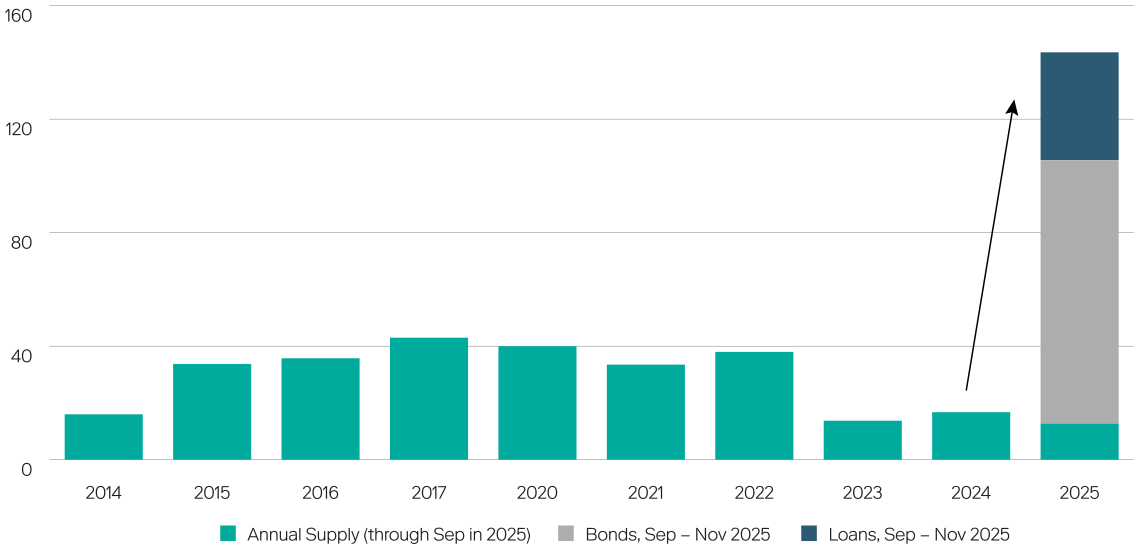
Source: BofA Global Research, data through November 11, 2025. “AI big tech firms” include Amazon, Google, Meta, Microsoft and Oracle. “Loans” refers to $38 billion data center construction loan currently in the market.
For the most part, these cash-rich issuers are just beginning to take on debt to fund these needs, maintaining large capacity for new leverage without affecting credit ratings. It remains an open question whether companies and their financial backers will be rewarded for their massive spending; adoption may prove less than generally expected or technological innovation could theoretically curb the footprint needed for effective AI delivery.
The potential safety valve—should AI disappoint—may be the ability of companies to use this computing capacity in their existing, viable businesses. That said, we think it will be important to avoid the “wrong side” of these trades, in part due to the general euphoria associated with the AI trend. Beyond the large issuers are various small companies that will occupy niche areas of the data center buildout. Some may be backstopped by the hyperscalers, but it is in this area that signs of potential trouble could emerge.
Cornucopia of Debt Sources and Structures
Given the massive scale of the spending needs, it stands to reason that these companies are employing multiple structures to bring in funding. Much of the buildout should continue to be financed from free cash flow, but beyond traditional corporate debt, issuers are also looking to asset-backed securities and various private markets. The unusual profile of data center risk—part real estate, part utility and part construction loan—lends itself to bespoke deal structures, making careful analysis essential for investors.
Where Will the Money Come From?
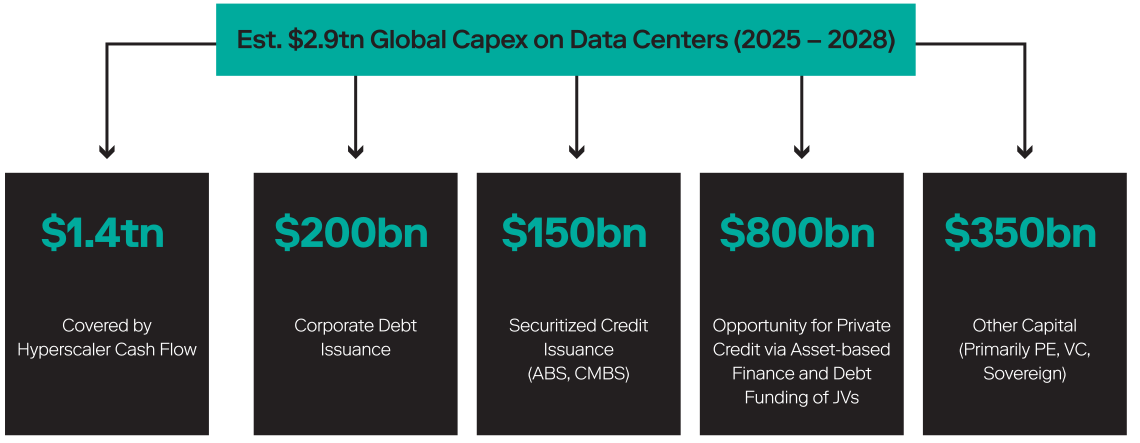
Source: Morgan Stanley, as of October 31, 2025.
Can the Energy Sector Support AI Growth?
Securing energy will likely be essential to keep the AI boom going. According to estimates, U.S. data center electricity consumption could grow from today’s 175 TWh to 325 – 580 TWh by 2028.1 However, the potential avenues toward this growth will be highly constrained. It takes three to four years to build a gas turbine and, based on history, 10 years or more to construct a new nuclear plant. The big tech companies have sought to secure dedicated power sources, including recommissioned nuclear plants, but over the next few years much of development will focus on other renewable sources, which carry reliability and cost issues. Another consideration is the inflationary impact of AI-related demand on the cost of electricity to consumers, an issue that regulators will likely focus on.
Gauging Business Impacts From AI
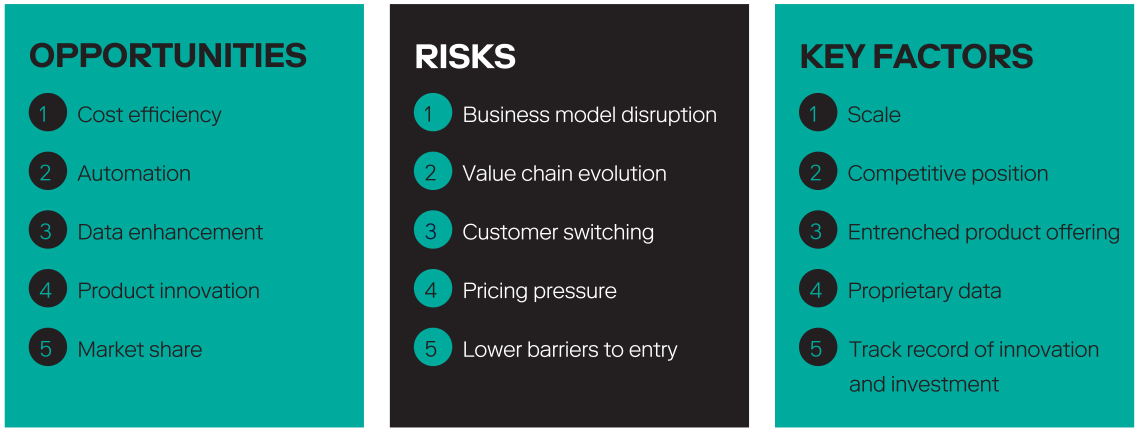
Beyond the issuance dynamics, another closely watched aspect of AI’s rollout remains its repercussions for business models, and the potential success of companies in adapting to and capitalizing on the new technology. As one would expect, much of the action in assessing credit risk is within the non-investment grade sector. Here, we are finding that many issuers are well positioned to leverage AI advances to deliver cost efficiencies, enhance productivity and unlock potential growth drivers.
Of course, AI could also create pockets of disruption depending on an issuer’s position across the value chain. Some may need to increase investments, acquire AI capabilities and adjust operational strategies to transition their businesses.
Opportunities and Risks
The potential for disruption or opportunities generated will likely depend on an issuer’s position in the value chain and management execution
Source: Neuberger Berman.
An Ongoing Analysis
Neuberger’s integrated global investment teams are actively collaborating in assessing the acceleration of AI’s development and its investment implications. We believe the hyperscalers are generally well positioned to expand their debt loads, with greater risk affecting smaller players. Dynamics across industries will vary; companies with scale, entrenched competitive positioning, strong management teams and more-advanced AI integration should be best positioned to navigate this shift. The broader impacts of AI on the economy and labor markets could be highly fluid, and bear watching closely in the coming months.
To read our series of insights related to this topic, How AI Is Reshaping Credit Markets, please click here.