Asset Allocation Committee Outlook

Opportunity Amid Uncertainty

Beyond the short-term market impacts of trade tensions and geopolitical risk events, we are constructive in our medium-term outlook for the global economy and risk assets.

Commentary

That was a tumultuous quarter. Since April, the global economy and markets have faced the U.S. administration’s erratic tariff policy, broader trade tensions, fiscal concerns and flare-ups in geopolitical risk, all resulting in widespread volatility and economic uncertainty. And while many of these catalysts may ultimately have material economic and financial impacts, both macro data and risk markets have shown notable resilience, and “looked through” this uncertainty, a theme that we introduced in our last quarterly outlook. At its heart, “looking through” is an optimistic strategy, one in which we recognize that reinforcing our conviction in our risk posture requires overcoming a degree of skepticism.

Looking back, most equity markets have broadly recovered from the April drawdown with some rising to new highs, while credit spreads have ground back to near their tightest levels of the year. Against this backdrop, weakness in the U.S. dollar and more turbulent moves at the long end of government bond curves have stood out.

Looking ahead, we see several catalysts for further market volatility and economic uncertainty, including rocky trade negotiations, ongoing military conflict in the Middle East, and shifting fiscal policy in the U.S. and other developed economies. However, beyond the short-term effects of these disruptions, we are optimistic in our medium-term outlook for the global economy and risk assets. Our growing confidence in growth prospects and expanding return opportunities across asset classes is supported by continued monetary policy easing, pro-growth fiscal policies in the U.S. and Europe, strong fundamentals in Japan and a strengthening recovery in China.

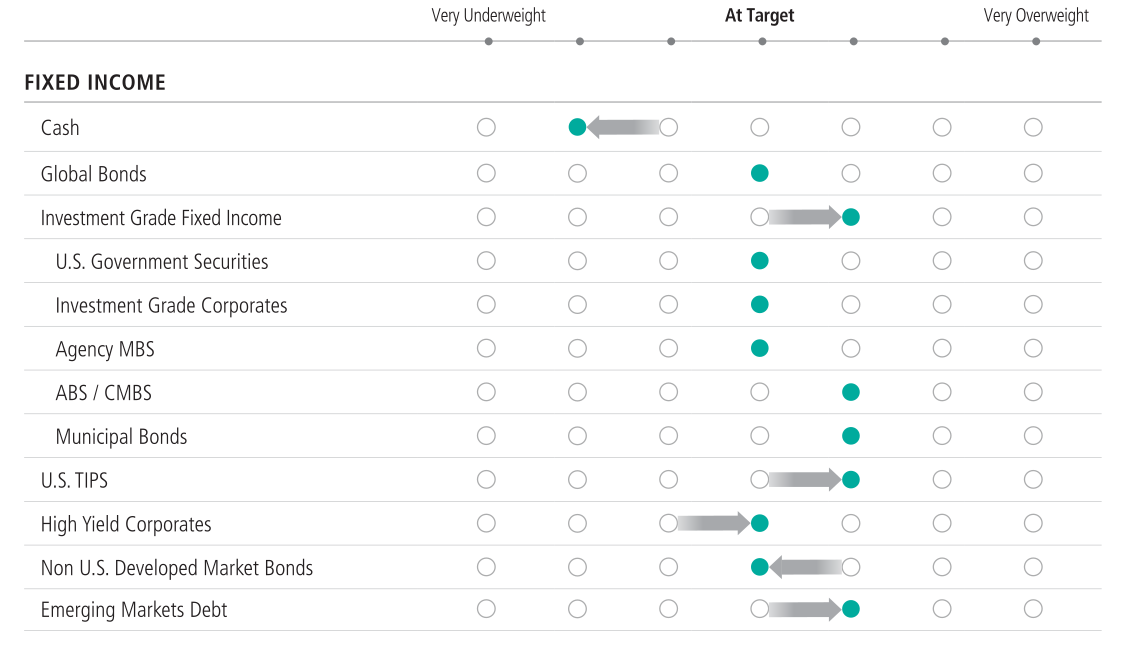
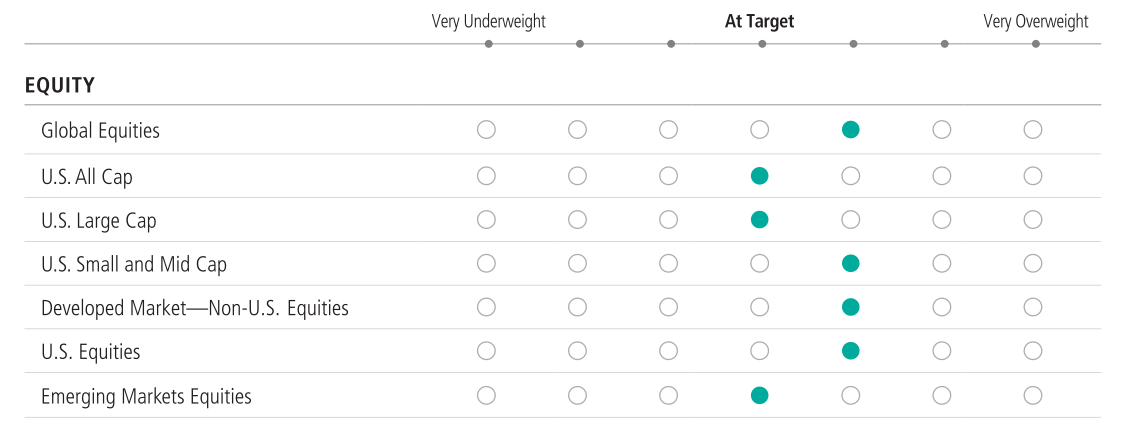
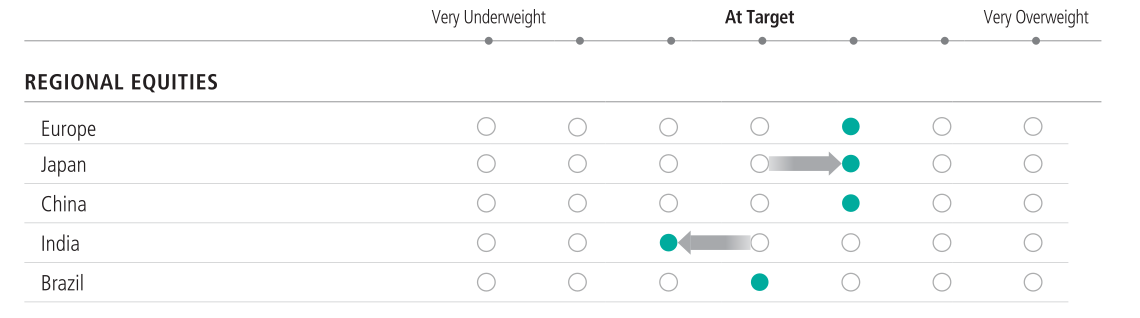
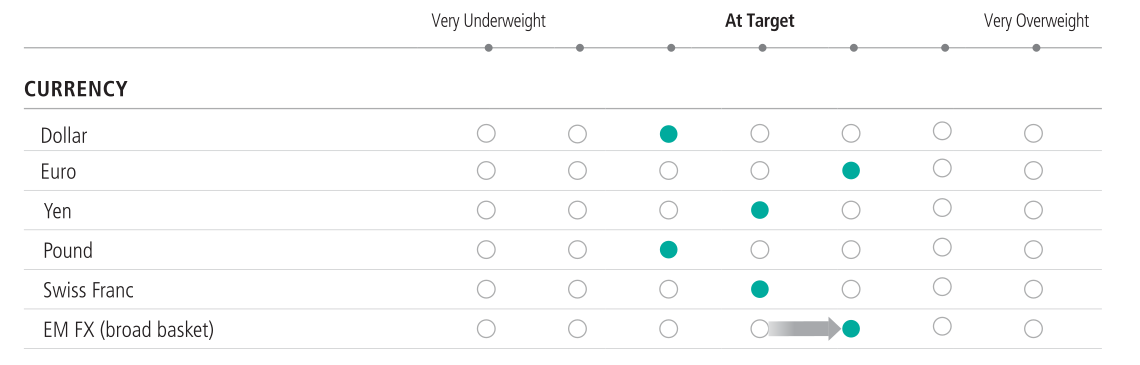
Growing market breadth is evident in our currency and equity views. This quarter, we are maintaining our U.S. dollar underweight against a broader basket, and have introduced an overweight to emerging markets currencies. In equities, we maintain our preference for non-U.S. developed markets over the U.S. We have also upgraded Japan to overweight from at-target.

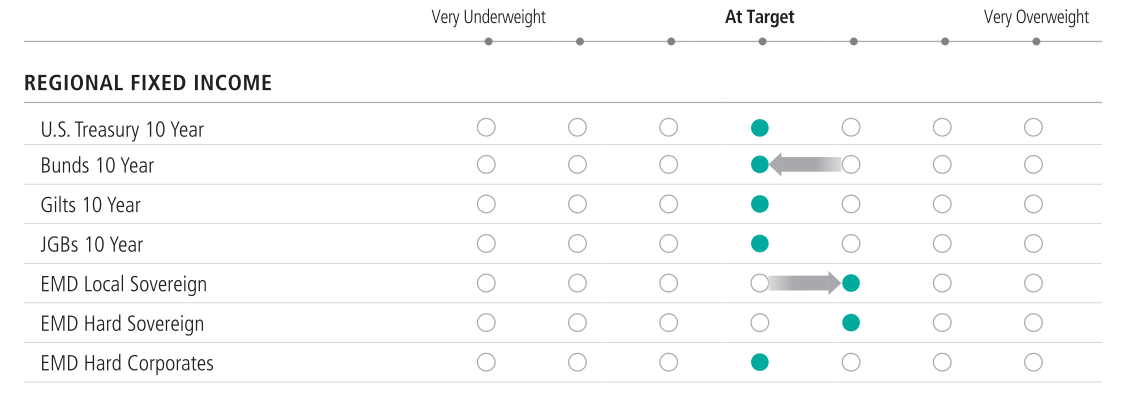
In fixed income, a more U.S.-centric view prevails: after capturing favorable valuation moves, we have downgraded non-U.S. developed market bonds to at-target from overweight, preferring to increase our exposure to U.S. fixed income markets where premia are higher and we expect rate cuts more quickly than reflected in market pricing.

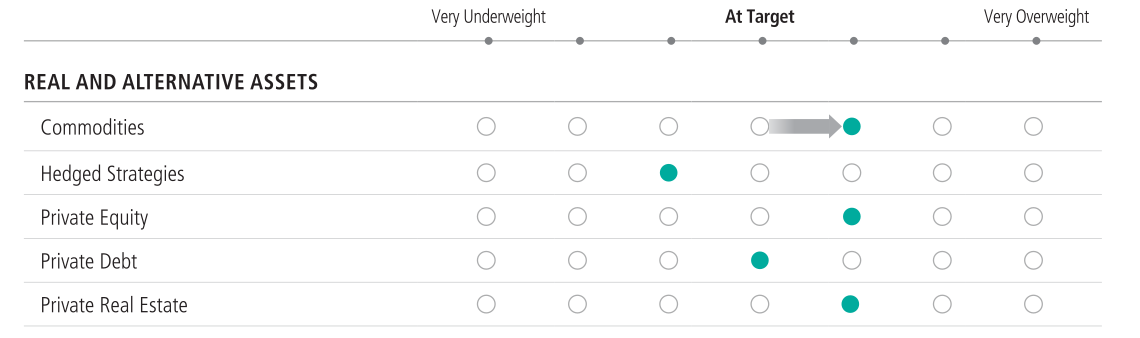
At the same time, with tail risks still elevated, we have upgraded commodities to overweight, including gold, which we see as an effective hedge to a growth slowdown, inflation and/or geopolitical event.
In Case You Missed It

On July 15, Jeff Blazek, Co-Chief Investment Officer, Multi-Asset, and Maya Bhandari, Chief Investment Officer, Multi-Asset Strategies, EMEA, were joined by Hakan Kaya, PhD, Senior Portfolio Manager on the Quantitative and Multi-Asset Strategies team, to share their perspectives on the economic outlook moving forward.

As we put pen to paper on this Outlook, President Trump’s One Big Beautiful Bill Act—a $3.4 trillion net fiscal stimulus package—was passed and signed into law, and the administration’s 90-day reciprocal tariff deadline was moved to August 1 from the original date of July 9.

So far, risk markets, as they have done for much of this year, have broadly shrugged off both the deadline extension and the U.S. administration’s threats to impose steep levies on the European Union, Mexico, Brazil, South Korea, Japan and some other trading partners. What happens on tariffs and trade between now and August is highly uncertain, and bouts of volatility remain likely outcomes. However, we believe that, after negotiation, the final tariffs will likely be lower for some, if not most, countries involved, and that a meaningful growth shock to the global economy seems a lower probability.

Economic growth has already taken a hit from the tariffs, but it remains broadly resilient with disinflationary trends continuing to play out across major economies. While inflationary risks, whether from tariffs or potential oil price spikes stemming from the Middle East conflict, continue to stalk markets, we are still seeing broadly improving dynamics. On this basis, we remain confident in our outlook on growth and risk markets for this quarter and over the medium term, a position we believe is supported by several powerful catalysts.

Easing, Growth Policies and Strengthening Fundamentals

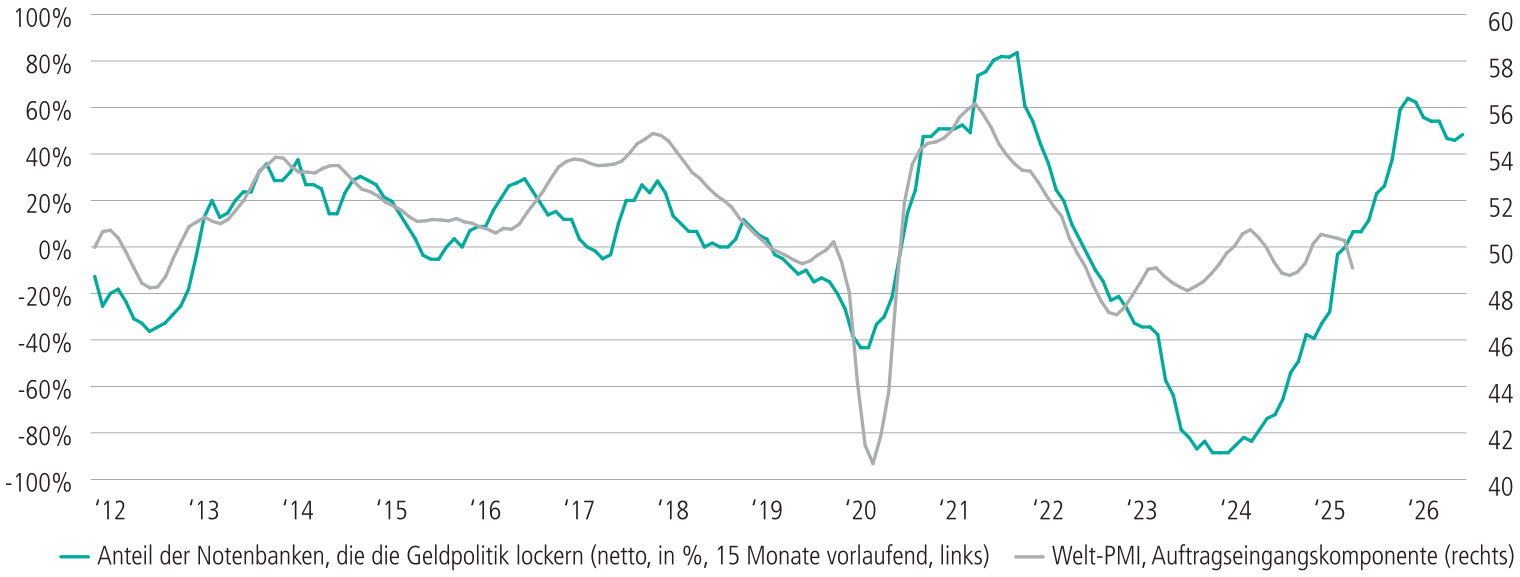
First, most major central banks, including the U.S. Federal Reserve, European Central Bank, Bank of England, The People’s Bank of China, and other emerging market (EM) central banks continue to pursue a course of gradual monetary easing in response to the prevailing trend of disinflation. This accommodative backdrop should help boost flagging global growth rates, bolstering risk asset performance. Candidly, the outlook for the timing of rate cuts remains complex and highly data-dependent. Ultimately, we expect the Fed will focus more on softening labor markets and look past the one-time inflationary effects of tariffs.


Global Central Banks Continue to Ease Monetary Policy

AAC Chart 

Source: Bank of America, Neuberger Berman Research and FactSet. Data as of March 31, 2025. Nothing herein constitutes a prediction or projection of future events or future market behavior. Historical trends do not imply, forecast or guarantee future results. Due to a variety of factors, actual events or market behavior may differ significantly from any views expressed or any historical results. Past performance is no guarantee of future results.

Second, ambitious pro-growth fiscal policies in the U.S. and Europe are expected to stimulate demand and improve growth prospects over the medium term. In particular, we expect the pro-business elements of the U.S. tax and spending bill—especially the restoration of beneficial tax treatment for capital investment—and the drive for deregulation to support growth for small and medium-sized businesses and in turn consumers in the U.S. In Europe, and Germany specifically, we have seen a dramatic shift toward significant fiscal spending on defense and infrastructure, which has improved the outlook for above-trend growth in that region.

Third, our outlook for Asia is improving, supported by Japan’s strengthening fundamentals, including solid wage growth and pro-shareholder reforms. Similarly, China’s broad-based economic stabilization, fueled by significant fiscal and monetary stimulus, should position its economy and equity markets for recovery.

Overall, this constructive economic context leads the AAC to maintain a positive medium-term outlook for markets, with some nuance and regional divergence across asset classes.

Asset Allocation Committee Outlook

Opportunity Amid Uncertainty

aac

Related Insights

Connect with us

Timely insights, delivered to you

Get perspectives that help you navigate today’s markets—customized to your interests and delivered directly to your inbox.