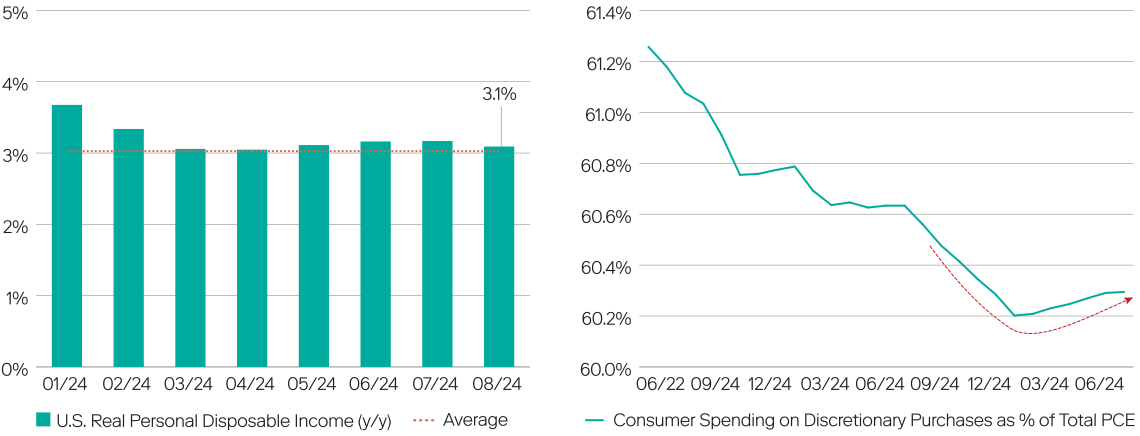
In our 3Q Equity Market Outlook, we were constructive on stocks, but cautious about the richly valued Technology and Communication Services sectors, as well as the historically low levels of short interest among the tech-heavy Nasdaq Composite Index. Since then, earnings growth across the rest of the S&P 500 Index has started to broaden, deflating the tech sector’s significant growth-scarcity premium.
We also expected market volatility to pick up ahead of the U.S. presidential election (followed by a post-election relief rally) and suggested tactical adjustments, such as underweighting the Technology, Communication Services and Consumer Discretionary sectors. And given our economic view, we advised tilts toward value over growth, and small caps over large caps.
Many of those views proved prescient in Q3 and we maintain them heading into Q4, along with a few regional adjustments.
Sector Tilts
Underweighting the Technology, Communication Services and Consumer Discretionary sectors was beneficial in Q3, and we believe many of these allocations still apply in Q4.
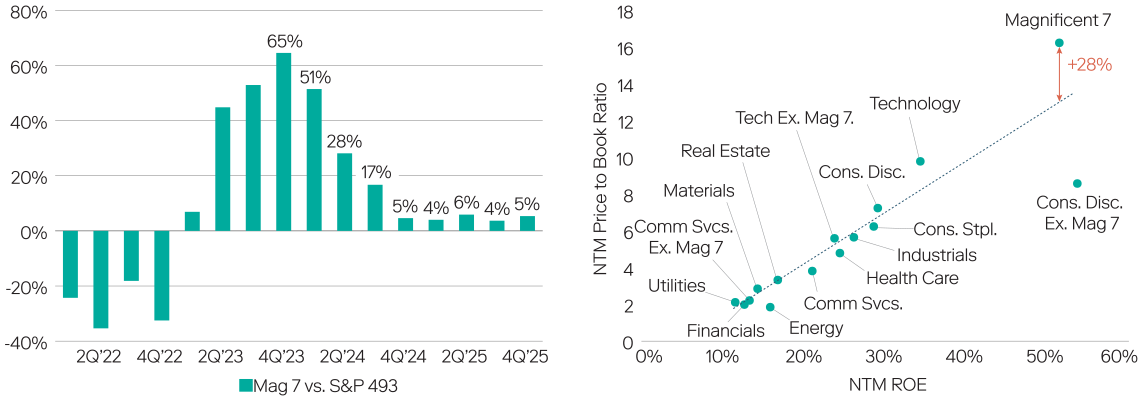
- The annual earnings growth differential between the Mag 7 and the other 493 stocks in the S&P 500 Index has gradually moderated to 17% versus a peak of 65% in 4Q239 (see the left side of figure 6). We believe the growth gap could narrow to 5%—the longer- term average10—as earnings growth broadens and accelerates across the market with an improving economy.
- While Mag 7 relative valuations have receded since last quarter, we believe this group still appears to trade at a 28% premium to its theoretically justifiable price-to-book valuation relative to the expected next-12-month return on equity (see the right side of figure 6).
- Concentration in Tech and Communication Services within the S&P 500 Index remains elevated at 39.8%, but down from its historical high of 41.8% in June.11
Figure 6: The Mag 7’s Growth Scarcity Premium May Continue To Diminish
S&P 500 Quarterly Earnings Growth (y/y)
Source: Neuberger Berman Research and FactSet, data as of September 30, 2024. For illustrative purposes only.
Past performance is not indicative of future results.
Value Over Growth
Last quarter, we thought value stocks looked ready to outperform growth stocks in the near term. Since July 1, the Russell 1000 Value Index has outpaced the Russell 1000 Growth Index by 624 bps, yet we maintain our value tilt.12
- The representation of growth stocks relative to value stocks continues to fade among the stocks in the top momentum quintile of the Russell 1000 (see the left side of figure 7).
- We believe our proprietary return/risk ratio—which we use to gauge shifts in relative performance—continues to evolve in favor of the Russell 1000 Value Index. (For more details on our return/risk ratio framework, see our 2Q Equity Market Outlook.)
- Value has tended to outperform growth during the 24 months following the start of a rate-cutting cycle (see the right side of figure 7).
Figure 7: Growth Has Been Losing Ground To Value—More Rate Cuts Could Support That Trend
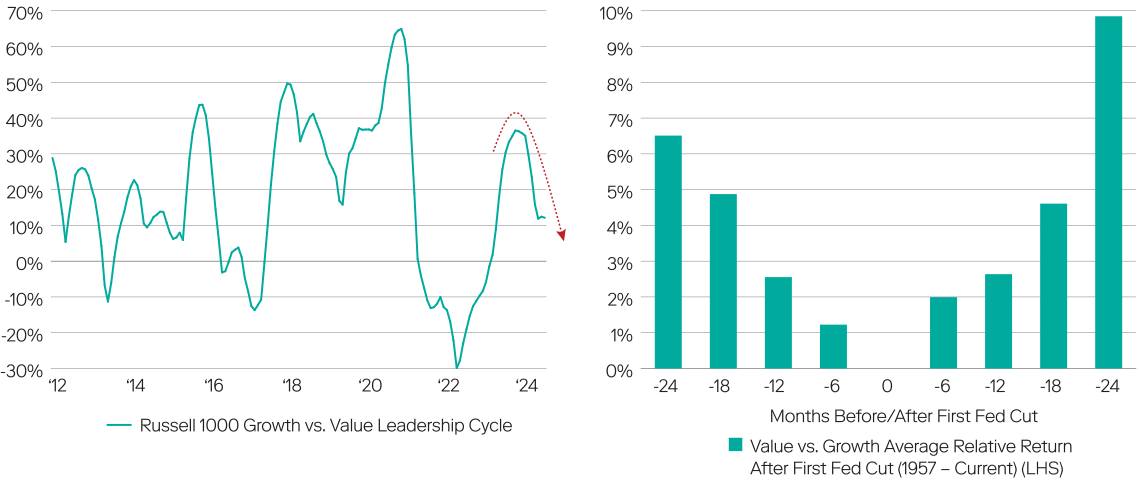
Note: A “Leadership Cycle” seeks to capture the representation of a sector, style or size among the winning stocks. A Leadership Cycle is defined as the percentage of stocks (within that sector, style or size) that are among the top quintile of trailing twelve-month performance of the relevant universe (such as the Russell 1000 Index) minus the percentage of stocks (within that sector, style or size) that are among the bottom performance quintile of that universe. Those percentages are tracked monthly.
Source: LHS: Neuberger Berman Research and FactSet, data as of August 31, 2024; RHS: Fama French Database, Neuberger Berman Research and FactSet, data as of August 31, 2024. For illustrative purposes only. Past performance is not indicative of future results.
Small Over Large
Since July 1, small caps have outperformed large caps by 319 bps13—a trend we foreshadowed in our last report—and we think they still have more room to run.
- We believe favorable macro trends—such as healthy credit growth, anticipated additional rate cuts, the likely onset of a U.S. capex cycle, and (not least) the extreme relative valuation differential between small and large caps—should continue to provide tailwinds for small caps.
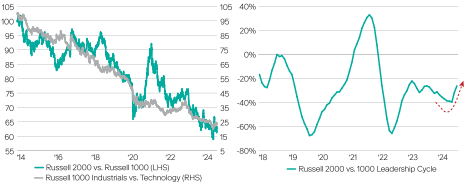
- As an asset class, small caps have more exposure to the Industrial sector than to the Technology sector compared to large caps, which we view as a big reason for their relative underperformance over the last decade (see the left side of figure 8). In recent months, Industrial stocks (which we are overweight) have outpaced Technology stocks (which we are underweight), and we expect that trend to continue.14
- As shown on the right side of figure 8, the representation of small caps relative to large caps continues to increase in the top momentum quintile of the Russell 3000 Index.
- Finally, we believe our return/risk ratio analysis continues to evolve in favor of the Russell 2000 Index vs. the Russell 1000 Index.
Figure 8: Small Caps Are Longer Industrials And Shorter Tech Compared To Large Caps; As Growth Broadens Beyond Tech, Those Sector Differences Could Be A Tailwind For Small Caps Vs. Large Caps
Relative Return (Jan ‘14 – Current)
Note: A “Leadership Cycle” seeks to capture the representation of a sector, style or size among the winning stocks. A Leadership Cycle is defined as the percentage of stocks (within that sector, style or size) that are among the top quintile of trailing twelve-month performance of the relevant universe (such as the Russell 3000 Index) minus the percentage of stocks (within that sector, style or size) that are among the bottom performance quintile of that universe. Those percentages are tracked monthly.
Source: LHS: Neuberger Berman Research and FactSet, data as of August 31, 2024; RHS: Neuberger Berman Research and FactSet, data as of September 20, 2024. For illustrative purposes only. Past performance is not indicative of future results.
Regional Allocations (relative to the MSCI ACWI)
U.S.: Downgrading to Market Weight
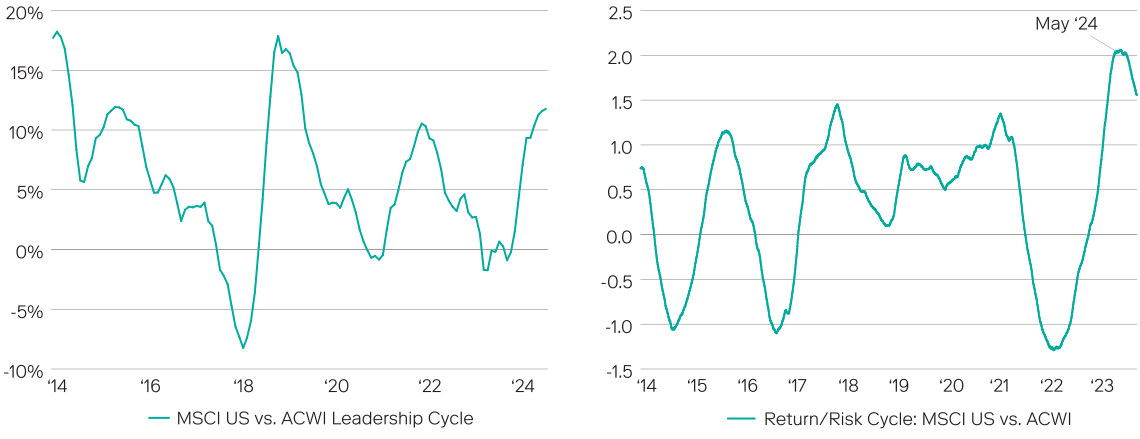
The relative performance of the Technology sector plus the Mag 7—which together account for 42% of the S&P 500 Index weight— has exhibited a strong year-to-date correlation (74%) with the relative performance of the S&P 500 Index vs. the MSCI ACWI.15 Given our belief that the Technology sector should continue to underperform relative to the broader market, we suggest reducing exposure to the U.S. in line with the broader global index.
We believe this allocation is consistent with the signals from our bottom-up leadership cycle16 analysis, which is hitting a peak, and our top-down return/risk cycle analysis, which has already peaked (see figure 9).
Figure 9: Market Leadership And Return-Risk Analyses Suggest Reducing Exposure To The U.S.
Note: A “Leadership Cycle” seeks to capture the representation of a sector, style or size among the winning stocks. A Leadership Cycle is defined as the percentage of stocks (within that sector, style or size) that are among the top quintile of trailing twelve-month performance of the relevant universe (such as the Russell 3000 Index) minus the percentage of stocks (within that sector, style or size) that are among the bottom performance quintile of that universe. Those percentages are tracked monthly.
Source: LHS: Neuberger Berman Research and FactSet, data as of August 31, 2024; RHS: Neuberger Berman Research and FactSet, data as of September 20, 2024. For illustrative purposes only. Past performance is not indicative of future results.
Europe, Australia and Far East (EAFE), and Emerging Markets (EM): Leaning In Selectively
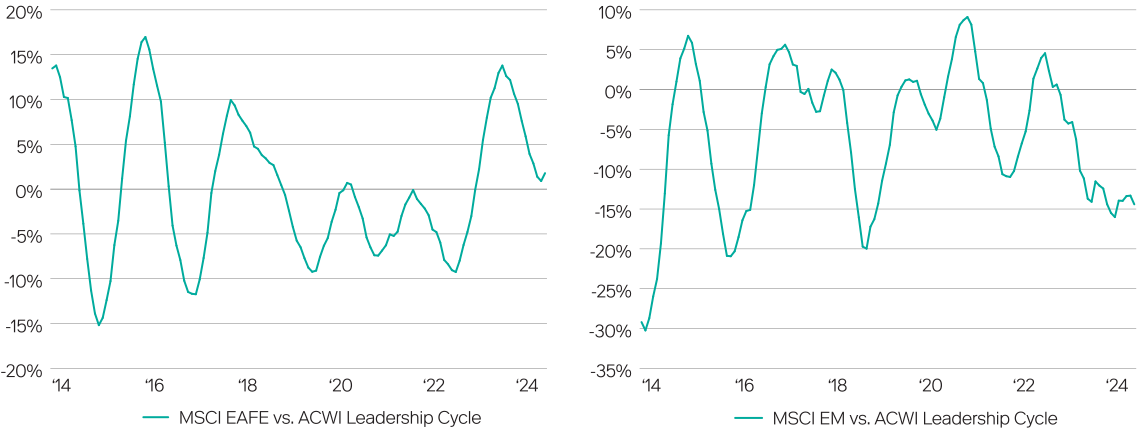
Should technology and AI-levered names continue to underperform versus more traditional sectors, as we anticipate, EAFE and EM could be poised for greater leadership within the ACWI (see figure 10).
Figure 10: Market Leadership And Return-Risk Analyses Suggest Increasing Exposure To EAFE And EM
Note: A “Leadership Cycle” seeks to capture the representation of a sector, style or size among the winning stocks. A Leadership Cycle is defined as the percentage of stocks (within that sector, style or size) that are among the top quintile of trailing twelve-month performance of the relevant universe (such as the MSCI ACWI Index) minus the percentage of stocks (within that sector, style or size) that are among the bottom performance quintile of that universe.
Those percentages are tracked monthly.
Source: Neuberger Berman Research and FactSet. Data as of August 31, 2024. For illustrative purposes only. Past performance is not indicative of future results.
Japan: Maintaining Market Weight
While we maintain our market weight position in Japan, we remain very constructive on the subset of Japanese equities undertaking longer-term shareholder-friendly corporate governance reforms.
What concerns us is that Japan is poised to raise interest rates, thereby strengthening the yen and tightening financial conditions, which we believe could slow Japan’s economy over the next 18 to 24 months. In our view this would put Japan at a particular disadvantage relative to a rising majority of nations where the central banks are easing monetary policy.
Stocks within the MSCI Japan index generate an extraordinary 55% of their revenue from outside Japan, hence the strong negative correlation between Japanese stocks and the yen (-73% since 2020).17 We believe a rising yen could pressure Japanese stocks despite solid progress on structural reforms.
Europe: Upgrading to Market Weight
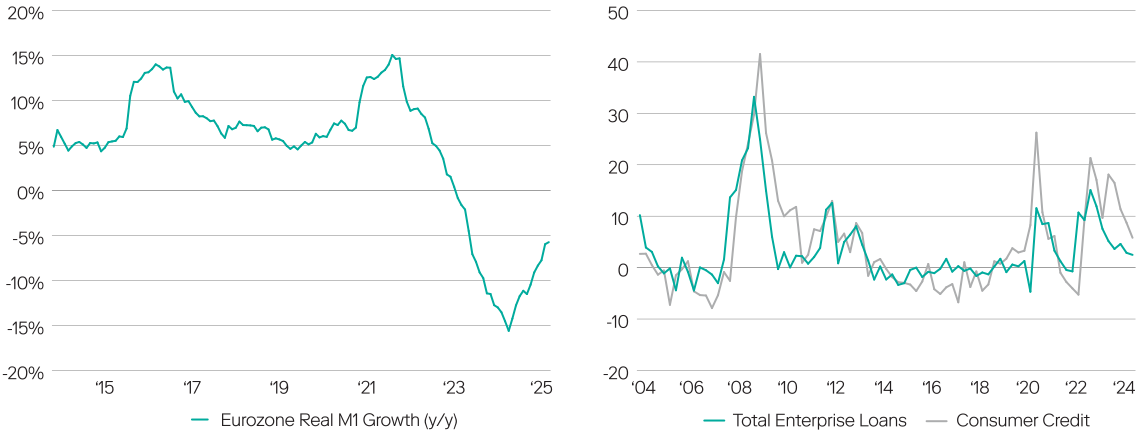
Recent news from the Eurozone has been mixed: The ECB is further along its rate-cutting cycle than the Federal Reserve; growth in the Eurozone’s M1 money supply has picked up, and demand for housing loans has increased for the first time since 2022 (see figure 11).
Figure 11: Increasing Money Supply And Consumer Credit Could Help Boost The Eurozone
Source: Neuberger Berman Research and FactSet, data as of July 31, 2024. For illustrative purposes only. Past performance is not indicative of future results.
These trends have coincided with a reacceleration in the OECD’s European Leading Economic Indicator.18 We believe our leadership and return/risk cycle frameworks are at the cusp of turning favorable on Europe, and therefore recommend upgrading Europe to
a market weight relative to the MSCI ACWI. We will need to see more encouraging activity in bank lending and positive earnings revisions before further increasing our suggested exposure.
China: Maintaining Overweight
Though our upgrade last quarter proved early (a risk we acknowledged in our report), it appears as though our thesis on China has begun to play out.
In mid-September, sentiment on the Chinese economy and stock market had soured, valuations had pulled back and positioning had eased. China was on track for a rare GDP growth-target miss19 as negative fiscal and monetary impulses threatened to crimp growth in 4Q, and signs of economy-wide deflation were evident. Meanwhile, potentially longer-term structural challenges remain, including a debt overhang and unfavorable demographics.
Still, the MSCI China Index had not underperformed relative to MSCI ACWI over the previous six months,20 which led us to believe that much of the bad news had perhaps been priced in. To us, this implied that the timing was right for a comprehensive policy response, and that’s just what the authorities delivered—including a range of lower interest rates, financial support for property markets, and
a flurry of measures designed to stimulate banking and investment. The result was a solid 29% rally in the MSCI China Index since September 10.
We acknowledge that the specter of deflation could derail the rally if aggregate policy measures fail to adequately stimulate aggregate demand. However, we also believe a handful of fundamental catalysts—such as an industrial rebound (in response to global monetary easing), a revival in the U.S. capex cycle, and stronger Eurozone growth—have the potential to support Chinese corporate earnings and keep the rally going.
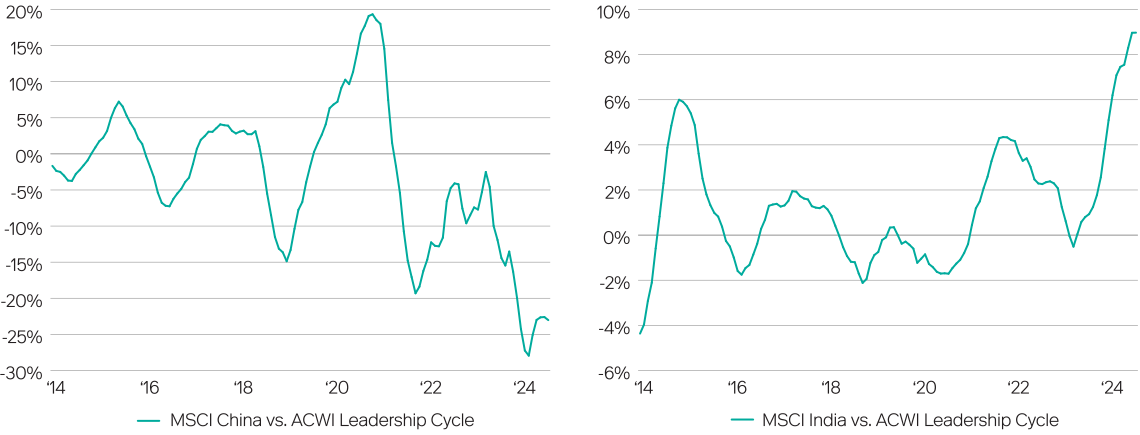
For now, the representation of Chinese stocks within the ACWI’s top quintile appears to be bottoming (see the left side of figure 12), increasing the potential for outperformance and supporting our overweight stance.
Figure 12: China’s Underperformance May Be Bottoming While India’s Recent Run May Be Peaking
Note: A “Leadership Cycle” seeks to capture the representation of a sector, style or size among the winning stocks. A Leadership Cycle is defined as the percentage of stocks (within that sector, style or size) that are among the top quintile of trailing twelve-month performance of the relevant universe (such as the MSCI ACWI Index) minus the percentage of stocks (within that sector, style or size) that are among the bottom performance quintile of that universe.
Those percentages are tracked monthly.
Source: Neuberger Berman Research and FactSet. Data as of August 31, 2024. For illustrative purposes only. Past performance is not indicative of future results.
India: Downgrading to Market Weight
In our view, downgrading India from overweight to market weight makes good sense as elevated valuation, sentiment and equity positioning meet slowing nominal GDP, government spending, corporate capex and loan growth. The leadership of Indian stocks within the MSCI ACWI also appears to be peaking (see the right side of figure 12).
For detailed recommendations across sectors, factors, styles and geographies, see the section titled “Investment Themes and Views.”