EMD Isn’t Getting Its Due From Global Indices and Managers
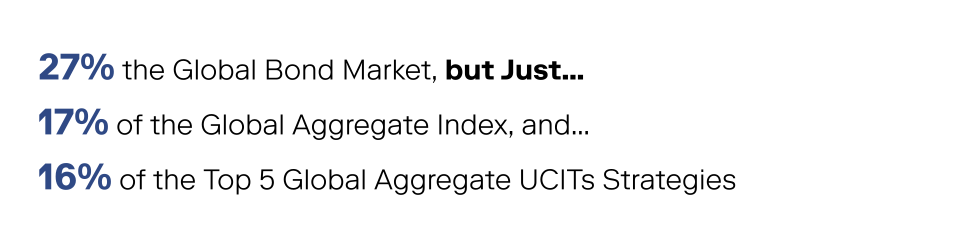
With $44 trillion total tradable emerging markets debt, the asset class represents 27% of the $162 trillion global fixed income market.1 However, for the Global Aggregate Index—the benchmark that drives allocation targets for many investment strategies—exposure is just 17%.2 Looking at the top five Global Agg UCITS funds by assets under management, we found even lower EMD levels, ranging from 10.6% to 22.4%, with an average of 15.5%.3 Underexposure extends to countries as well, the funds averaging exposure to 21 markets compared to 85 for a blended index of hard currency sovereigns, corporates and local currency.4
What’s the source of this underweighting? In part it may be a function of curating portfolios for quality—limiting exposure to lower-rated, more volatile countries and credits. However, we also believe it’s due to outdated thinking about EMD, which has matured from a fundamental and credit quality standpoint, and offers compelling characteristics relative to developed market peers. Either way, we believe it is time to reconsider emerging market exposures, and potentially introduce EMD as a distinct core allocation within broadly diversified portfolios.
Indices and Global Bond Managers Underweight EMD, Which Represents…
Source: BofA, BIS, Bloomberg, Morningstar. Global bond market data as of December 31, 2024; fund and Global Aggregate Index as of March 31, 2026.
Emerging Market Fundamentals Show Strength and Balance
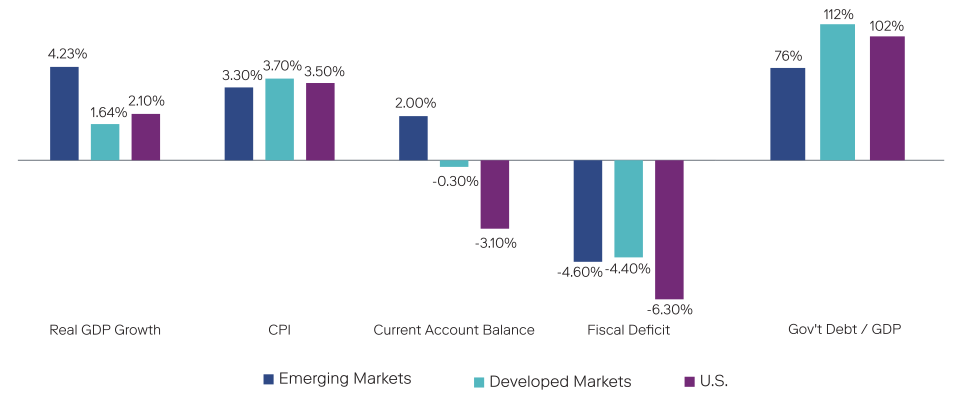
Emerging markets historically provided exceptional economic growth potential, but often endured extreme price volatility given less mature financial systems, higher debt loads, unpredictable inflation and greater vulnerability to economic shocks. Today, however, the EMD universe presents a far more balanced picture. This year, real EM GDP growth is expected to more than double developed markets, but inflation forecasts are lower, while measures of trade balance, fiscal deficits and debt/GDP are comparable or more favorable.
Favorable Economic Picture vs. Developed Markets
2026 Forecasts
Source: Bloomberg, IMF. Data as of June 3, 2026. Bloomberg 2026 forecasts for real GDP growth, fiscal deficit, current account, CPI, U.S. government debt/GDP. IMF 2026 forecast for EM and DM government debt/GDP.
EMD Credits Reflect an Up-in-Quality Trend
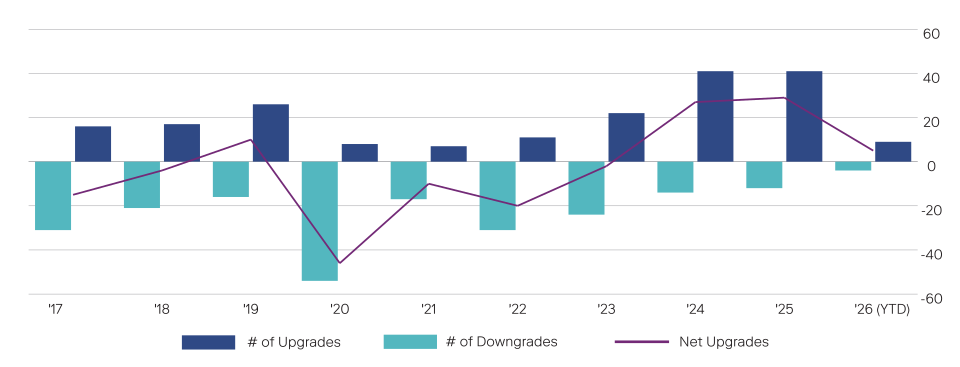
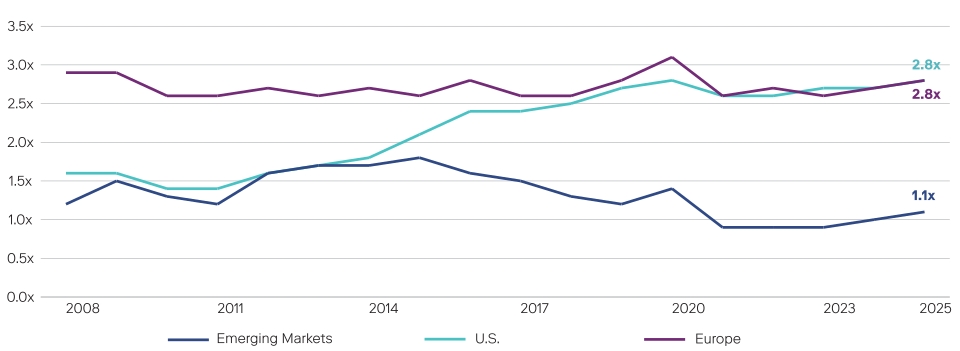
A constructive economic backdrop has been part of the reason the EM credit environment has seen steady improvement since the COVID-19 pandemic, with sovereigns showing particular gains over the last couple of years, as reflected in positive credit rating changes. Meanwhile, leverage of investment grade EM credits has remained stable at levels substantially lower than 10 years ago, and barely a third of the levels seen in the U.S. and developed markets more broadly.
Credit Strength Has Accelerated in Emerging Markets
EM Sovereign Credit Rating Changes
Source: S&P, Moody’s, Fitch, BlackRock Aladdin, JPMorgan. Data as of June 5, 2026. Counts changes in foreign currency rating by S&P, Moody’s or Fitch, for sovereign issuers in the JPMorgan EMBIGD Index.
EM Corporate Credits Have Retained Limited Debt Levels
Investment Grade Corporates – EM and DM Leverage Ratios
Source: J.P. Morgan, Bloomberg Finance L.P., Capital IQ. Data as of September 30, 2025. Excludes 100%-quasi-sovereigns, financials, real estate and defaulted companies. Additionally excludes Russian corporates for 2022 and afterward. DM numbers are as of 4Q24. EM results are based on partial 4Q24 earnings (300+ companies) blended with earlier results for those that did not report.
EMD Can Offer Healthy Yields, Effective Diversification
Credit spreads have substantially narrowed for many emerging market bonds amid performance strength. However, despite market dynamics, improved credit fundamentals and quality advantages over many DM bonds, EMD continues to offer generous all-in yields to investors and provide better yields than comparable DM bonds without presenting materially higher credit risk. Relatively low correlations to other fixed income segments enhance the diversification potential of the asset class. For investors concerned about local currency risk, hard currency EMD strategies will invest only in dollar-denominated securities, and may offer an attractive entry into the broader EMD universe.
EM Hard Currency Yields Remain Above the 10-Year Average
Yield to Worst: EM Hard Currency Sovereigns and Global Aggregate Index
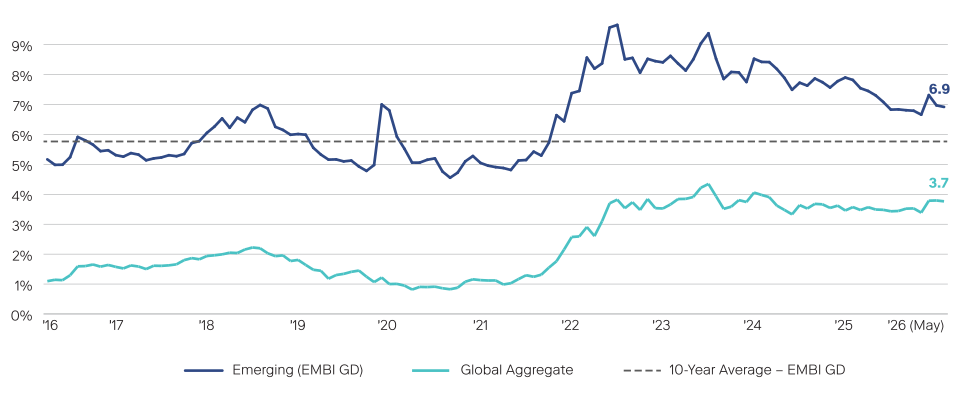
Source: JP Morgan, Bloomberg. Data as of May 29, 2026. Yield to worst for the EMBI Global Diversified Index and Global Aggregate Bond Index.
EMD Has Provided Meaningful Diversification
Correlation
| EMD Hard Currency | EMD Corporate | EMD Local Currency | EMD Blend | EMD Short Duration | |
|---|---|---|---|---|---|
| Global Agg | 0.69 | 0.61 | 0.70 | 0.73 | 0.48 |
| U.S. Treasuries | 0.36 | 0.31 | 0.22 | 0.29 | 0.14 |
| U.S. IG Corporates | 0.81 | 0.80 | 0.60 | 0.73 | 0.62 |
| U.S. High Yield Corporates | 0.78 | 0.76 | 0.65 | 0.75 | 0.71 |
| S&P 500 | 0.61 | 0.55 | 0.58 | 0.62 | 0.49 |
| MSCI EM | 0.68 | 0.65 | 0.79 | 0.79 | 0.61 |
Source: Bloomberg, JP Morgan. Data as of March 31, 2026. JPM EMBI Global Diversified (EMD Hard Currency), JPM CEMBI Diversified (EMD Corporate), JPM GBI-EM Global Diversified (EMD Local Currency), 50% JPM EMBI Global Diversified 1-3yr, 50% JPM CEMBI Diversified 1-3yr (EMD Short Duration), EMD Blend (25 EMD HC/25 EMD Corp/50 EMD LC), Bloomberg U.S. Agg Corporate Index (U.S. Corp IG), Bloomberg Global Agg Total Return Index Unhedged (Global Agg), Bloomberg U.S. Corporate HY (U.S. Corp HY), Barclays U.S. Agg Treasury Total Return Index Value Unhedged USD (UST), S&P 500 (U.S. Equities), MSCI Emerging Markets TR (MSCI Emerging Markets).
Short Duration EMD Helps Mitigate Rate Volatility
Given current uncertainty about the potential trajectory of inflation, and by extension, interest rates, investors are increasingly looking to shorter duration securities for opportunity within fixed income. EMD short duration has the benefit of not only limiting interest rate risk but capitalizing on the positive fundamentals and generous yields provided within the emerging markets universe. The displays below indicate the yield/duration position of short duration EMD versus other assets. Note that the short duration EMD universe has a higher credit rating than U.S. high yield, providing greater quality for a comparable yield/duration relationship.
Compelling Combination of Yield and Duration
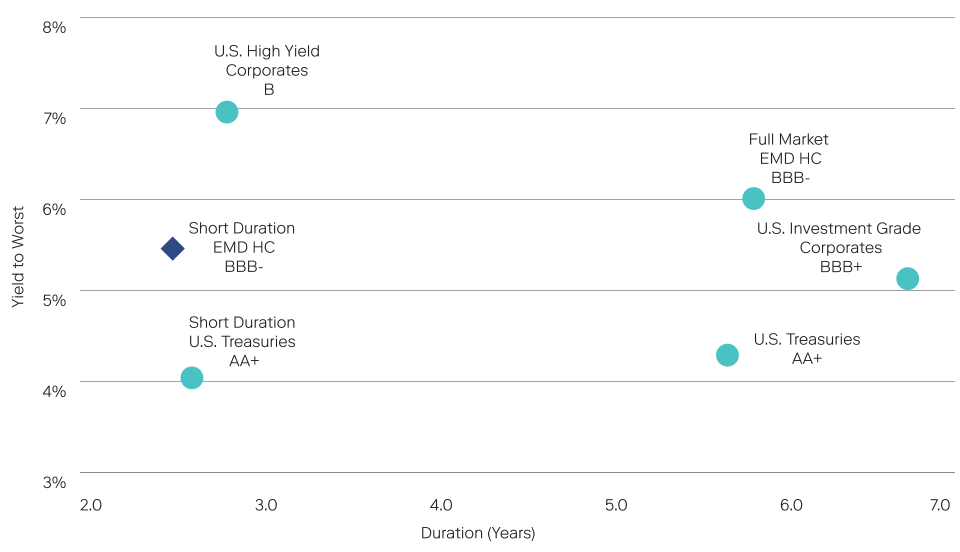
Source: Bloomberg. Data as of May 31, 2026. Indexes used: Bloomberg EM USD Aggregate Index (Full Market EMD HC), Bloomberg U.S. Corporate High Yield Index (U.S. High Yield Corporates), Bloomberg U.S. Corporate Bond Index (U.S. Investment Grade Corporates), Bloomberg U.S. Treasury Index (U.S. Treasuries). Bloomberg U.S. Treasury 1 – 5 Year Index (Short Duration U.S. Treasuries). The U.S. Bloomberg EM USD Aggregate Indices include emerging market sovereign, quasi-sovereign and corporate bonds issued in USD.
Conclusion: We Believe EMD Could Deserve a Core Allocation
Given the tendency of global fixed income strategies to underrepresent the EMD asset class, we believe that it could be time for investors to consider EMD on a standalone basis. Its combination of strong economic fundamentals, often moderate debt burdens and improved credit profile suggests that it may merit a strategic—not just tactical—weighting in diversified portfolios. Generous yields over comparably rated developed market securities, meaningful diversification and, in the case of short duration, peace of mind in relation to interest rate fluctuations could make it a natural fit for the current investment climate and beyond.