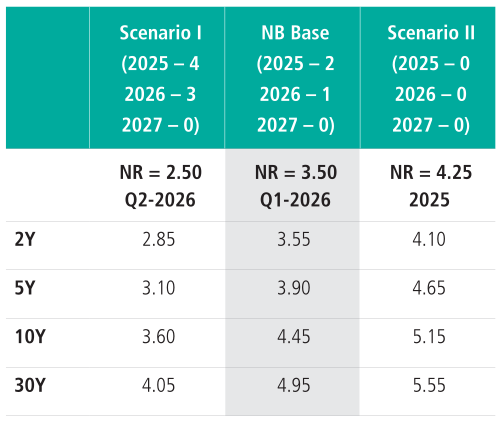
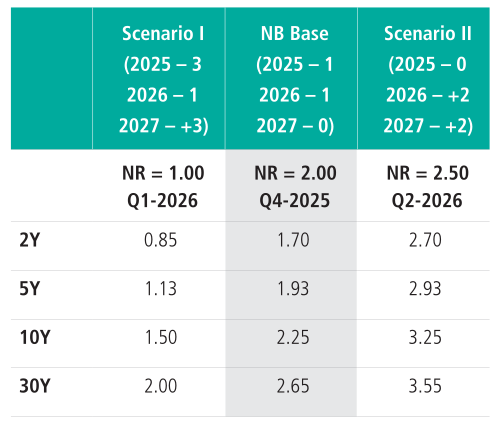
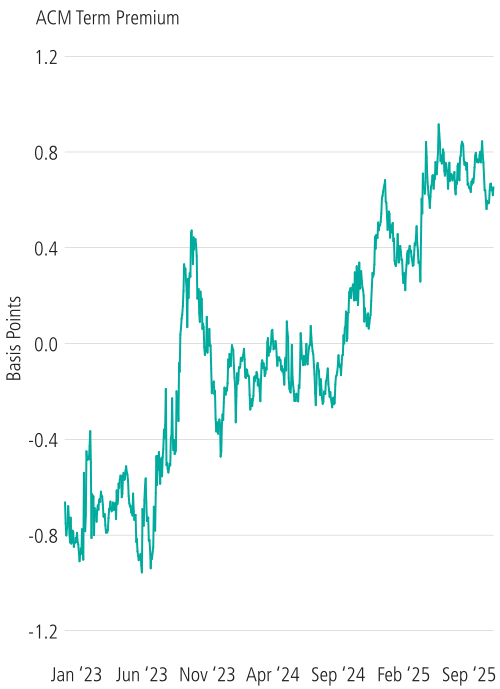
As global monetary policy continues to moderate while trade and political strains persist, we are seeing decided changes in the fixed income landscape. In our view, U.S. investment grade bonds appear to offer less relative value than issues in Europe and elsewhere that may provide windows to capitalize on price dislocation. At the same time, the all-in yields provided by high yield and other sectors merit consideration despite tight credits spreads, albeit with an eye toward careful security selection.
Commentary
Shifts in fiscal policy, budgetary issues and widening differences among markets and securities are creating new avenues for return potential.
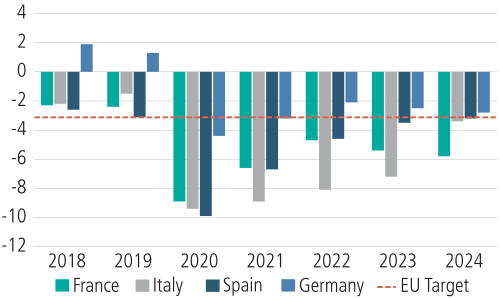
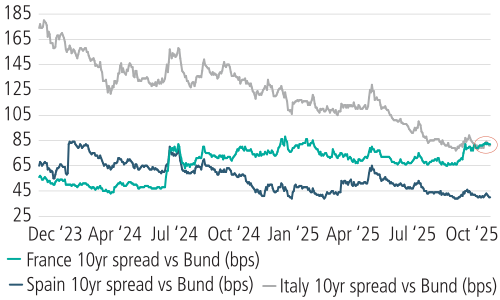
The global fixed income market has generally experienced relatively strong results over the past few months, on the back of central bank easing, softer growth and still moderate (but not cured) inflation. Early tariff impacts turned out to be less severe than expected while corporate fundamentals remained solid, as reflected in narrow credit spreads. In our view, conditions should remain relatively benign, though with meaningful clouds on the horizon in the form of fiscal excess and political friction. Increased divergence among issuers—e.g., core vs. peripheral European economies—could offer opportunity for active managers.
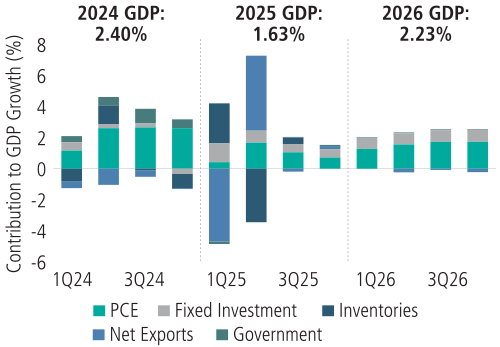
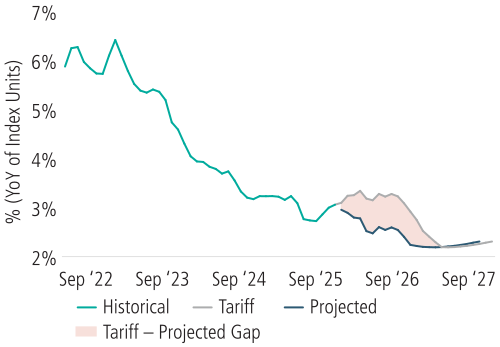
U.S. growth has generally outpaced expectations and may reaccelerate next year. Tariffs turned out to be less impactful than initial draconian expectations. And despite questions about their legality and thus durability, multiple rationales for the levies’ imposition should keep most of them in place. Meanwhile, companies are adapting through changes in supply chains and transmission of higher costs to purchasers.
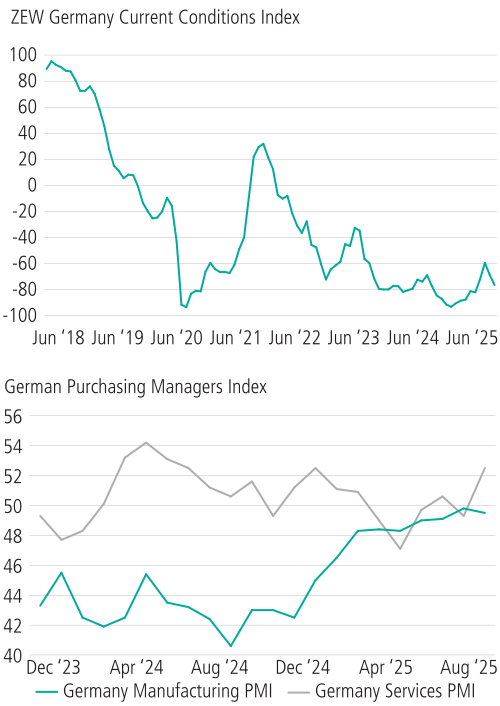
The European economy remains sluggish amid trade fallout, weak exports and tepid consumption. Conditions should improve over time with German outlays on defense and infrastructure, as well as potential U.K. spending. Despite worries over tariffs, the export-heavy Japanese economy has been relatively resilient while China is showing some green shoots of recovery, including in the ailing real estate sector.
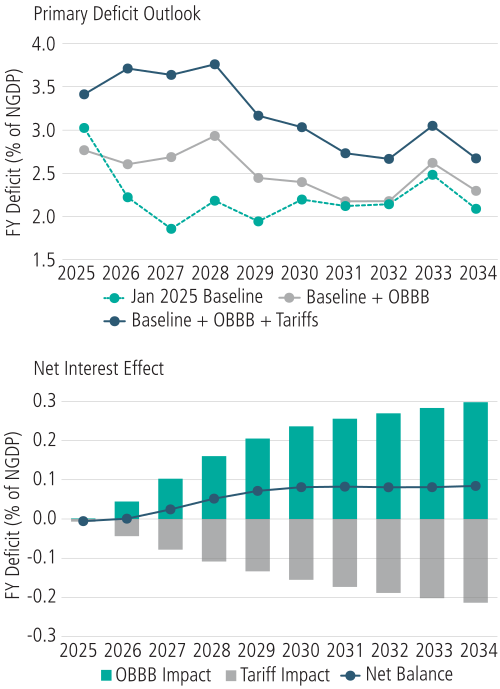
Politics remains a key source of economic uncertainty. As we wrote this outlook, the U.S. government shutdown continued, as Democrats sought to claw back health care cuts from the One Big Beautiful Bill Act. Division was also evident with the resignation of France’s latest prime minister amid difficulties on addressing its growing debt levels. Even the Federal Reserve was not immune to jockeying as President Trump sought the ouster of one board member and inserted another more sympathetic to his dovish view on interest rates.
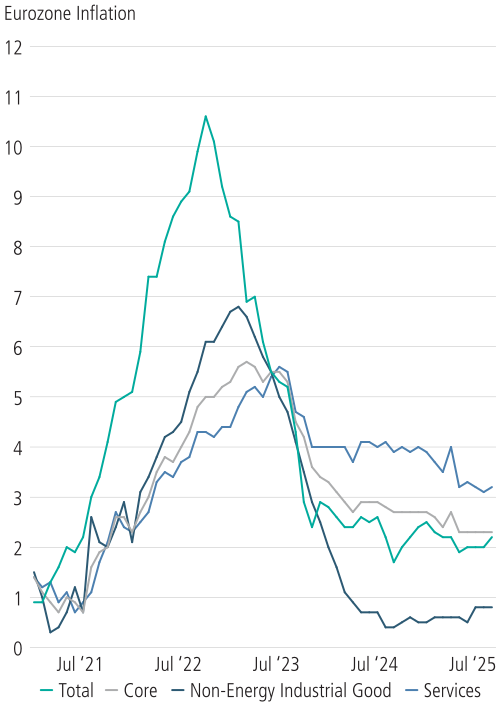
Overall, we think inflation should continue to improve in the coming months, allowing continued monetary easing. With its “risk management” rate cut in September, the Fed is paying closer attention to the weakening labor market, even as backward-looking inflation figures remain above target. In our view, the Fed and European Central Bank likely will make more cuts, as could the Bank of England, even with the U.K.’s more difficult near-term inflationary backdrop. Japan remains a policy outlier, with the central bank potentially hiking rates one more time in the current cycle. That said, likely incoming Prime Minister Sanae Takaichi favors fiscal stimulus and has been critical of past Bank of Japan tightening, introducing more policy uncertainty.
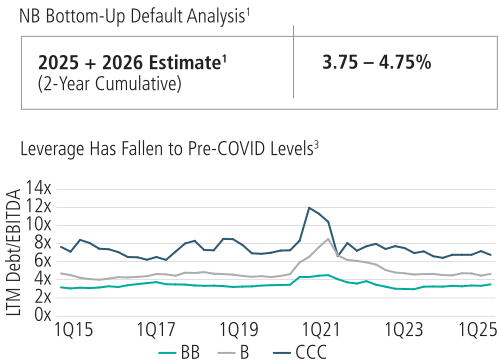
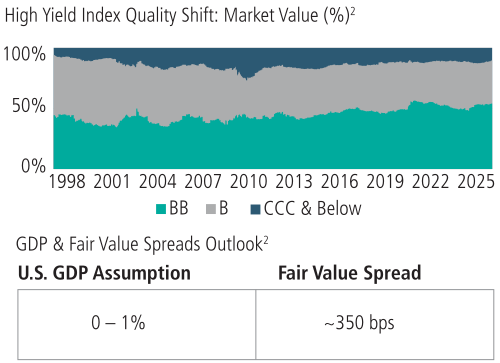
In terms of opportunities, we are shifting our emphasis to non-U.S. developed markets given their more benign inflation outlook and the increased dispersion of fiscal outlooks and economic fundamentals across markets. More generally, credit spreads remain close to historical tights, which appears justified by healthy fundamentals. High yield securities look attractive in terms of all-in yields, improved overall quality and prospects for relatively low default rates. Agency mortgage-backed securities are not as cheap as they once were, but still provide appealing yields relative to similarly rated choices. Finally, while emerging markets debt has ridden a wave of enthusiasm, issuers could continue to benefit from central bank easing and sturdy economies. The segment maintains a significant yield advantage over developed market counterparts.
Below, we present our key investment themes for the quarter.