When transitioning to a new investment strategy using in-kind assets, investors face important considerations around taxes, risk and timing. Even as their investment goals change, investors can feel stuck with their existing assets due to the tax friction associated with selling their current positions. Fortunately, custom separately managed accounts (SMAs) have paved the way for a more tax-efficient transition process, using risk and tax optimization to thoughtfully transition portfolios over time.
At a high level, tax-optimized transitions seek to balance tracking risk (TR), a statistical measure of how closely aligned a portfolio is with the target strategy, with tax impact, the potential taxes associated with realizing gains from selling down existing assets. This process looks to prioritize trades that reduce TR in the most tax-efficient way—deferring capital gains where possible, strategically realizing capital gains where necessary and harvesting any available losses to help mitigate overall tax impact.
Investors can tailor this transition process to their individual circumstances in a number of ways. For example, using a capital gains budget, adding cash or applying leverage can all help reduce TR and increase potential for future loss harvesting. However, not all approaches are suitable for all investors. Let’s look at how one client might evaluate different transition scenarios and determine which is right for them.
Case Study: Seeking Tax-Efficient Diversification
Client has a concentrated, technology-focused portfolio with meaningful unrealized capital gains, and is looking to diversify tax-efficiently over time.
Current Portfolio
- Market Value: $5M
- Unrealized Gains: $2.5M (100% gain)
- Number of Securities: 10
- Portfolio Composition: Large concentration of Information Technology and Communication Services stocks
- Current Tracking Risk vs. U.S. Large-Cap Core Model: 16%*
*Tracking risk (also called tracking error) is the annualized standard deviation of the difference in returns between a portfolio and its benchmark, measuring how closely the portfolio follows benchmark performance. Example: If a portfolio has a tracking risk of 3%, its returns have historically deviated from the benchmark by approximately 3% per year (up or down) in a typical year.
Scenario 1: No Net Gain Transition
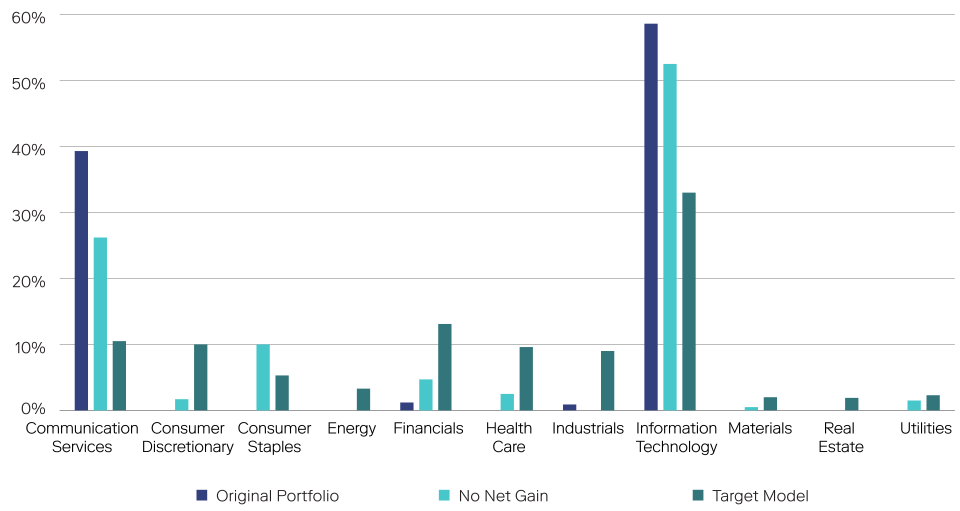
The client’s current portfolio is running at a high TR of over 16% against a diversified U.S. Large Cap Core model portfolio. Several of their Information Technology stocks directly overlap with the target U.S. Large Cap Core model, but they are meaningfully overweight, creating considerable TR. While many of their holdings have significant unrealized capital gains, some individual tax lots have unrealized capital losses, meaning that the market value of those lots is lower than their original purchase price. The portfolio manager can sell these specific tax lots and use the losses to strategically offset an equal amount of gains from trimming overweight positions. They can then immediately redeploy the cash into the target model. Using this type of tax-aware risk optimization, the manager can decrease TR from 16% to approximately 11% with no upfront tax impact.
Sector Exposure – No Net Gain Scenario
Source: Neuberger.
Scenario 2: Setting a Capital Gains Budget
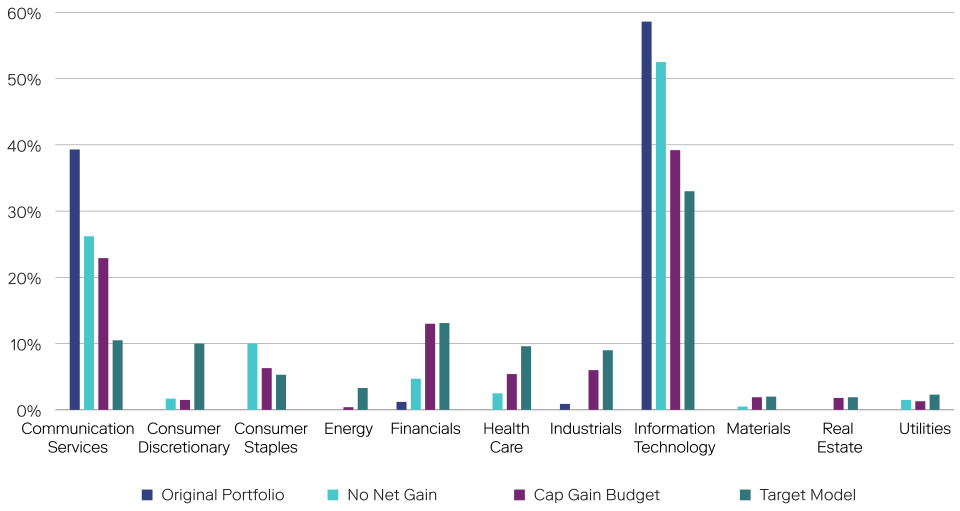
If the client has capacity to realize capital gains, the portfolio manager can potentially reduce TR even further by strategically selecting specific positions and tax lots to sell. Let’s say the client has a $500,000 net capital gain budget for the year. By thoughtfully realizing long-term gains from higher basis tax lots and simultaneously reinvesting the proceeds into complementary names within the target model, the portfolio manager can further reduce TR to approximately 7%. More specifically, the manager can trim some additional IT positions in order to buy more Financials, Health Care and Industrials names, where the client is currently underweight. With the new tax year, the client can reevaluate their yearly gain budget and diversify their portfolio in a disciplined and controlled manner over multiple years.
Sector Exposure – Realizing Capital Gains to Balance Sector Exposure
Source: Neuberger.
Scenario 3: Strategic Cash Deployment
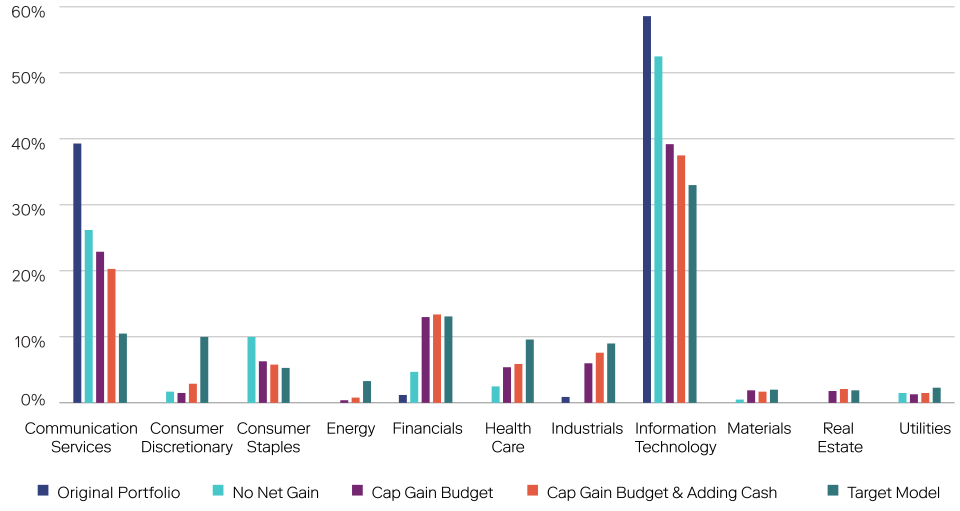
In addition to realizing net gains upfront, the portfolio manager can also look to reduce TR by adding cash to the portfolio and strategically investing around existing assets. This approach allows them to balance sector exposures without needing to sell additional assets and realize more capital gains. Adding an additional $500,000 in cash to the portfolio allows for further reduction of TR to 5%. This new cash infusion also helps reset the portfolio cost basis higher, introducing new opportunities for future tax-loss harvesting.
Sector Exposure – Strategically Investing Around Existing Assets
Source: Neuberger.
So far, our scenarios have focused on commonly used solutions for long-only portfolios; however, for certain clients, more advanced strategies may help manage TR and supercharge tax-loss harvesting potential. Let’s look at how long-short “extensions” (adding both long and short positions to an existing portfolio for a net neutral exposure impact) can be used to accelerate the transition process, minimize tax friction and seek to deliver pretax outperformance.
Scenario 4: Adding Long-Short Extensions
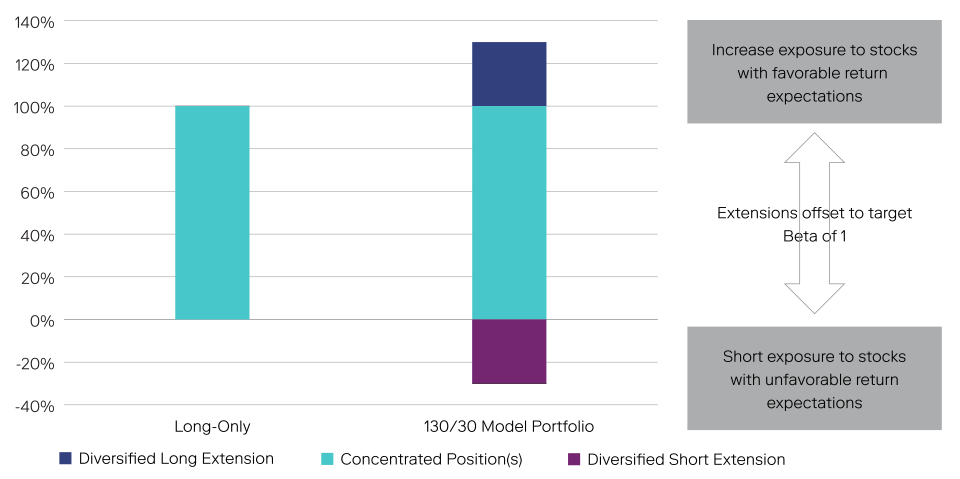
Utilizing a levered long-short 130/30 strategy, the portfolio manager can add extensions around a client’s existing positions to achieve some immediate diversification while maintaining a net exposure of 100%. Instead of realizing gains or adding cash up front, the portfolio manager can diversify risk with new long positions in, for example, high-quality Financial, Health Care and Consumer stocks, and strategically offset some of the client’s existing IT exposure by shorting expensive, low-quality IT and Communication Services names. In our example, simply adding these extensions can reduce TR from 15% to 9% with no upfront gain realization, compared to only 11% TR in the no net gain scenario above.
Gross Exposure – Applying Long/Short Extensions
Source: Neuberger.
Additionally, these +30% long and -30% short extensions establish new cost basis for future loss-harvesting opportunities regardless of market direction. While the goal of both the long and short extensions is to outperform on a pre-tax basis, should markets drift higher, short positions may present greater potential for loss harvesting, and should markets fall, the long extension may generate additional losses. As the portfolio rebalances and these losses are realized, they can be used to offset an equal amount of gains from selling down some of the large, concentrated positions, thereby accelerating the diversification process in a tax-neutral manner. Over multiple years, this can allow investors to strategically transfer their risk and tax liability from those concentrated positions into a more diversified basket of stocks.
Long-Short Diversification Path – Using Realized Losses from Long/Short Extensions to Tax-Efficiently Sell Down a Concentrated Position Over Time
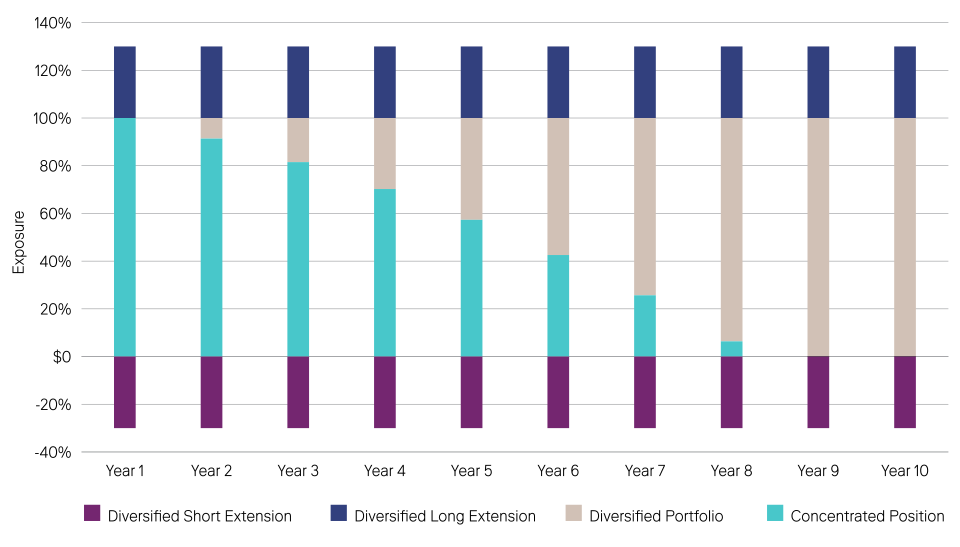
Source: Neuberger. Does not account for market growth of portfolio or concentrated stock. Uses a simple average realized net loss of 11.5% of NAV annualized. Market environment will affect the results. Information presented solely to demonstrate changes to an illustrative portfolio over time and does not reflect or predict any investment performance.
Conclusion: The Right Toolkit
All the scenarios above seek to demonstrate that effective tax-managed transitions are not about a single “right” answer, but about having the right toolkit. For some investors, a disciplined long-only approach with thoughtful gain budgeting and ongoing loss harvesting can reduce risk and help manage taxes. For others with significant embedded gains and/or a higher tolerance for complexity, a long-short extension can potentially provide even greater tax benefit and accelerate the diversification process. By thoughtfully using cash, gain budgets and, where appropriate, leverage, investors can better keep pace with their evolving investment objectives.