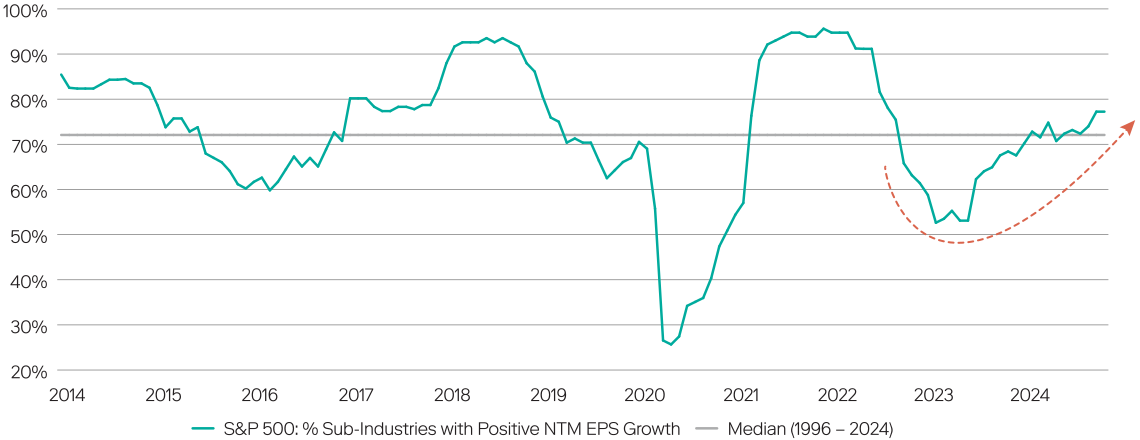
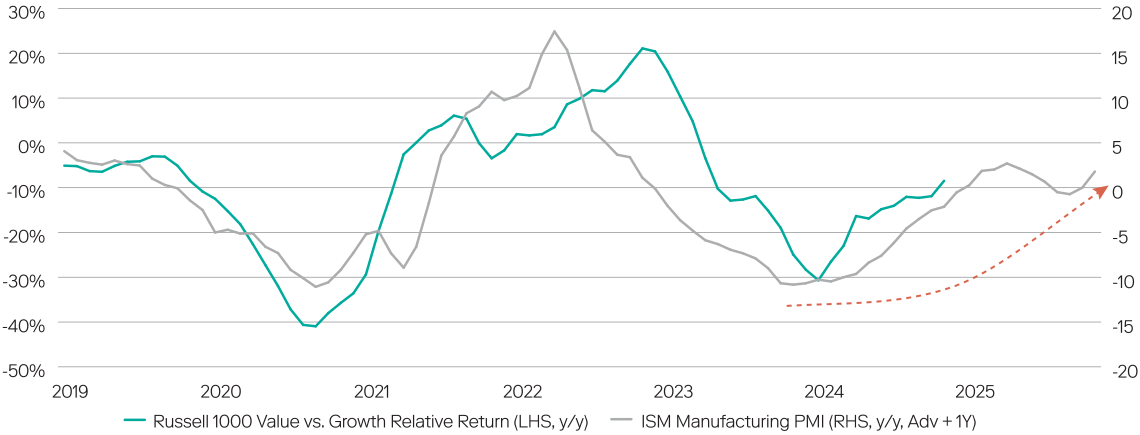
While we remain optimistic about U.S. equities in 2025, we acknowledge several underlying risks that could challenge the market’s overall performance, as well as our style, size and sector recommendations.
Stalling Rebounds in Earnings Breadth and Capex Growth
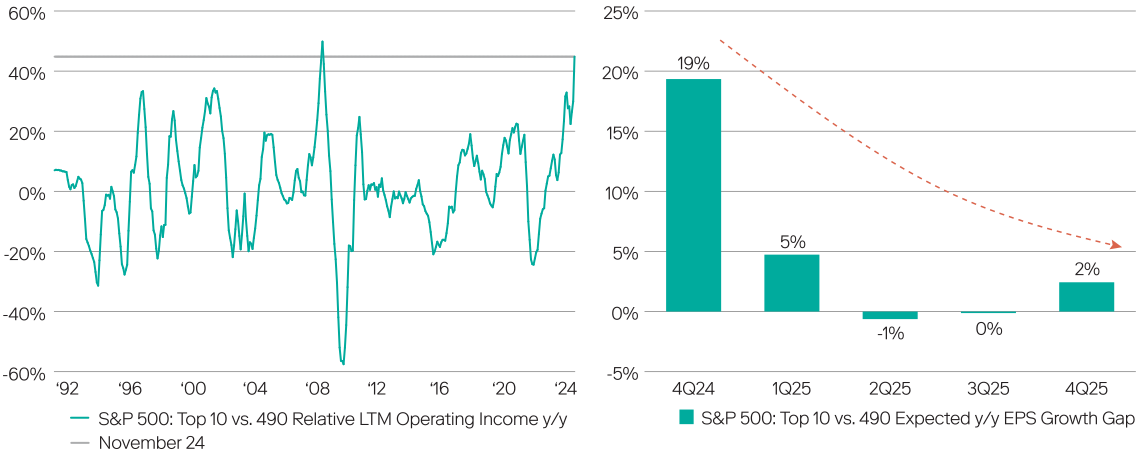
Even as earnings growth has begun to broaden across the equity market, many investors are still enamored of the mega caps. The gap in reported earnings growth between the 10 largest stocks in the S&P 500 Index and the other 490 has recently expanded to nearly 40%—a level exceeded only once in four decades (see the left side of figure 3).15
Figure 3: Will Mega-Cap Earnings Slow From Elevated Levels?
Source: BofA, Neuberger Berman Research and FactSet. Data as of November 30, 2024. Nothing herein constitutes a prediction or projection of future events or future market behavior. Historical trends do not imply, forecast or guarantee future results. Due to a variety of factors, actual events or market behavior may differ significantly from any views expressed or any historical result. Past performance is not indicative of future results.
Our base-case scenario assumes that the extraordinary growth gap between the top 10 stocks and the rest will diminish to more typical levels in 2025 as industrial activity accelerates and economic growth broadens (see the right side of figure 3). However, if earnings are late to broaden or global capex expenditures are late to pick up, we fear the growth gap could remain elevated, potentially posing a significant risk to our recommended tilt toward value stocks and small caps over growth stocks and large caps.
Stretched Equity Positioning
U.S. households currently have a higher proportion of their net worth allocated to equities relative to cash than at any time since records began in 1951, except one quarter at the peak of the dot-com bubble.16 At these elevated allocations, we fear the stock market could be more sensitive to negative corporate and geopolitical news surprises in 2025 than is normally the case.
At the sector level, Technology, which now accounts for 32% of the S&P 500 by market cap, has a beta of 1.6—the highest among all sectors.17 Compounding this risk: discretionary managers' positioning in Technology is now at a bullish 93rd percentile, meaning their relative exposure to that specific sector has been higher only 7% of the time since 2010.18
In terms of style, the protracted outperformance of high-quality stocks relative to value stocks is reaching a level not observed in 26 years.19 We fear this shift has introduced a subtle risk: High-quality stocks—traditionally considered safer than the broader market—now have a beta exceeding 1.0, making them riskier than the overall S&P 500 Index.20
We worry these trends have made the broader equity market particularly vulnerable to a shift in investor sentiment away from growth stocks, potentially caused by earnings disappointments in the tech sector or a broadening of economic growth.
An Unwinding of the Yen Carry Trade Is a Risk to Growth Stocks
The significant divergence in real interest rates across the developed world has made carry trades particularly lucrative over the past three years. Carry trades involve borrowing in a low-yielding currency, such as the yen and Swiss franc, and investing in a higher-yielding currency or even global growth stocks, thereby capturing a spread.
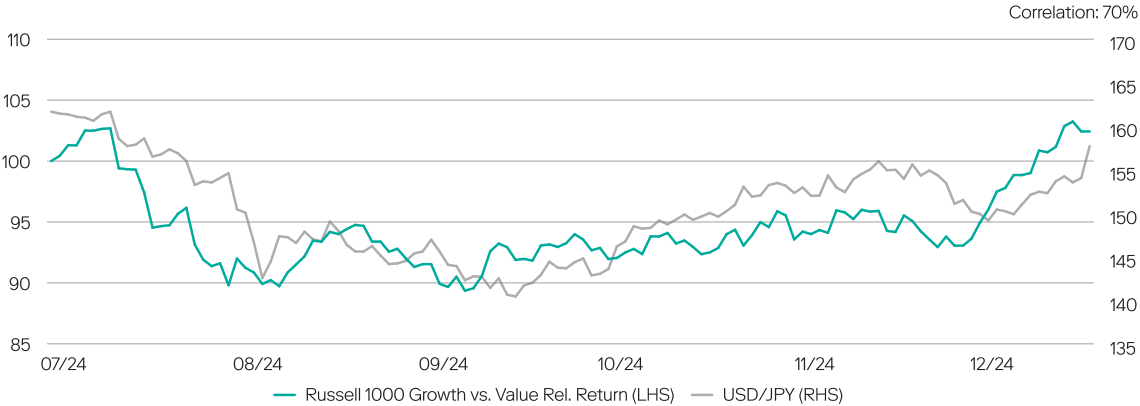
Consider the current differential between the USD and JPY policy rates, as shown in figure 4: As the Fed looks to ease while the BoJ aims to hike, we expect the Japanese 2-year rates to rise relative to those in the U.S. This would make the carry trade increasingly unattractive.21
The yen carry trade has been a significant contributor to the exceptional performance of mega-cap growth stocks and remained a significant support for the NASDAQ 100 in the second half of 2024.22 The reversal of carry trade, in our view, could pressure growth stocks and create volatility across the broader stock market.
Figure 4: The Yen Carry Trade May Soon Start Looking Unattractive
Source: Neuberger Berman research and FactSet. Data as of November 30, 2024. Nothing herein constitutes a prediction or projection of future events or future market behavior. Historical trends do not imply, forecast or guarantee future results. Due to a variety of factors, actual events or market behavior may differ significantly from any views expressed or any historical results. Past performance is not indicative of future results.
There is precedent for this: The yen rose against the USD in early July, prompting a rapid unwinding of the carry trade. Investors sold growth stocks and bought yen, which resulted in a swift 13% correction in the Russell 1000 Growth index within a three-week period.23 In short, we suggest investors monitor developments in the carry trade over the course of 2025.