The war in Iran has triggered fertilizer shortages which have dominated agricultural commodity headlines in recent months and for good reason. The war has disrupted supplies from the Persian Gulf, pushing input costs up and supporting higher prices across the agricultural complex. But a new catalyst is forming that could drive the next leg higher for commodity prices: a strong El Niño cycle in the second half of 2026.
Not every commodity is exposed to both events equally. Some are more vulnerable to a prolonged disruption in the Strait of Hormuz, others sit squarely in the path of an El Niño cycle. The chart below maps where each one sits.
Sugar and Cocoa Sit in the El Niño Crosshairs:
Commodity sensitivity to El Niño vs. Strait of Hormuz closure
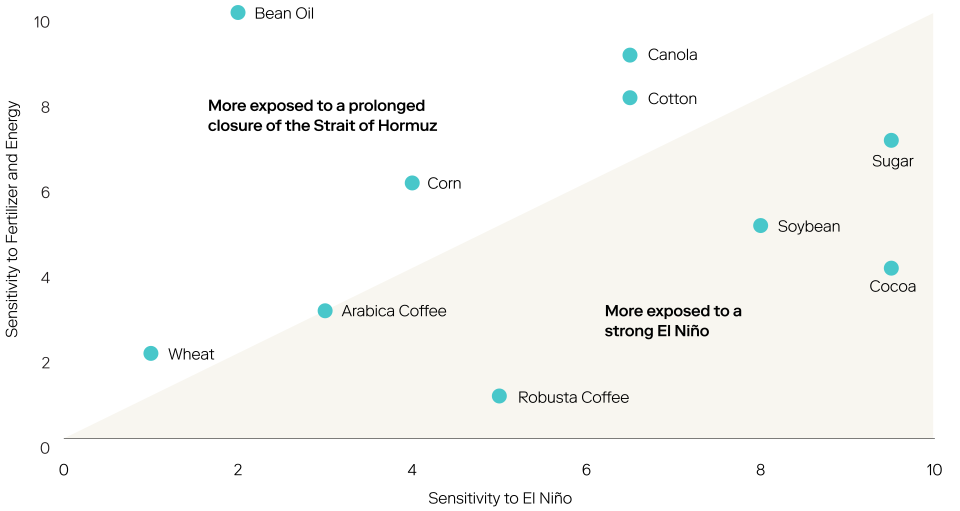
Source: Bloomberg, Neuberger. Data as of May 22, 2026. El Niño sensitivity ranks each commodity by its maximum futures roll yield during the two most recent strong El Niño events (2015–16 and 2023–24); higher roll yield indicates more acute physical shortage. Fertilizer and energy sensitivity (exposed to a prolonged Strait of Hormuz closure) ranks each commodity by its average correlation since 2002 to the Green Markets North America Fertilizer Price Index and the S&P GSCI Heating Oil Excess Return Index; higher correlation indicates greater sensitivity.
El Niño and Agricultural Commodities
El Niño is a climate pattern driven by warming of sea surface temperatures in the central and eastern Pacific Ocean. Its effects ripple across global agriculture by reshaping rainfall and temperature patterns in key crop-growing regions. In broad terms, El Niño brings excessive rainfall and flooding to parts of South America, while triggering drought conditions across Southeast Asia, India, parts of Africa and Australia. This disrupts both planting and harvesting across multiple crops and geographies, which often means tighter global supply and higher price volatility.
We believe the upcoming El Niño cycle is a meaningful tailwind for agricultural commodity prices, creating an opportunity for commodity investors across several key markets.
Benchmark Cocoa, Sugar, and Coffee Get Pricier
Cocoa is particularly vulnerable. West Africa, the world's largest producing region, has historically suffered significant output declines during strong El Niño episodes as warmer sea temperatures intensify the winds which descend from the Sahara across West Africa. Hot, dry conditions stress cocoa trees, suppress pod development and reduce bean quality. Past strong El Niño cycles, such as 1997–98 and 2015–16, triggered sharp drops in Côte d'Ivoire production. They have also caused significant production losses in Ecuador, another cocoa producer, as the opposite problem, excessive rainfall and potential flooding, boost fungal diseases and disrupt harvesting.
Sugar faces pressure from multiple weather phenomena. Drought could threaten output in India and Thailand, while wetter conditions in Brazil can disrupt the sugarcane harvest. Brazil has built one of the most sophisticated biofuel programs in the world, turning its sugarcane into fuel and a pillar of national energy security. Elevated ethanol prices incentivize mills to divert that cane away from sugar production, compounding a weather-driven supply squeeze.
Robusta coffee is another area where we see upside risk. Vietnam, which accounts for more than 40% of global supply, is among the regions most exposed to El Niño-driven drought. The 2015–16 weather phenomenon cut Vietnamese coffee output considerably and fueled a sharp rally in robusta futures. In contrast, the picture is much more favorable for arabica coffee. El Niño tends to bring rainfall to Brazil's main arabica-growing regions, boosting supply. While Robusta is not included in standard commodity benchmarks and is less liquid than arabica, we think it earns its place in portfolios. This is an example of the diversification of scarcity sources we believe investors should look for when adding non-benchmark positions.
Grains: Bullish Wheat, Balanced Corn and Soy
Wheat is one of the most important staple crops globally, and El Niño is expected to impact supply here as well. Australia, a major exporter, has suffered production declines due to drought in nearly every El Niño year over the past six decades, with potential losses ranging from significant to severe. Like Brazil, excessive rainfall and flooding also threaten Argentina and its wheat crop, as waterlogged conditions can damage roots, raise the risk of fungal disease and reduce yields. While elevated global stocks of wheat provide a buffer, we believe wheat prices will track higher.
The impact on other grains is more nuanced. Weather volatility caused by El Niño can delay Brazil’s main crop planting, which in turn shortens the second-crop corn harvest, an increasingly critical component of global supply that has outpaced the U.S. in recent years. By contrast, the outlook for U.S. corn is mixed as warmer, wetter conditions forecasted for the Midwest can support yields. Soybean supply looks strong, with the top three exporting regions on track for record production in 2026–27, though U.S. biofuel blending mandates continue to provide solid demand, which gives us optimism for the trajectory of prices from here, particularly soybean oil.
Weather Impact on Crops: What's Past is Prologue
El Niño does not have a uniform impact. Historically, its effects vary by crop and by region. But the broad pattern is that a strong El Niño cycle tends to constrain global agricultural supply and increase price volatility. The influence of El Niño extends beyond agriculture, with temperature extremes amplifying heating and cooling demand across energy markets.
If a strong El Niño event occurs alongside ongoing fertilizer disruptions, investors could face a particularly challenging combination: food price inflation layered onto energy inflation, creating a double headwind for traditional asset classes. This is supply-driven inflation, the kind that monetary policy can struggle to address. We do not believe current market pricing adequately reflects this risk. Add in supply concerns across the broad commodity universe, from copper to oil, and we see a strong case for investors to increase their commodity allocation, not only for diversification and as an inflation hedge, but also to capture potentially attractive returns.