- The latest U.S.-Iran ceasefire has now broken down. There will almost certainly be another attempt at one, just as there will likely be further periods of calm followed by renewed tensions. For investors, however, that isn't the most important question. Rather than trying to predict whether the next ceasefire will last, investors should ask where the opportunity in the energy complex has moved to.
- On the surface, crude markets appear well supplied. OPEC+ has increased production, much of the geopolitical risk premium has faded and many forecasts point to a surplus over the coming year. That is precisely why we had reduced our overall energy exposure. But reducing exposure is not the same as eliminating it.
The squeeze has moved downstream
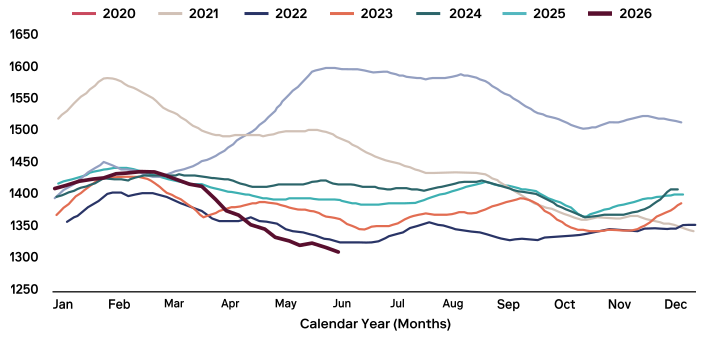
Refined Product Inventories Continue to Decline
Global Total Products Stocks (Million Barrels)
Source: S&P Global, Macquarie Macro Strategy, June 2026.
The chart above tells the story.
- While investors have focused on crude balances, a different picture has emerged further down the value chain. Global refined product inventories remain below the lows reached during the 2022 energy crisis, leaving the market with far less flexibility than headline oil prices imply. At the same time, refining capacity continues to face disruption from Russian refinery outages, lower Middle Eastern product exports and logistical constraints that have yet to fully normalise.
- In other words, the fuels consumers actually use—diesel, gasoline and jet fuel—remain considerably tighter than crude itself. That distinction matters because refined products ultimately determine the price of the energy we consume.
Fragility remains beneath the surface
- The latest breakdown in the ceasefire is a reminder that periods of calm should not be confused with lasting stability. The Middle East has settled into a familiar pattern: negotiations, temporary truces, renewed tensions and fresh attempts to restore calm. Markets tend to reprice each development as if it marks a decisive turning point. We believe it is more useful to focus on what has not changed.
- Shipping through the Strait of Hormuz has improved from the height of the disruption, but it has not fully normalised. Major shipowners remain cautious, insurance costs remain elevated and logistics continue to recover more slowly than headlines suggest. Markets may appear comfortable with crude balances, but the infrastructure that moves, refines and delivers energy continues to operate with limited spare capacity.
- That means even relatively modest disruptions can still have an outsized impact on refined fuel markets. Importantly, this is no longer simply a geopolitical story. It is increasingly a resilience.
Why we continue to own energy
- This is why we continue to maintain a selective allocation to energy despite reducing our overall exposure.
- Rather than attempting to trade every geopolitical headline, we prefer to own the parts of the energy complex where inventories remain thin, flexibility remains scarce and supply chains continue to exhibit structural fragility.
- The investment case today is less about predicting the next ceasefire—or the next breakdown—and more about recognising that the world's energy system continues to operate with limited buffers.
- Markets may have priced out much of the fear premium in crude. We believe the resilience premium in energy is still being built.
For investors, that means looking beyond the price of crude and focusing instead on where resilience remains scarce. Today, that opportunity lies further downstream—in the barrel that the world actually burns.