We remain constructive on equities based on three general observations: 1) investors’ renewed focus on corporate earnings; 2) the gradual broadening of the stock market; and 3) the continuing global industrial rebound.
Renewed Focus on Earnings
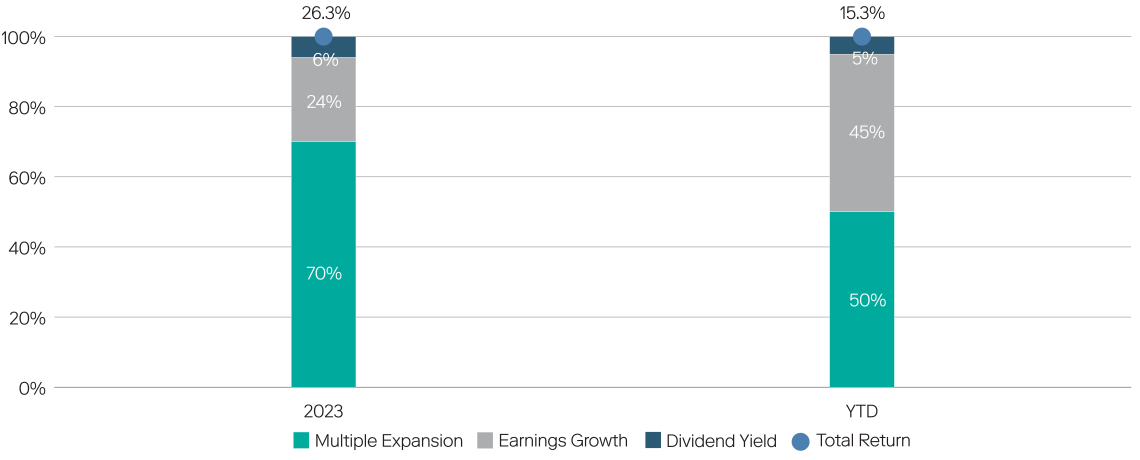
While an increase in price-to-earnings (P/E) multiples drove much of the stock market’s rise in 2023, fundamentals have made a strong comeback in the first half of 2024. As figure 1 shows, 70% of the S&P 500’s total return in 2023 came from expanding P/E multiples, and just 24% from earnings growth; thus far in 2024, that split is much more even, 50% to 45%.
Figure 1: Earnings have contributed more to equity returns in 2024 than in 2023
S&P 500 Return Decomposition
Source: Neuberger Berman Research and FactSet. Data as of June 28, 2024. Past performance is not indicative of future results.
Why might a renewed focus on earnings be good news for stocks? We find that earnings-driven markets tend to be anchored by improving economic and corporate fundamentals, whereas P/E multiple-driven markets are often led by sentiment and liquidity. Furthermore, we notice that earnings-driven markets tend to be less volatile and engage more investors who have longer investment horizons, which can add to a bull market’s longevity.
Solid Earnings Are Underpinning a Broadening Stock Market
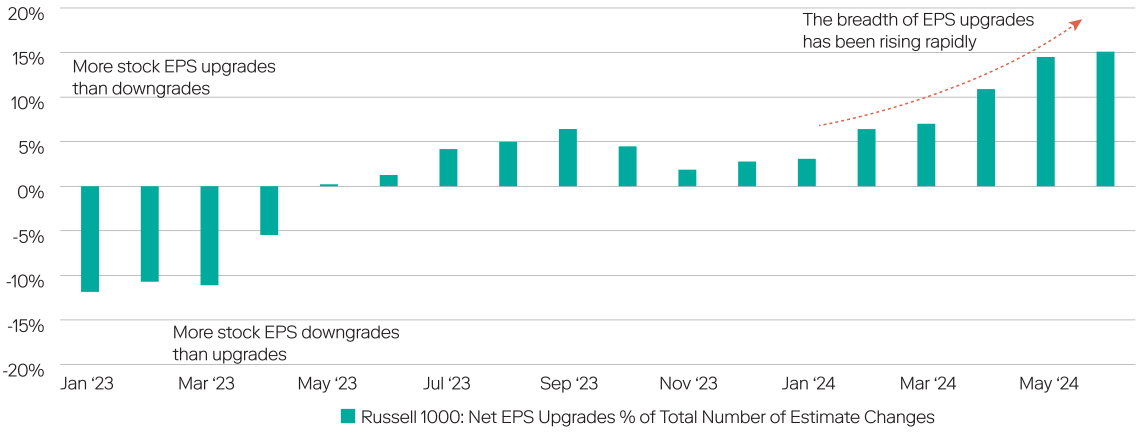
Another reason for optimism, in our view, is that we saw positive earnings revisions spread across many sectors during the first half of 2024. As shown in figure 2, the net percentage of companies within the Russell 1000 with positive earnings revisions has been rising rapidly since the beginning of the year. Furthermore, by the end of May, nine out of 11 sectors within the S&P 500 had seen net positive earnings revisions, versus just one—Technology—at the end of 2023. 1
Figure 2: The breadth of positive earnings revisions has risen dramatically
Source: Neuberger Berman Research and FactSet. Data as of June 28, 2024. Indexes are unmanaged and are not available for direct investment. Past performance is not indicative of future results. Please see additional disclosures at the end of this presentation.
In the near future, we expect further corporate earnings growth across sectors, fueled by rising household net worth, a supportive labor market, positive fiscal impulse and reviving global industrial production (more on that below).
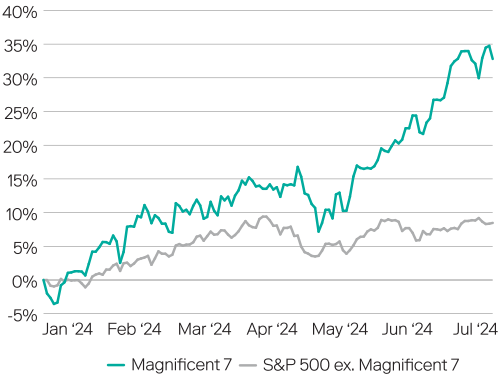
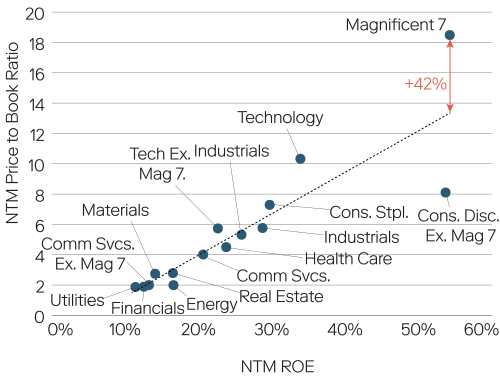
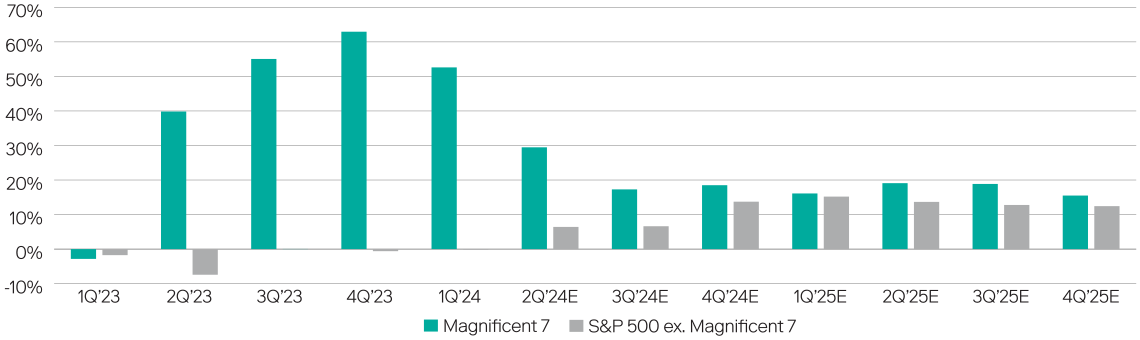
Notably, rising earnings breadth across the stock market has narrowed the growth gap between the Magnificent 7 (Microsoft, Amazon, Meta, Apple, Alphabet, Nvidia and Tesla) and the other 493 stocks in the S&P 500. As of 4Q 2023, the Mag 7’s growth has been moderating while the rest have picked up. As shown in figure 3, the earnings growth gap between the Mag 7 and the rest peaked at 64% in 4Q 2023 and has begun trending in favor of the S&P 493, which is much more reasonably valued in our view. For most of 2023, the Mag 7 were valued at a growth-scarcity premium, which we expect will be chipped away as growth broadens.
Figure 3: Broader growth means the Mag 7 is no longer the “only game in town”
Quarterly Earnings Growth (y/y)
Source: BofA and FactSet. Data as of May 31, 2024. Indexes are unmanaged and are not available for direct investment . Past performance is not indicative of future results.
Should this transition continue, we believe it could reduce the appeal of the Mag 7 (and the valuation premium they command), thereby increasing the relative attraction of the broader market.
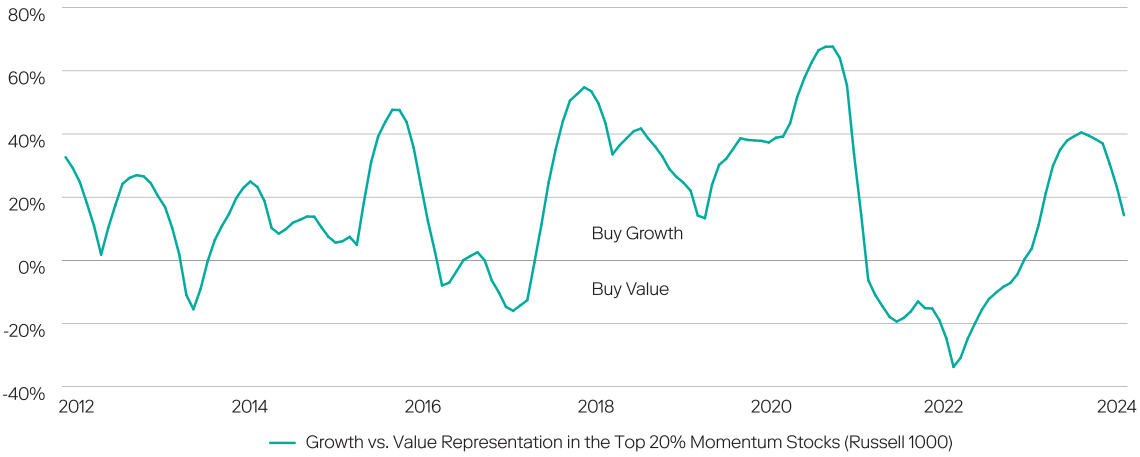
From an investment style perspective, we think another shift appears in progress: While growth has been outpacing value at the index level, a closer look leads us to believe that growth stocks could be starting to cede market leadership to value stocks.
In figure 4, the teal line shows that, among the stocks in the top momentum quintile of the Russell 1000 at the end of June, the representation of growth stocks relative to value stocks had grown a lot thinner than at the start of the year. Additionally, policy easing has historically coincided with the outperformance of value versus growth over the following 24 months, and we believe a rate cut later this year or next could accelerate that transition.
Figure 4: Growth Stocks Appear to be in the Late Stages of Outperformance
Source: Neuberger Berman Research and FactSet. Data as of June 28, 2024. Indexes are unmanaged and are not available for direct investment. Past performance is not indicative of future results.
Global Industrial Production Continues to Rebound
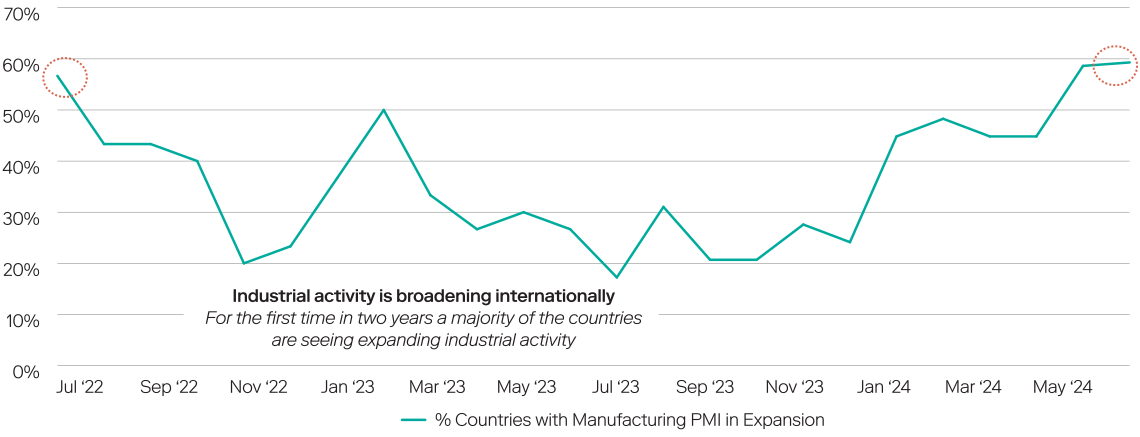
Yet a third reason we are optimistic is that manufacturing is humming across much of the globe: PMIs are expanding in most countries for the first time in two years (see figure 5); OECD industrial confidence has been soaring;2 and global new orders are now outpacing the growth in global inventories.2 This suggests to us that global industrial production could continue to strengthen for the rest of the year.
Figure 5: An Industrial Rebound Is Strengthening and Broadening Across the Globe
Source: Neuberger Berman Research and FactSet. Past performance is not indicative of future results. Data as of June 28, 2024.
When global production picks up, we observe goods prices tend to follow, thereby bolstering margins within industrially sensitive sectors. We believe much of this potential margin improvement is not yet priced into these sectors, which is why we recommend overweighting them within portfolios in the near term. At the same time, we find that goods inflation can be a headwind for consumer discretionary stocks, hence our underweight recommendation.