


Memory chip prices are expected to rise sharply through 2026, driven by AI data center demand crowding out supply of traditional memory used in PCs, smartphones, servers, vehicles, and consumer electronics. This creates margin compression, product delay, and inventory risks for downstream Investment grade issuers.
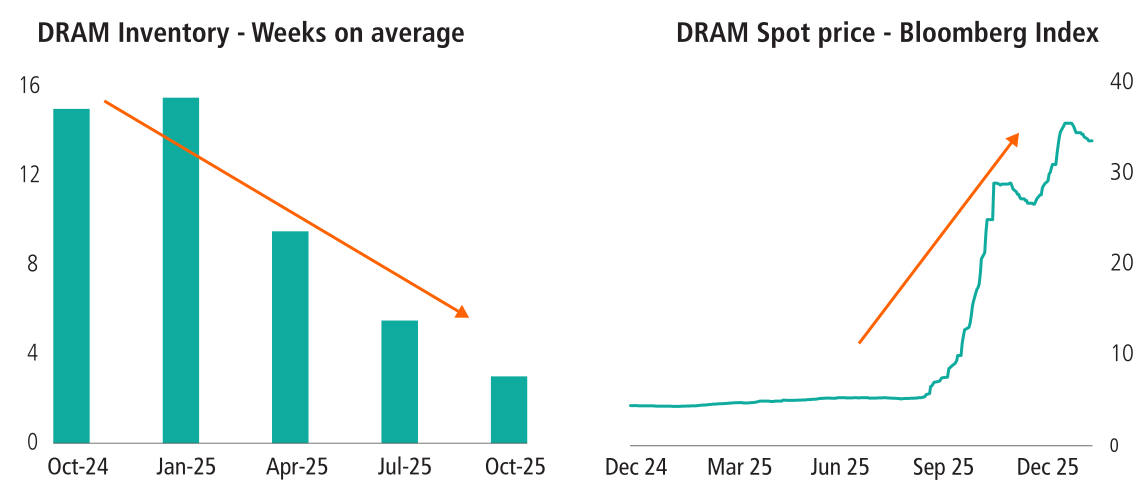
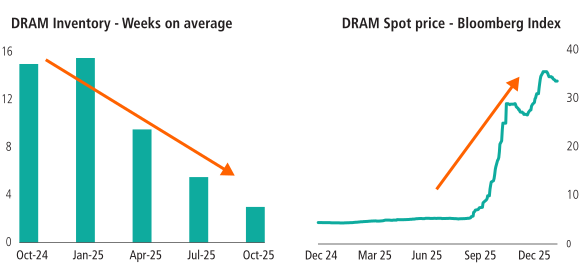
Since Q4 2025 we have witnessed a spike in the spot prices of dynamic random-access memory (DRAM) chips, coupled with a sequential reduction in inventories at DRAM suppliers, signalling a rising risk of shortage in the availability of this type of memory semiconductor, which would be a disruptive trend for a range of end user sectors.
- Higher Prices, Lower Inventories: The main reason of such trends observed for DRAMs is the rapid acceleration of artificial intelligence (AI) development and infrastructure build-out, driven primarily by hyperscalers operating vast, scalable cloud data centres, which has already started triggering a supply crunch across Asia’s DRAM markets. As AI workloads scale exponentially, memory has become one of the most strained components in the semiconductor ecosystem, with shortages and elevated pricing expected to persist this year and potentially into 2027, becoming a credit risk to more closely monitor as we move into the 2026 earnings seasons. This credit risk would have two key dimensions: higher costs for sectors requiring memory chips the most, and supply disruption for those sectors or companies which may not get sufficient amount of chips for their production requirements.
- The Challenge: While we understand most memory chips are purchased under annual or longer-term contracts at terms which are still much more favourable than purchase on the spot market, contractual protection would eventually reduce as contracts get closer to expiry/renewal, suggesting that the cost/supply squeeze could become one of the hottest topics in some sectors later this year and into 2027.
- Winners: The potential winners will be the major DRAM suppliers, such as semiconductor makers Samsung and Micron Technologies, which are going to charge higher prices amid a surge in demand and looming supply shortage. Combined, these dynamics point to the emergence of a multi-year memory upcycle centred in Asia, where leading manufacturers — particularly in South Korea, Taiwan, and parts of China — are well positioned to benefit from stronger pricing, tighter supply discipline, and accelerating AI-driven component demand.
- Losers: The potential losers are consumer electronics manufacturers, which would face rising memory chip costs for the smartphones and PCs, hyperscalers which will see escalating cost for building data centers, as well as carmakers, which will see constrained availability and higher costs of chips required for the electronic architectures and infotainment content of the vehicles they produce. Assuming only a portion of the higher costs would be passed on to final customers, profitability would take a hit.
- The Automotive Sector: carmakers will face cost pressures as DRAM prices rise sharply. According to a Barclays research report dated February 2026, the memory chips constraints and costs would disproportionately affect battery electric vehicle (BEV) production, which require meaningfully higher DRAM content than traditional injection combustion engine (ICE) vehicles, as BEV rely more heavily on high compute systems. This differential in turn would likely delay the achievement of carmakers’ price parity target between BEV and ICE models (currently very unfavourable to BEVs), slowing BEV adoption and reducing profitability of those carmakers, particularly in Europe, which will need to push sales of more expensive and lower margin BEVs in order to comply with regulatory requirements, which are still very strict in Europe, as opposed to the US market where the current US administration is fully supportive of ICE vehicles (and less supportive of BEVs). Regionally, Korean automakers such as Hyundai and Kia, along with Chinese players such as Xiaomi, could face greater exposure to potential DRAM shortages than Japanese peers such as Toyota, Honda, and Nissan, given their greater focus on EV platforms and advanced cockpit technology.
Past performance does not predict future returns.
Left chart, source: Barclays research. As of October 2025.
Right chart, source: Bloomberg inSpectrum Tech data; Neuberger analysis. As of February 13, 2026.