
As artificial intelligence shakes up the economy and markets, the need for a massive buildout of data center infrastructure has become clear. Major tech companies have been leading the debt issuance charge to build facilities while seeking the electrical power needed to support them. U.S. utilities are a key partner in this effort and are already seeing rapid growth in debt issuance, potentially reaching a record of over $130 billion in gross issuance this year, which includes a little more than $40 billion to refinance maturing debt.1 We expect further growth in utility issuance next year. Let’s explore the dynamics, and the risks and opportunities they may represent.
Utility Issuance Was Accelerating Even Before the AI Boom
U.S. Utility Corporate Bond Gross and Net Issuance ($ Billions)
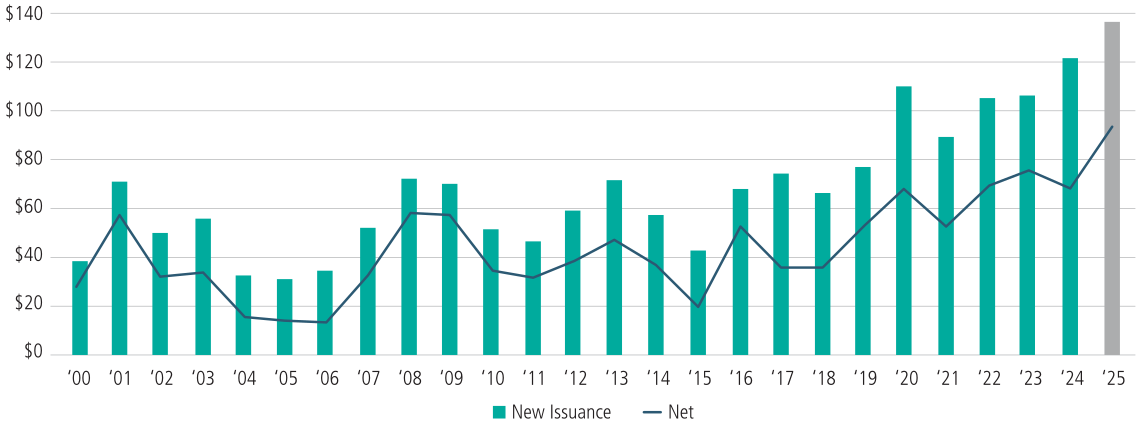
Source: Barclays, “High Grade Utilities 2025 Issuance Tracker,” October 2, 2025.
AI Puts More Pressure on an Already Stressed System
Artificial intelligence requires enormous computing capacity, which has led to the acceleration of data center construction across the U.S., including hotspots in the Upper Midwest, Mid-Atlantic states and Texas. This, in turn, has increased calls for reliable electricity generation that can handle intensive usage at all hours of the day. That said, while gaining new customers can be attractive in theory, the new demand comes at a time when many utilities have already been moving to modernize capacity due to climate initiatives while addressing the growing needs of the digital economy.
In 2000 – 2023, U.S. electricity demand grew at an annualized rate of less than 1%, as a growing emphasis on energy efficiency counterbalanced increased usage. However, substantial industrial investments, particularly in electrical equipment, led to a surge in consumption. This year, demand rose by an estimated 2% and could increase at a 3% rate over the next five years. Of the latter, roughly 20GW could come from the manufacturing sector and 20GW from general electrification. On top of that, data centers could require an additional 90GW (or 788 Twh) over this period.2 As of December 2024, the U.S. Department of Energy anticipated that data centers could move from consuming about 4.4% of total U.S. electricity in 2024 to approximately 6.7 – 12% by 2028 (see below).3
Data Centers Turbocharge U.S. Power Needs
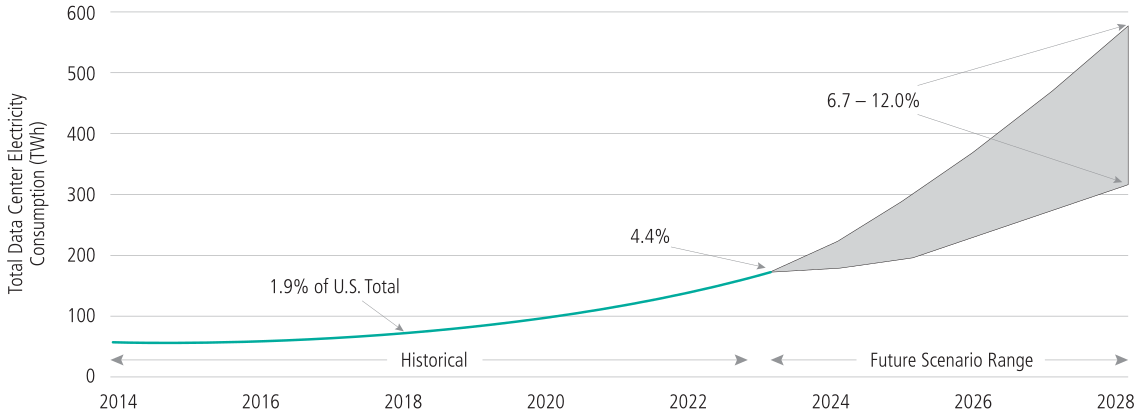
Source: U.S. Department of Energy, 2024 United States Data Center Energy Usage Report.
To meet the AI challenge, utilities have been increasing their capital expenditures significantly in recent years, with capex rising 17% year-over-year in 2025 and a projected 6% in 2026 (see below). Total capex spending over the next five years is estimated to equal that of the past decade.4
Utility Capex Could Continue to Climb
U.S. Investor-Owned Electric Utility Capital Expenditures
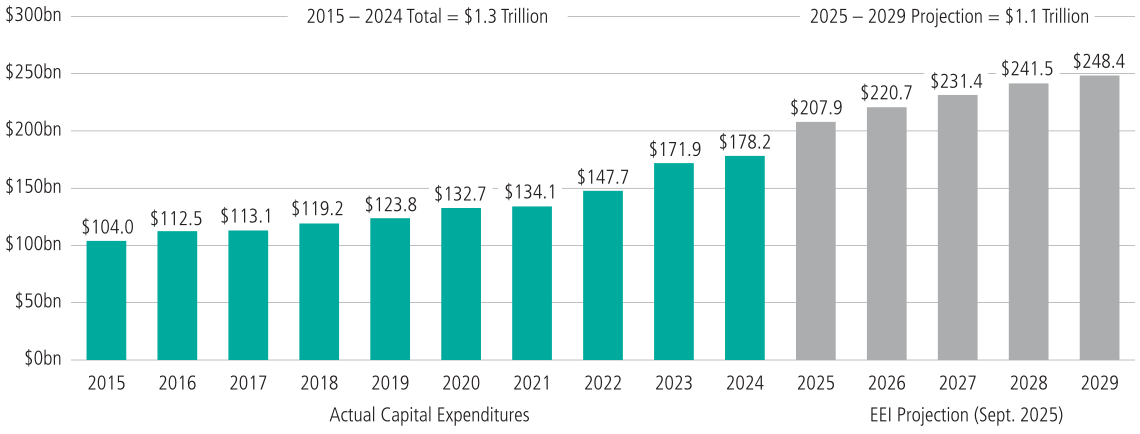
Source: EEI, as of September 2025.
Utilities Seem Prepared for New Issuance, Spending
Are utilities in a strong position to handle the new outlays and record issuance? In general, we think the answer is yes, with some caveats.
In the quest for modernization, the industry’s aggregate cash flow deficit grew from about $50 billion to consistently over $100 billion over the past 10 years, worsening the ratio of funds from operations (FFO) to debt. Today, Standard & Poor’s estimates that about 50% of the industry is managing with limited financial cushion (defined as less than 100 basis points of FFO to debt above the downgrade threshold).5
That said, credit metrics have recently appeared to stabilize as U.S. electric and gas utilities have about 115 rate cases pending with regulators, requesting revenue increases of more than $24 billion,6 and have more effectively taken advantage of both the hybrid debt and equity markets.
In terms of credit ratings, since 2005, the percent of U.S. investor-owned utilities rated BBB- or above has grown from 75% to 91% amid industry consolidation; and in 2024, the industry’s average parent company credit rating remained at BBB+ for the eleventh straight year.7
The Utility Sector Has Seen Improving Rating Quality
U.S. Investor-Owned Electric Utilities, Parent Company Credit Ratings
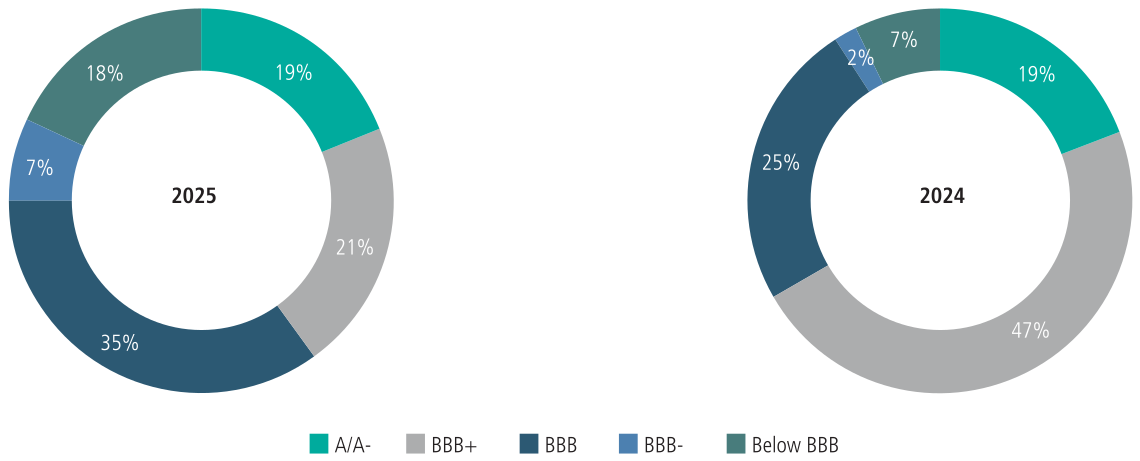
Source: EEI, as of July 2025.
Key Challenges
Despite the positives, utilities face a number of issues that could complicate matters as they seek to support the AI buildout:
Energy Sourcing: Looking to Natural Gas and Nuclear
As the footprint of artificial intelligence grows, a key challenge will be where data center operators and utilities can secure the energy they need. With the decline of coal as a primary energy source, many utilities expanded their use of natural gas, as well as renewables including solar and wind. The intermittent nature of the latter two, however, suggests that utilities will tend to emphasize natural gas in their construction projects, and where possible, nuclear power.
Unfortunately, elevated demand has created a multiyear backlog for purchasing gas turbines, while new nuclear power facilities may not be on the horizon for another decade. Some leading tech companies have reached deals to access exclusive nuclear energy sources. Constellation Energy is leading an effort to reopen Three Mile Island (now Crane Clean Energy) with Microsoft set to buy a significant portion of the plant’s output under a 20-year Power Purchase Agreement (PPA); and NextEra Energy is also working to recommission Iowa’s only nuclear plant, Duane Arnold, with Google agreeing to a 25-year PPA. However, similar nuclear opportunities are quite limited.
As AI data centers proliferate, this could lead to the possibility of an energy crunch that turns into higher prices. One way around such a scenario could be reduced red tape on new energy projects, an issue that the current presidential administration has been focused on; however, recently passed federal curbs on clean-energy tax credits could stifle the development of solar projects in the future.
Stranded Assets: What If You Build It, and They Don’t Come?
As part of their quest for power sources, tech companies have naturally been shopping around for sites with sufficient energy capacity. So, a concern for utilities is whether, if they expand their generation, these companies will actually open the data centers they contemplated; and if so, whether they will stay in place long enough for utilities to recoup their investment. Wariness of stranded assets is now front-and-center for utilities, which are looking for upfront payments, extended contracts of up to 20 years, minimum take-or-pay contracts and guarantees by developer parent companies.
Energy Affordability: Can New Loads Avoid Hurting Consumers?
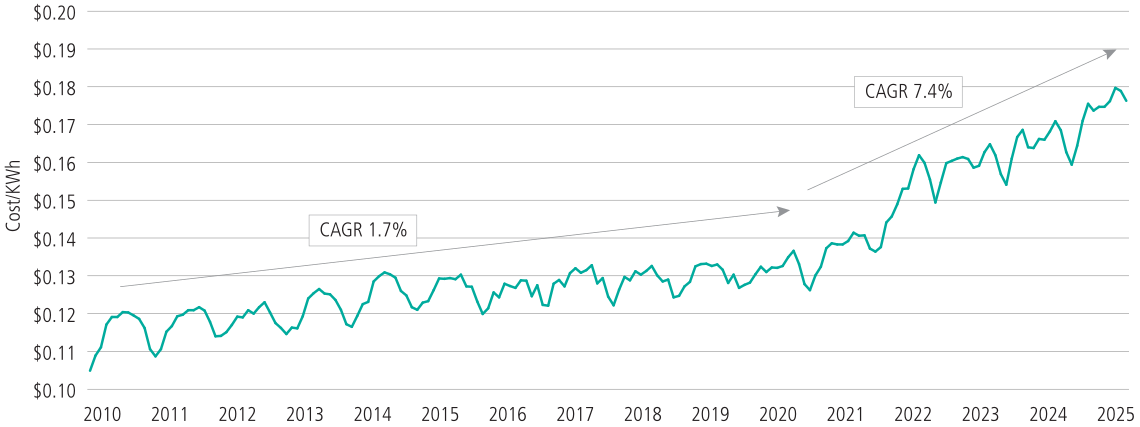
A central issue for regulated utilities is what the introduction of AI data centers to their service areas will do to energy affordability. From 2010 to 2020, residential electricity prices grew at an annual rate of just 1.7%. However, since the beginning of 2021, those prices have grown at over 7% per year.8 Commercial and Industrial prices have also seen significant growth.
Electricity Prices Have Been Accelerating
U.S. Average Residential Electricity Price
Source: Bloomberg, U.S. Department of Energy, as of November 5, 2025.
Electric prices vary locally due to fuel costs, regulation, subsidies and weather, and until recently were dampened by moderate increases in demand, energy-efficiency initiatives and low-cost natural gas prices. However, capital expenditures to support the level of generation required to feed data centers could affect electricity prices if not properly managed. Utilities and regulators are generally looking to avoid hurting existing customers with new large “load” agreements, while nonregulated independent power producers have no such constraints and, unlike regulated counterparts, will likely secure deals directly with data center companies on advantageous terms.
Regulated utilities are considering arrangements where the centers have their own dedicated infrastructure or “behind-the-meter” solutions. As seen in the recent New Jersey gubernatorial race, any increase in utility prices can quickly become an issue that utilities and state regulators want to avoid. Navigating the affordability issue could be crucial for utilities as they seek government approval of their plans and favorable disposition of rate requests by regulators, who will likely be highly cognizant of public attention to costs.
Laying the Groundwork for AI
U.S. utilities overall appear well prepared for the coming AI buildout. In our view, many companies are in sound financial shape, with the capacity to seek new financing over time. That said, energy constraints are real, as are the issues of potential stranded assets and affordability, the latter coming at time when many U.S. consumers feel economically strapped. Overall, we believe that investors in utility bonds will likely benefit from data center growth, but that selectivity will be crucial to avoiding the inevitable pitfalls that may arise amid the AI boom.
To read our series of insights related to this topic, How AI Is Reshaping Credit Markets, please click here.