



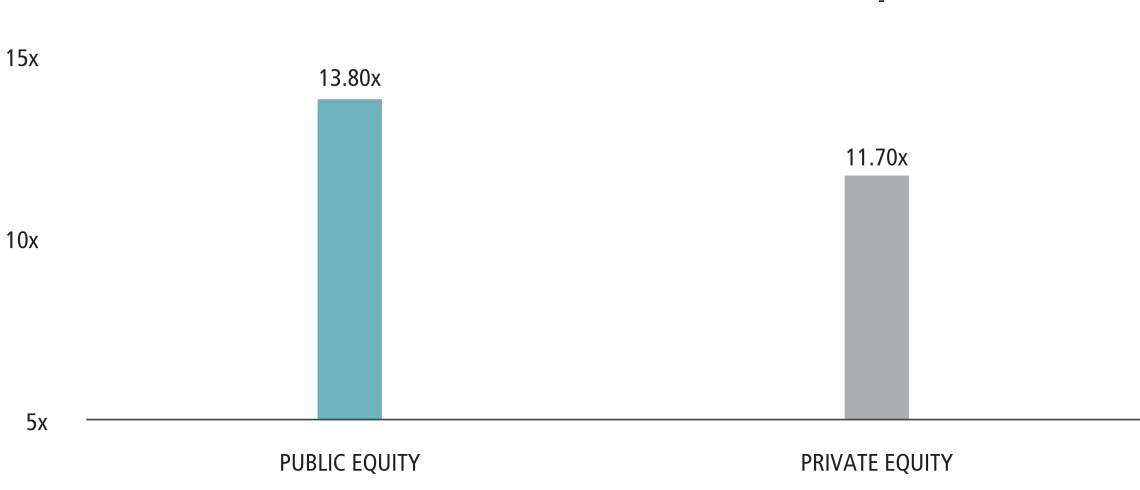
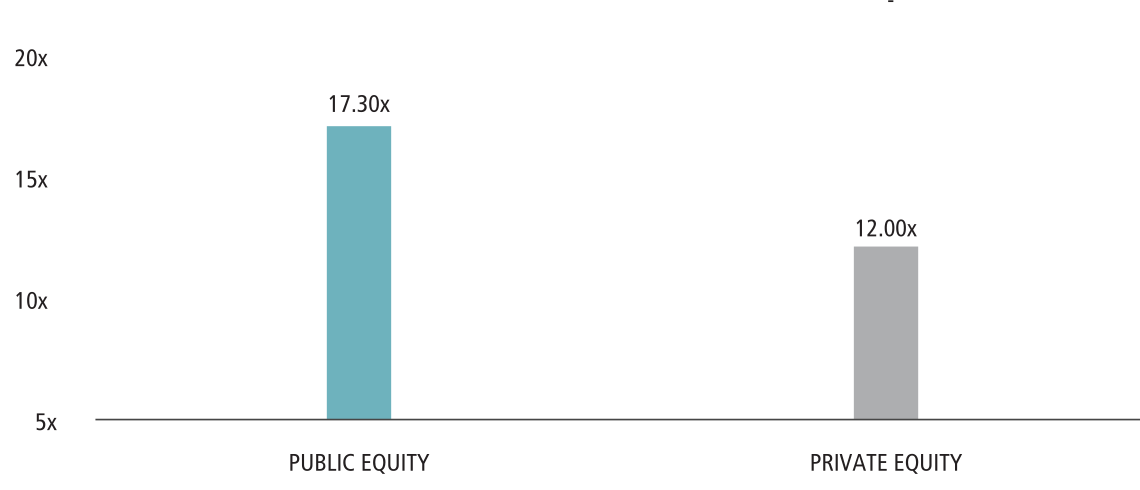
Year-to-date 2025, private deals are trading at a deeper discount to public markets, where concentration has increased and the ‘Magnificent Seven’ now represent a significantly larger share of the S&P 500 than historically.
We believe the modest uptick in recent private deal pricing reflects a higher‑quality mix rather than broad multiple expansion, as investors have become more realistic about the environment. Discipline has increased.
Source: Pitchbook and S&P Capital IQ as of 2025 Q3. U.S. public multiples are based on the S&P 500 Index. U.S. private multiples are based on the median. For illustrative and discussion purposes only. Nothing herein constitutes a prediction or projection of future events or future market behavior. Due to a variety of factors, actual events or market behavior may differ significantly from any views expressed or any historical results. Indexes are unmanaged and are not available for direct investment. Investing entails risks, including possible loss of principal. Based on NB Private Markets market observations and analysis as of the date herein. Such views and opinions are subject to change and there is no guarantee that any will prove to be accurate or that industry experts would agree. These views may not reflect the views of Neuberger Berman as a whole.
Year to date, private markets have exhibited notable pricing dynamics, with private deals continuing to trade at a deeper discount relative to public markets. Public market concentration has intensified, with the ‘Magnificent Seven’ now accounting for a significantly larger share of the S&P 500 than historical norms. Active selection and disciplined underwriting have become increasingly important as investors navigate this environment.
- Deal quality: We believe that the modest uptick in private deal pricing is driven by a higher‑quality mix rather than broad-based multiple expansion. GPs are prioritizing resilient businesses and realistic growth assumptions, reflecting a more pragmatic approach to valuation. Discipline in underwriting has strengthened, favoring companies with robust fundamentals and clear value creation plans.
- Valuation trends: Discounts to public comparables remain pronounced, underscoring the relative attractiveness of private opportunities for long-term investors. While headline multiples have stabilized, dispersion persists across sectors and strategies, with premium pricing reserved for top-tier assets and sponsors demonstrating operational excellence.
- Liquidity and concentration: The concentration risk in public markets—amplified by the dominance of mega-cap technology—has reinforced the appeal of private markets for diversification. However, liquidity constraints and extended holding periods require careful portfolio construction and pacing.
In summary, the backdrop favors disciplined deployment into high-quality private assets, with select opportunities offering compelling relative value. Active management of deal sourcing, underwriting standards, and sector exposures remains critical to mitigate tail risks and capture differentiated returns.