



Another year, another stellar return for stocks. Three straight years of double-digit U.S. equity gains have many investors feeling either exuberant or edgy, and when looking through the data, one can find evidence to support both postures. The U.S. labor market is soft, and company surveys show little evidence of an intent to boost hiring. Fiscal measures have tilted most global economies toward wider budget deficits, and post-COVID inflation has compounded, resulting in much higher costs for goods and services consumed by both the private and public sectors. Geopolitical tensions are on the rise, as broader conflicts in Ukraine and the Middle East continue, while new ones such as U.S. involvement in Venezuela point to the instability that often lies beneath the surface of an increasingly multipolar world.
Can Equities’ Winning Streak Continue?
Annualized Total Return
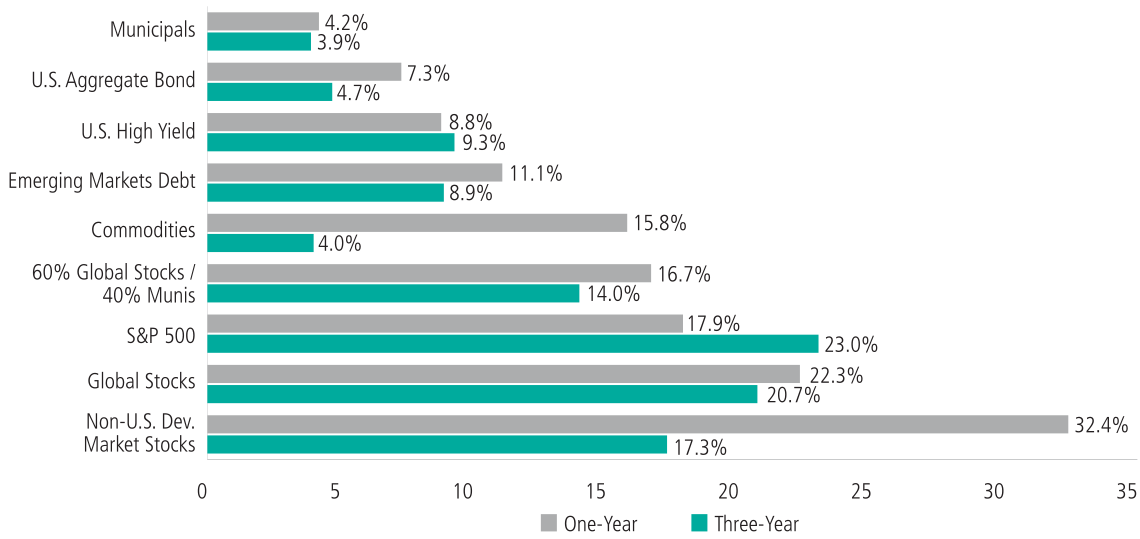
Source: Bloomberg, through December 31, 2025. The following indices are represented: S&P 500, MSCI ACWI (global stocks), Bloomberg Municipal Bond Index, Bloomberg U.S. High Yield 2% Issuer Cap, Bloomberg EM USD Aggregate, Bloomberg U.S. Aggregate, MSCI Emerging Markets, MSCI ACWI ex-U.S. (international large and midcap stocks), Bloomberg Commodity. Nothing herein constitutes a prediction or projection of future events or future market behavior. Historical trends do not imply, forecast or guarantee future results. Due to a variety of factors, actual events or market behavior may differ significantly from any views expressed. Past performance is not indicative of future results.
Yet, our view is optimistic—and we believe realistic. Evidence of slowing global inflation supports the case for neutral to accommodative monetary policy outside of Japan, where one could argue that stronger growth and inflation are more than welcome. Productivity is on the rise, and while representing a potential headwind for employment, will likely help boost GDP as artificial intelligence-related efficiencies materialize. Reportedly anxious U.S. consumers navigated the holiday season with their usual aplomb and now can look forward to tax season, which will yield a higher refund for many. Companies around the world may not be planning to hire, but they are signaling that capital expenditures could pick up in 2026, which should have positive implications for growth, wages and, yes, eventual hiring.
But in our view, investors may wish to consider adjusting their approach. Earnings growth is likely to broaden out, and the leaders of the last three years may not be the relative winners of tomorrow—even as they could participate in a continued move higher in equity prices. It appears that the valuations afforded first movers in AI are at risk as innovation moves quickly; and successful adoption by companies outside of technology will likely require a prescriptive and disciplined approach to spending on a solution that helps drive growth of their businesses over time. Credit and duration dynamics, too, are shifting, as interest rates stabilize, growth rates diverge and issuer strength proves critical as credit quality comes into question amid higher debt loads. Public markets have reigned supreme, but longer term, private market opportunities have historically outperformed—particularly following periods of muted interest rates and returns. Asset allocation decisions drive longer-term returns, and in our view, this year will be one in which they could be increasingly important.
Scanning the Horizon for Opportunity
The strong returns generated by U.S. equities over the past three years have benefited many U.S. investors, particularly given the sizable allocations to U.S. exposures compounded by years of meaningful outperformance. However, we see shifts in the policy and economic landscape that could translate into stronger performance for non-U.S. assets in 2026, justifying further diversification efforts.
Within equities, the argument for broadening has shifted from focusing on small and midcap stocks in the U.S. to one that contemplates economic momentum lifting earnings globally in 2026. The concerns about valuation and concentration in U.S. large caps remain, but with the Magnificent 7 stocks1 diverging and the benefits of AI implementation likely to accrete to a broader swath of sectors and industries in 2026, the foundation for wider performance participation, if perhaps at lower absolute levels of earnings growth than those achieved by large cap tech, appears to be in place. While we remain constructive on U.S. small and midcap stocks, given this boost, we are increasingly interested in how both AI momentum and the ripple effects of accommodative monetary and fiscal policy could support non-U.S. equities. Specifically, we are more constructive on emerging market equities, given not only what we consider an attractive price point, but also the more cyclical exposure reflected in these underlying markets. Combining U.S. small and midcaps, developed non-U.S. and emerging market stocks to complement appreciated U.S. large-cap exposures could be, in our view, an effective way to benefit from broad global momentum.
Within fixed income, the solid performance of U.S. bonds in 2025 reflected a move lower in yields as fiscal sustainability concerns and market volatility subsided following the passage of the One Big Beautiful Bill Act and the muted (or perhaps delayed) economic fallout of U.S. tariffs. Credit spreads, too, have remained quite narrow, even against the backdrop of higher debt issuance; those spreads, however, represent risk to U.S. investment grade and high yield credit performance in the coming year. As such, we believe the first half of 2026 is likely to deliver closer to coupon returns in U.S. fixed income, save perhaps for municipals, which we believe still provide value versus Treasuries. However, the shifting dynamics of a weaker U.S. dollar, stronger euro and more stable interest rate environment versus the U.S.—in which the Fed could move rates slightly lower, or much lower depending on political influence—point to opportunities in developed market sovereign debt, namely, German, Japanese and U.K. debt. In addition, with emerging markets reflecting strong current accounts and reasonable debt ratios, the opportunity exists to take advantage of higher coupons without meaningfully increasing the default risk of an overall portfolio. Adding these satellite exposures to a diversified U.S. fixed income portfolio could add yield and total return prospects should our expectations bear out.
Municipal Bond Valuations Remain Appealing
Municipal Bond Taxable Equivalent Yield vs. U.S. Aggregate Bond Yield
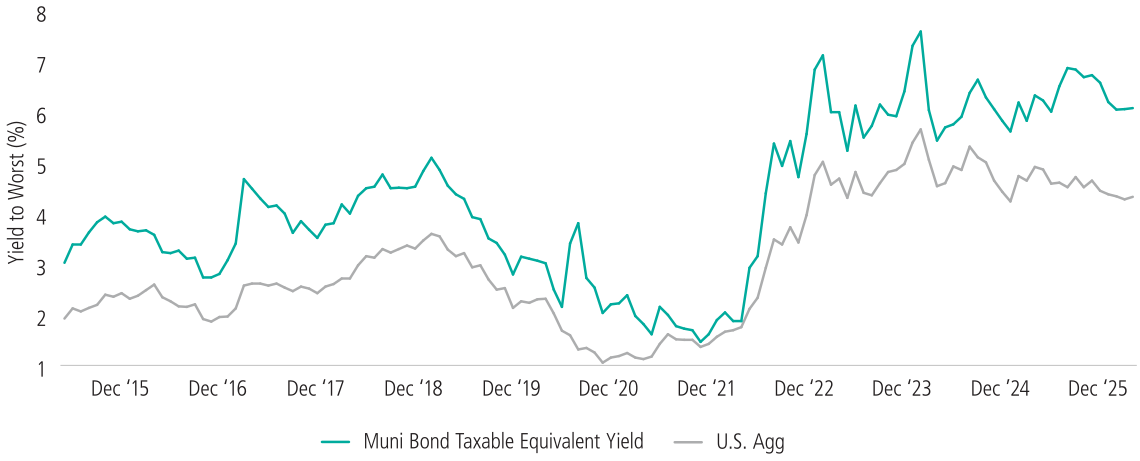
Source: Bloomberg, as of December 31, 2025. Assumes 40.8% federal tax rate.
Setting the Pace in Private Markets
Even in a year of strong absolute returns, some predictions will inevitably go unfulfilled. Going into 2025, we believed that a slew of pro-business measures combined with a large backlog of deals would mean a sharp increase in mergers and acquisitions, resulting in a higher pace of distributions and a firmer fundraising environment, but a sharp drop in business confidence and ongoing tariff uncertainty proved to be a hindrance. Even with the passage of the One Big Beautiful Bill Act over the summer, private company exits remained below the pace we had anticipated. Instead, private companies continued to seek liquidity within their own ecosystem, whether through secondary or co-investment transactions on the equity side of the ledger, or via debt provided by private credit lenders, as they waited for further improvement in the environment.
It was not just concerns about slower exits that dampened enthusiasm. Anxiety stemming from increased capital expenditure in the technology sector—glaringly evident in public company announcements—spilled over to private companies as investors became fearful of the significant growth of private credit as a source of ongoing funding. While investors are becoming wary of higher debt issuance and lower coverage ratios for AI-adjacent growth companies, more pressing concerns in other sectors have recently demanded attention. As the industry at large faced two high-profile defaults related to auto financing, the current period is creating some comparisons to the subprime mortgage crisis of 2008 in terms of the opacity of the loans and their underlying collateral and terms. Private credit providers are facing questions about the quality of the collateral and the covenants associated with their loans, and those questions are likely to persist into 2026 as capital continues to flow into a space that has yet to weather a period of meaningful defaults.
Encouragingly, M&A announcements ticked higher in the fourth quarter of 2025, and we expect that trend to continue. The backlog mentioned above is still significant, and the need for general partners to distribute capital back to their limited partners remains an integral part of the life cycle of private equity investing. As companies outside of the technology sector integrate and implement AI into their businesses, AI enablers may look to tuck in companies with more specialized offerings, thus allowing further differentiation among enterprise partners to meet the needs of this newer set of AI consumers. As for private credit, we acknowledge the concerns, but believe that the fundamentals of credit investing apply as much to this universe as public credit markets—implying that disciplined underwriting and diversification are essential. Spreads, too, remain more attractive than those in the public credit markets, despite some compression over the last 18 months, from our perspective, thereby justifying the higher risk.
Mergers and Acquisitions Have Been on the Upswing
3-Month Cumulative M&A Announced Transactions ($Bn)
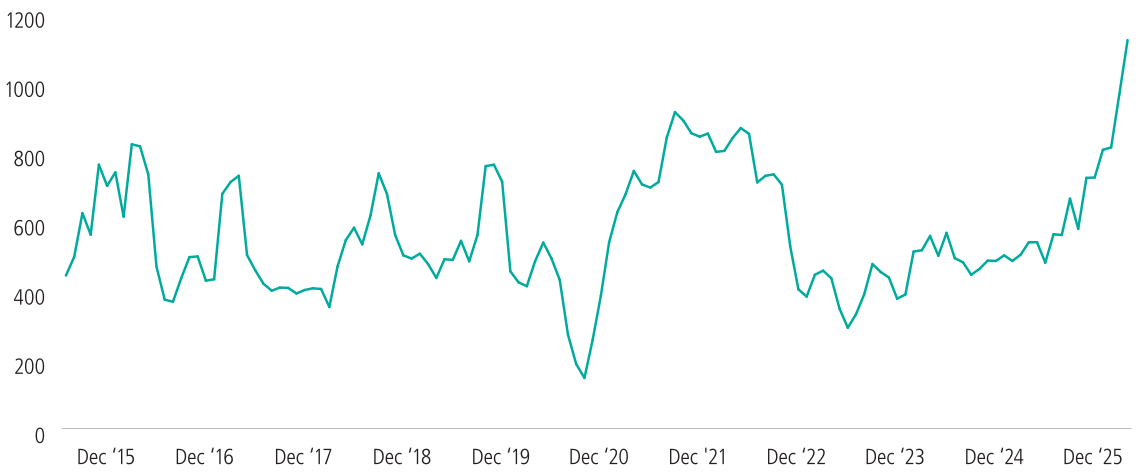
Source: Bloomberg, as of December 2025.
Overall, we believe that macroeconomic and policy tailwinds will quicken the pace of transactions this year, which should also translate to stronger fundraising activity in the second half of the year for experienced general partners with strong, long-term relative performance. As distributions pick up, vintage-year investors could gain greater confidence in allocating to new commitments, thus enabling the continued investment in innovative businesses at all stages in their life cycle.
Taking a New Tack
Consistency is typically a virtue for investors, but can become a bit dangerous if it turns into complacency. The past few years have been rewarding for U.S. equities, particularly when it comes to the large-cap leaders of the AI surge. However, the dynamics of this new technology appear to change every quarter or so, and with them the perceived prospects of a slew of names across the corporate landscape. Meanwhile valuations of U.S. indices are straining norms, even if they often appear somewhat justified by healthy earning gains.
To us, a key solution is to be mindful of current asset allocations, and if needed adjust them to align with long-term goals. Equally important, we believe investors should be open to segments that have often been brushed aside in the rush to capture large-cap U.S. index returns, whether select non-U.S. stocks, global credit or the bespoke opportunities found in private markets. This is not to recommend a turnabout in direction, but a subtle course change to find opportunities where they are most likely to appear.