






With hindsight, the last three years generally rewarded straightforward fixed income positioning: hold duration, be overweight credit and benefit as yields fall from post‑pandemic highs. However, we believe that the “easy beta” phase of market dynamics may be behind us. Policy rates are closer to neutral, credit spreads are relatively tight, and macro and political risks are more varied across regions than they have been for some time.
Historically, many investors were not penalized for taking a more domestic approach, given the broad sweep of economic and policy trends, producing generally high correlations across fixed income markets. However, with correlations starting to ease, we believe a key question is whether investors should consider strategically blending domestic and global exposures—and whether now could be tactically the right time to do so.
We explore the issues in this article.
Global Exposure: More to Choose From
At a basic level, the varied characteristics and sheer volume of issuers across global markets provide broader opportunities to diversify beta and increase the alpha opportunities over those available in one’s home market.
An Opportunity Set That Maximizes Flexibility
Global Aggregate Index Provides Example of the Broad Characteristics Available
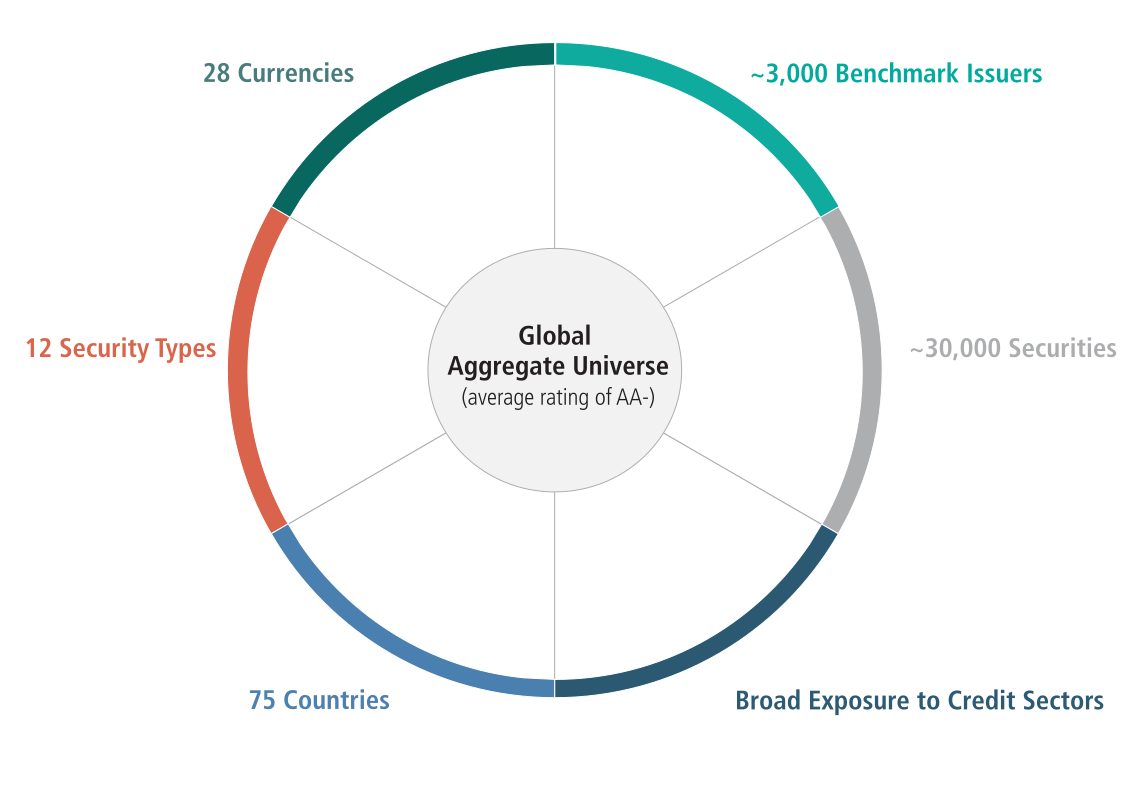
Source: Neuberger, Bloomberg, as of December 31, 2025.
Building on Existing Exposures
Global portfolios represent an opportunity to expand on current exposures, changing their proportion as part of the diversification process. Importantly, close to half of the Global Aggregate Index is devoted to U.S. fixed income securities—so for many U.S. dollar-based (or U.S. overweighted) investors, this can be viewed a moderate shift in direction, not a wholesale change, depending on investor needs.
Global Bonds Represent a Moderate Reset for Domestic Portfolios
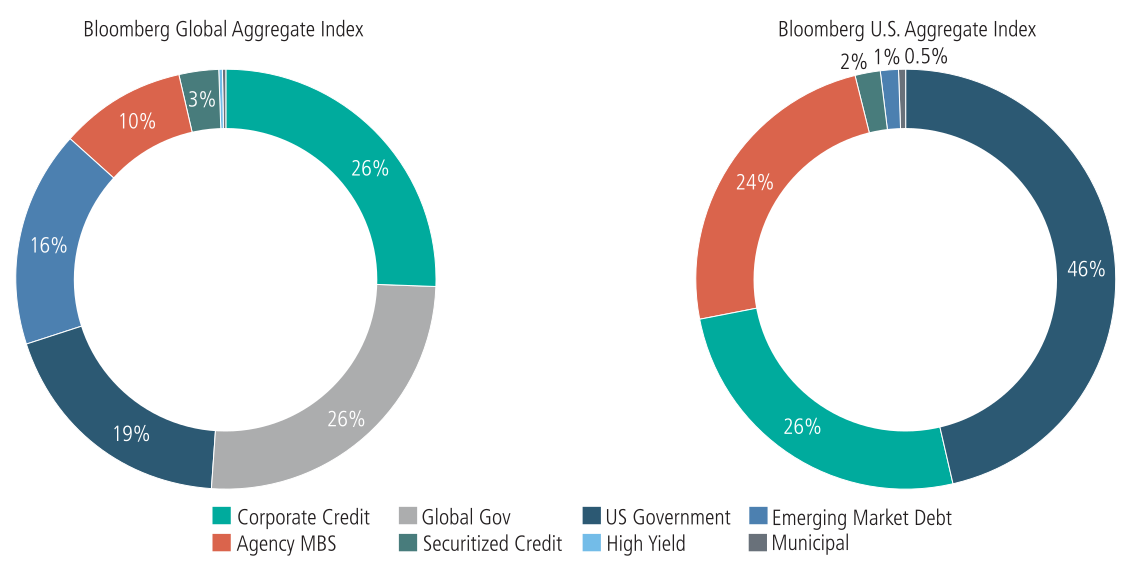
Source: Bloomberg, as of January 31, 2026.
Setting a Multipronged Strategy on Rates
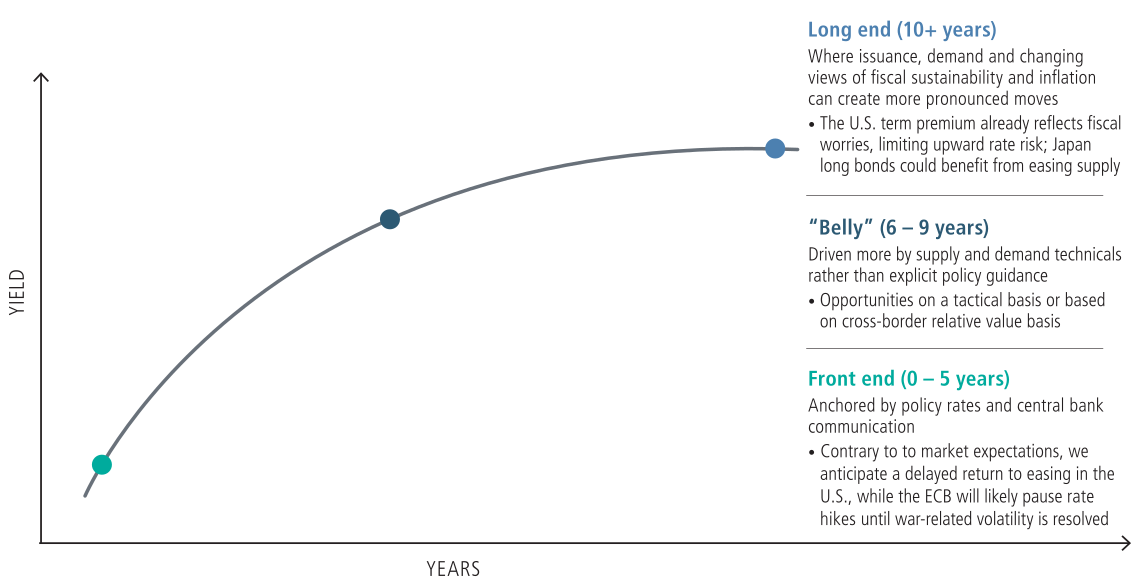
Widening the opportunity set to a broader selection of markets and term structures allows for exploiting the distinct characteristics and opportunities across global markets. Absolute and relative allocations across different countries and maturities increase the opportunity for income and alpha generation.
Varied Characteristics Across the Yield Curve
Source: Neuberger.
To bring some of these differences to life, consider that shifting policy, inflation and growth trends may offer new, differentiated opportunity sets across markets rates. In the U.S., although markets now see a possible rate hike this year tied to energy prices, we think a potentially softer economy and weak labor market could eventually lead to further cuts; meanwhile, long Treasury yields largely reflect current concerns about debt sustainability, likely limiting duration risk. In Europe, sluggish growth and confidence, combined with volatility tied to the Middle East conflict, could keep policy rates at current levels, despite market expectations for increases; shifts in the growth and debt profiles across Europe support increased relative‑value trades. Japan has moved away from ultra‑easy policy, and the yield curve has steepened sharply. Given potentially reduced long‑end supply and appealing hedged yields, opportunity may exist at the back end of the Japanese curve.
Worries over higher inflation tied to energy prices could change many of these dynamics. However, the unifying principal remains simple: Policy, growth and term‑structure dynamics look very different across borders, potentially benefiting a global approach.
As shown in the display below, we are already moving from an era of generally synchronized monetary policy to one where meaningful divergences are occurring.
Going Their Own Way on Rates
Central Bank Market Expectations: Interest Rate Futures Priced Through 2027
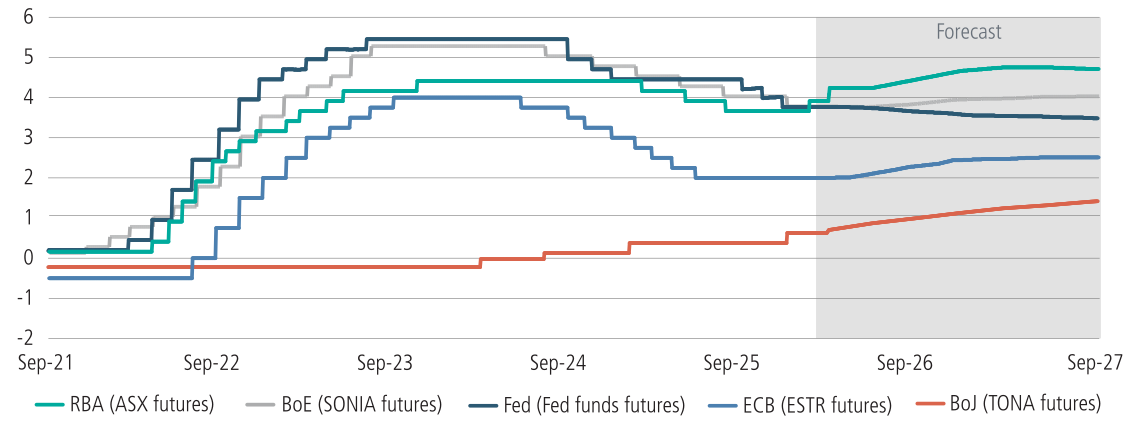
Source: Bloomberg, MacroBond, as of March 13, 2026.
Building Out FX Positioning
Utilizing currency exposure is not about selling the dollar, but about expanding one’s opportunity set. Global indices naturally contain multiple currencies, which can provide several advantages to investors. Some may seek new exposures to enhance diversification and maintain purchasing power of their base currency, while others may wish to neutralize FX exposures by hedging to that base currency; depending on its nature (for example, whether procyclical or defensive), the optimal hedge ratio may vary across investors and investment types.
Global fixed income managers commonly employ currencies to either improve returns or hedge risks, often in two ways: First, buying fixed income securities without a hedge to the benchmark, so that the strategy benefits when the currency appreciates; or second, through investments in the currency market that are agnostic to the underlying fixed income holdings (so-called currency overlays). In both cases, as currency investments are inherently relative value plays (you need to sell one currency to buy another), they have the potential to generate returns while maintaining a low correlation over time to the strategy’s fixed income investments.
Capitalizing on Credit Breadth
Across developed markets, credit spreads are tight, albeit with some recent widening. That is not necessarily a reason to avoid credit altogether, but it does mean there is less margin for error. In a “K‑shaped” environment, where parts of the economy and corporate sector are performing well while others are under strain, relative return may emerge largely from avoiding credit-related losses rather than from “clipping” spread.
Broadening out credit exposure by geography can help in achieving greater alpha opportunity, simply by expanding the universe of dissimilar companies available for investment (see display). Europe’s corporate universe, for example, has less technology exposure than the U.S. (3% vs. 10%), including to AI, which could be a diversifier if the AI story experiences a setback in the U.S. That said, some non‑U.S. issuers are leveraged to the AI buildout through infrastructure, semiconductors and other enablers, offering a balanced mix of providers, facilitators and adopters.
Distinct Credit Makeup Enhances Opportunity
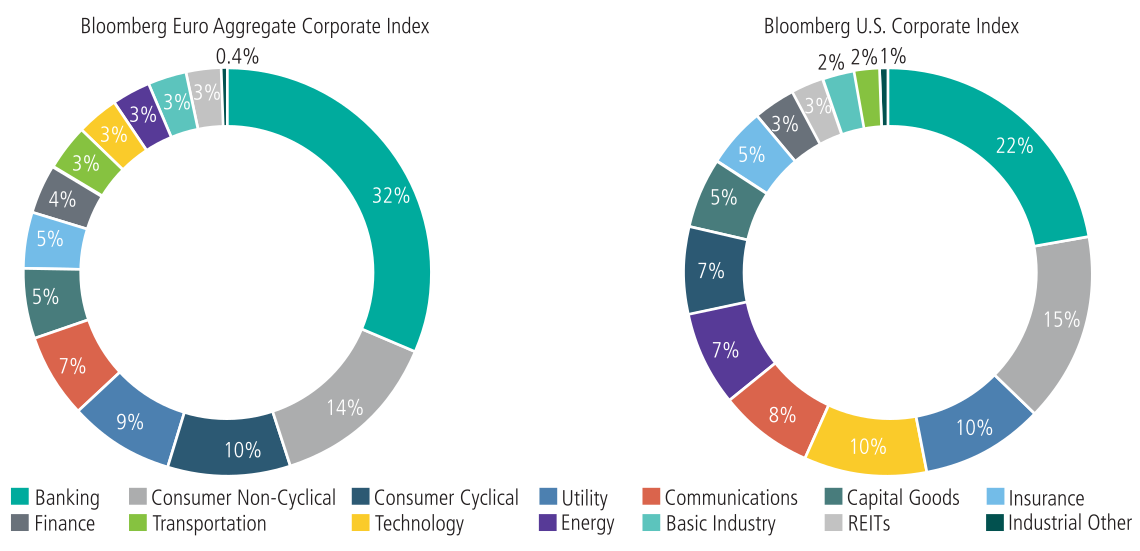
Source: Bloomberg, as of January 31, 2026.
Implementation Steps
Global fixed income can be incorporated into portfolios in multiple ways. One obvious option is simply to replace existing domestic-focused assets with global exposures, whether benchmarking the Global Aggregate or Global Credit indices. Another, sometimes more practical, alternative is to introduce a global element as part of core fixed income holdings—whether through replacement of some assets or directing new flows to global portfolios. A third, but perhaps less compelling, choice is to use global holdings as a sleeve of a broader fixed income portfolio. Regardless, the aim is to diversify risks beyond a single market, express duration views that reflect differing policy paths and gain access to a broader spectrum of high‑quality credit without changing the overall quality profile of the portfolio.
For investment grade mandates, core global bond allocations can add to investment flexibility, enabling modest dynamic exposures to high yield and securitized assets. This, in turn, can augment income and provide more levers to express views on structural themes (e.g., artificial intelligence, the energy transition or infrastructure) through carefully selected credits, and add scope to enhance alpha through both top‑down allocation and bottom‑up security selection.
Emerging market allocations can be handled through integration or a separate portfolio sleeve. With the latter, emerging markets debt strategies can reflect structurally different fundamentals based on a distinct investment framework. However, when included with developed markets within a global core portfolio, they can provide a powerful complement to those other holdings.
Why Now?
The world continues to change significantly from the unified trends of ultra-low rates during the COVID pandemic, monetary tightening in the wake of excess stimulus and the initial stages of the current easing cycle. Geopolitical events, most notably the conflict in the Middle East, are heightening market volatility, while political and trade dynamics are contributing to widening differences in fixed income fundamentals and sentiment across markets, amplified to varying degrees by fiscal dynamics. Ten years ago, not many would have expected peripheral European nations to gain traction relative to the core stalwarts of the past. And yet, here we are.
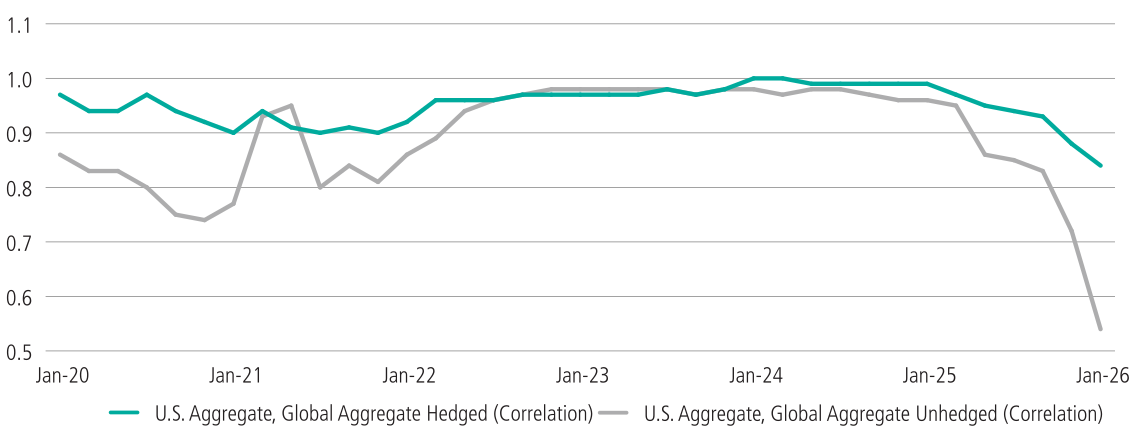
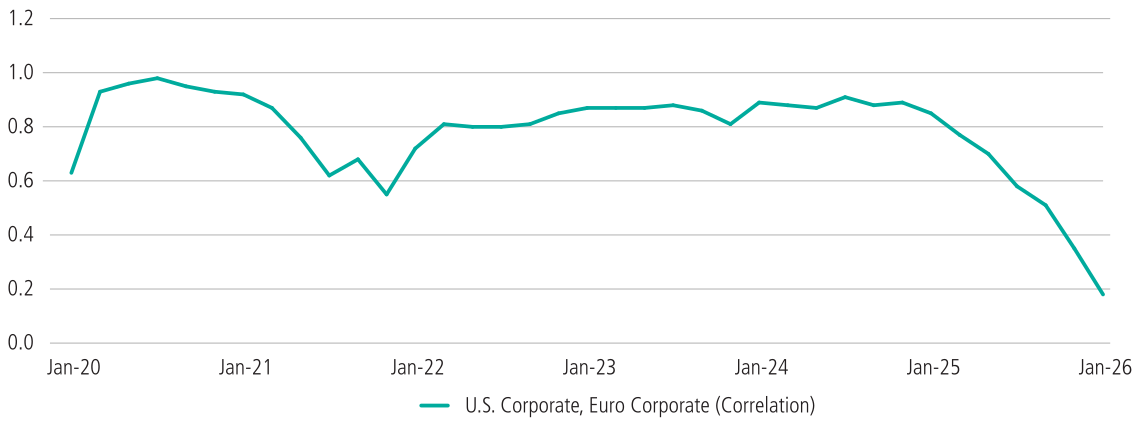
If anything reflects the broad sweep of change affecting global fixed income markets, it would be the declining correlations among assets—whether in Aggregate or Credit benchmarks (see below).
Correlations Say It All
Correlation of U.S. Aggregate and Global Aggregate – Rolling 1 Year
Correlation of U.S. and Euro Credit – Rolling 1 Year
Source: Bloomberg, data as of January 2026.
In our view, global fixed income offers a timely way to diversify core bond holdings by making portfolios less dependent on a single macro or currency regime, allowing duration and yield curve views to be expressed across markets and providing additional room for security selection when relative value opportunities are less frequent and the risk of error has been elevated.
Importantly, we believe an integrated, active approach to portfolio management can be highly effective in capitalizing on the varied dynamics associated with global bond markets. Leveraging capabilities across yield curves, currency and credit markets, as well as region-specific expertise, requires deep resources and organizational breadth, making the choice of manager especially important in the global context.
Overall, we see expansion of global exposures as a point of emphasis rather than a wholesale shift out of current weightings. Either way, we believe that current market dynamics reinforce that this could be an opportune time to assess portfolios, diversify income and take advantage of the return opportunities from a global opportunity set.