
Asset Allocation Committee Outlook
—-Jeffrey Blazek, Co-Chief Investment Officer, Multi-Asset
—-Maya Bhandari, Chief Investment Officer, EMEA—Multi-Asset
The AAC continues to see opportunities in growth and risk assets over the medium term, even as elevated risk and increasingly divergent monetary, fiscal and industrial policy paths make the investment landscape more complex. Stronger anticipated economic growth, a broad monetary easing bias and robust corporate earnings underpin our constructive view, encouraging a selective increase in risk-taking across asset classes and markets. This includes a more bullish cross-asset stance on emerging markets—led by an upgrade of EM equities to overweight—and on non-U.S. developed market fixed income, particularly in Europe and Japan. At the same time, the Committee continues to favor commodities, private markets and, increasingly, absolute return strategies as effective ways to capitalize on and hedge risks and potential value dislocations stemming from geopolitical turbulence and diverging policy regimes.
Key Observations:
- Dispersion dominates: With policies, growth and valuations increasingly diverging across markets, outcomes hinge on more precise risk selection versus broad market exposure.
- Equity expansion: The story continues to shift from U.S. mega-caps toward small/mid caps, emerging markets and regional rotation.
- Global fixed income: Best opportunities sit in non U.S. duration and emerging markets, complementing selective U.S. credit.
- Core alternatives: Commodities, private markets and absolute return strategies are playing an increasingly central role in driving returns and providing downside protection.
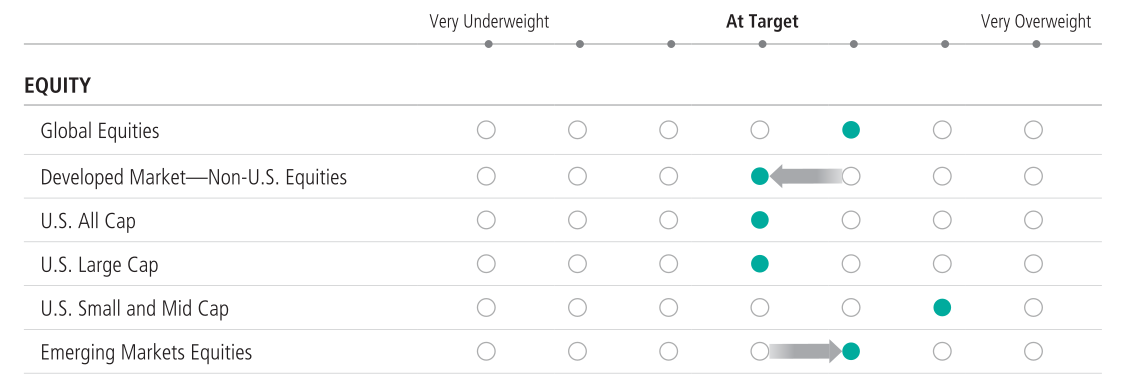
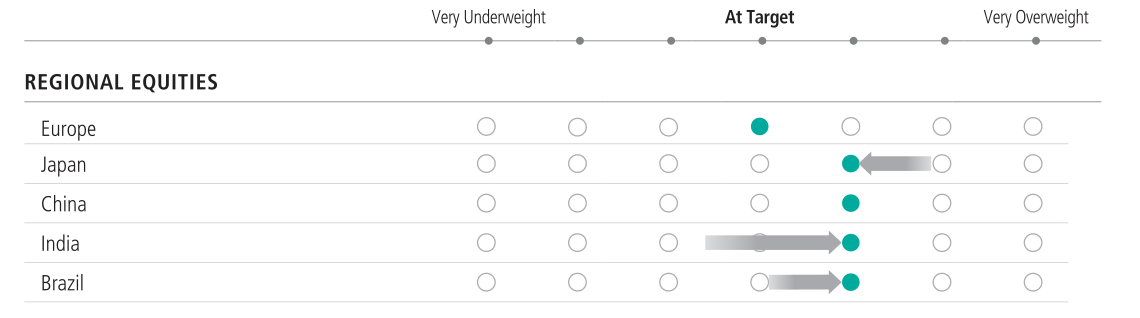
After a volatile yet strong year, the Committee believes the backdrop still favors stocks: earnings growth is robust, global activity is firming and most central banks are shifting—albeit unevenly—into easing mode. That combination helps explain why sizable geopolitical shocks, most recently related to Venezuela, have so far failed to break the uptrend. Within this context, we have become more constructive on emerging markets, where we see scope for cyclical catch up and a broader rerating. India stands out, with improved valuations relative to recent history, improving macro momentum and the prospect of continued foreign inflows. Brazil offers a different but complementary path, supported by monetary easing, commodity demand and more compelling valuation support. These changes sit alongside a still positive stance on U.S., European and Japanese equities, though we are tempering expectations for developed ex-U.S. markets given how far valuations have already recovered. In the U.S., in particular, we expect leadership to continue to broaden beyond mega-caps, with small- and mid-cap stocks better placed to participate as the cycle matures.
Key Positional Changes vs. 4Q 2025
- The AAC remains broadly positive on equities, maintaining at target in U.S. all caps and an overweight in global stocks while upgrading emerging markets—led by India and Brazil—to overweight.
- While constructive on non-U.S. developed markets, particularly Europe and Japan, the Committee has downgraded its view to at target, and altered its posture on Japan to a moderate overweight.
- The upgrade to emerging market equities largely reflects India’s elevation to overweight from underweight and Brazil’s move to overweight from at target.
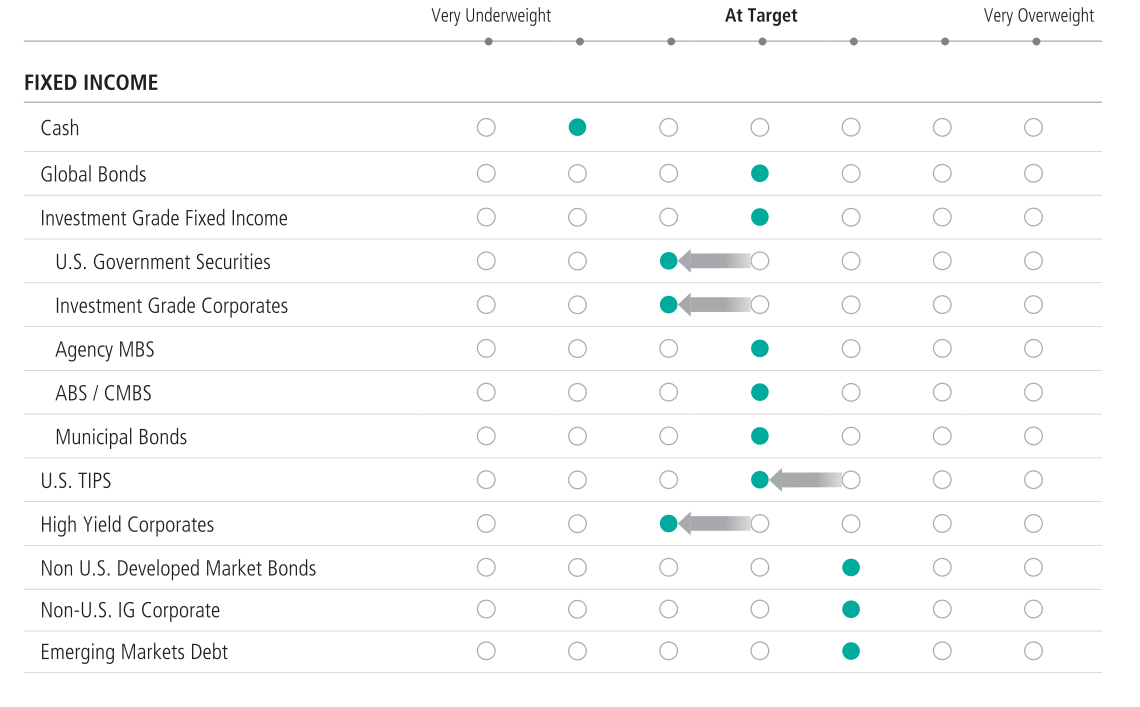
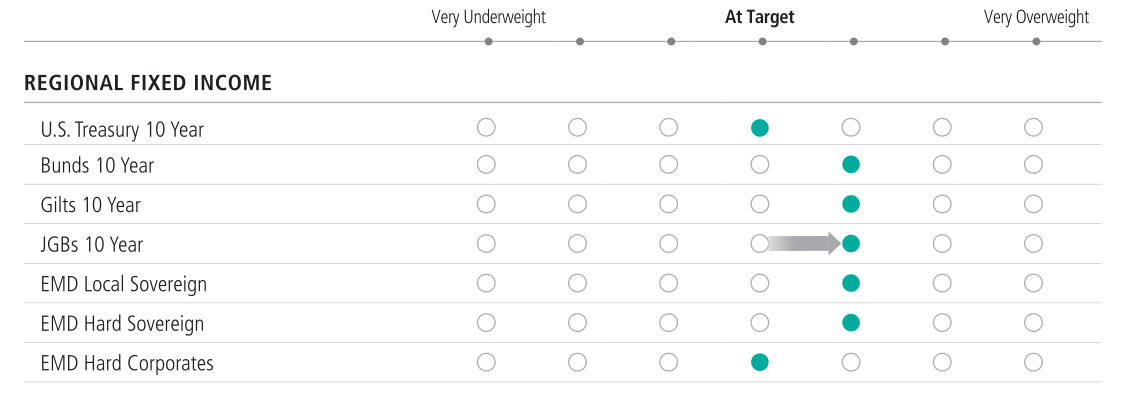
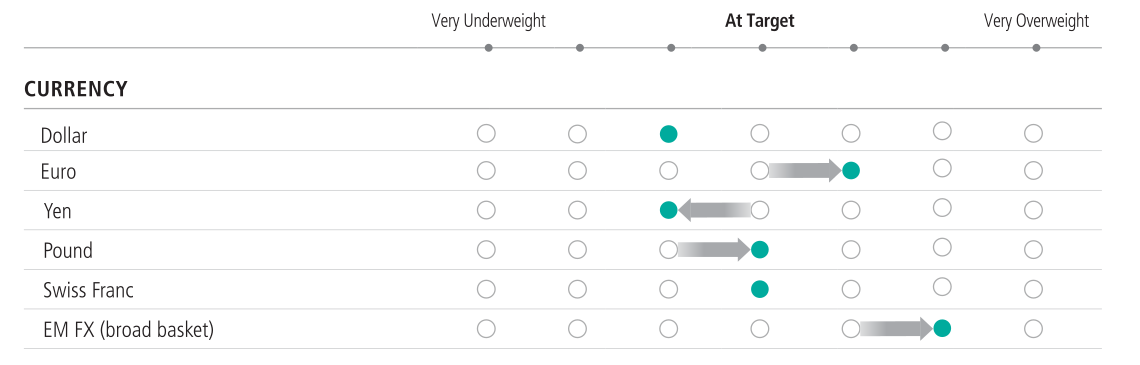
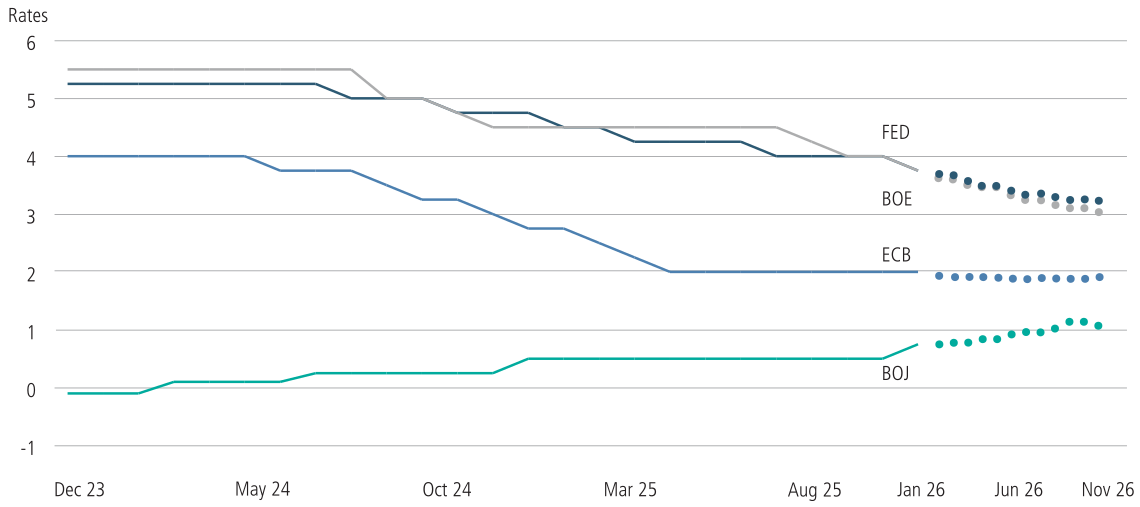
A more fractured macro landscape is creating opportunities beyond the U.S. for fixed income returns and diversification. With the U.S. Federal Reserve’s cutting cycle already well priced, and 2025 having delivered strong returns in Treasuries and U.S. credit, we see less compensation for taking additional U.S. duration and spread risk from here. At the same time, policy paths and inflation trends are diverging: markets still price relatively hawkish paths for the European Central Bank and Bank of England even as disinflation gains traction, while Japan’s gradual shift away from ultra-easy policy has pushed Japanese government bond yields to levels that look compelling once hedged back into dollars or euros. This divergence has opened up more attractive risk premia in non-U.S. sovereigns and high-quality credit, particularly in Europe and Japan, as well as in emerging market debt, where local- and hard-currency bonds still offer a meaningful pickup over developed markets. Our posture in currencies reinforces this tilt: upgrades to the euro, sterling and a broad basket of emerging market currencies, and a more cautious view on the yen, align portfolio exposure with a more differentiated, multipolar macro and policy regime.
Key Positional Changes vs. 4Q 2025
- The AAC has downgraded its view on U.S. government securities, investment grade corporate credit and high yield to underweight from at target. U.S. TIPS have also been downgraded to neutral from overweight. Municipal bonds remain at target.
- The Committee maintains its overweight position on non-U.S. developed market bonds, including 10-year German Bunds, U.K. Gilts and Japan government bonds (JGBs), which have been upgraded to overweight from at target. An overweight is also held on emerging market sovereign bonds in hard and local currencies.
- Allocations on multiple currencies have been adjusted, comprising an upgrading of the euro to overweight (from at target), sterling to at target (from underweight), and emerging markets foreign currencies (broad basket) deeper into overweight. The yen, in contrast, has been downgraded to underweight (from at target).
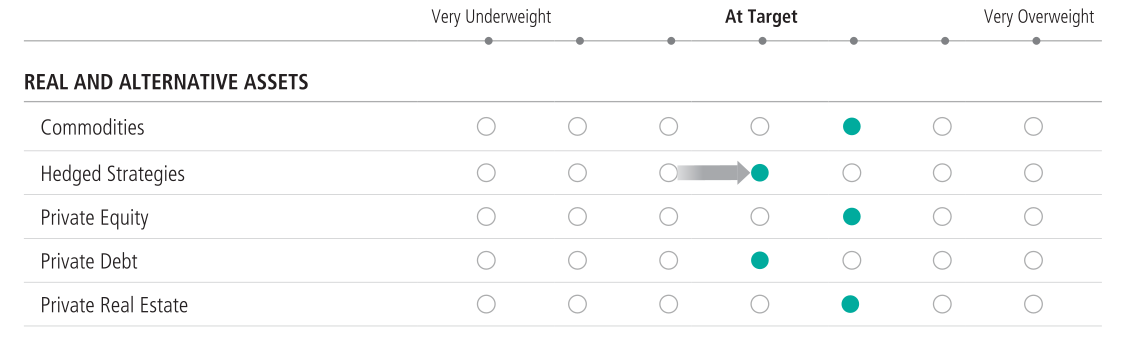
In a world where fiscal policy is more active, monetary paths are diverging and shocks are arriving from multiple directions, the Committee sees real and alternative assets as central to building resilience. Overweights in commodities, private equity and private real estate are intended to tap into higher nominal growth, long-term transition themes and opportunities that are less tied to daily moves in public markets. The main evolution is in our view of absolute return strategies (see Up for Debate section). As dispersion across regions, sectors and yield curves widens, and as volatility becomes more event-driven, strategies that can go long and short, adjust exposures quickly and harvest relative-value mispricings look better-placed to add value than in a more uniform, liquidity-driven cycle. By contrast, our stance on private debt remains deliberately balanced. The asset class continues to offer attractive income and diversification, but a rising incidence of borrower stress argues for selectivity over expansion, focusing on lender protections, manager discipline and ongoing credit work rather than simply adding more exposure.
Key Positional Changes vs. 4Q 2025
- The AAC has broadly held its positioning across real and alternative assets—including overweights on commodities, private equity and private real estate—and upgraded its view on absolute return strategies to at target from underweight.
- The Committee maintains its at target view on private debt although rising incidences of credit risk encourage close vigilance of the asset class.
Absolute Return Strategies: Time to Lean In?
The Committee debated whether to upgrade or simply maintain an at target view on absolute return strategies, but ultimately agreed that their role in portfolios is becoming more important. While we remain constructive on risk assets, we also see policy and geopolitical uncertainty—ranging from shifting policy proposals in the U.S. to evolving challenges in Japan and elsewhere—as a source of potentially higher volatility and episodic risk-off sentiment. In this environment, flexible, benchmark agnostic strategies that can dampen drawdowns while seeking to exploit dislocations and mispricings appear increasingly valuable. Rising dispersion across regions, sectors and yield curves should create more scope for relative value positioning, dynamic use of rates and FX, and active risk management rather than simply riding out shocks. Growing institutional demand for hedge funds and portable alpha has further reduced the case for a structural underweight. At the same time, some Committee members highlight high leverage and crowding in parts of the hedge fund universe, as well as higher financing costs and mixed evidence on downside protection, which argues for a measured, rather than aggressive, increase in positioning.
China: What’s the Right Call?
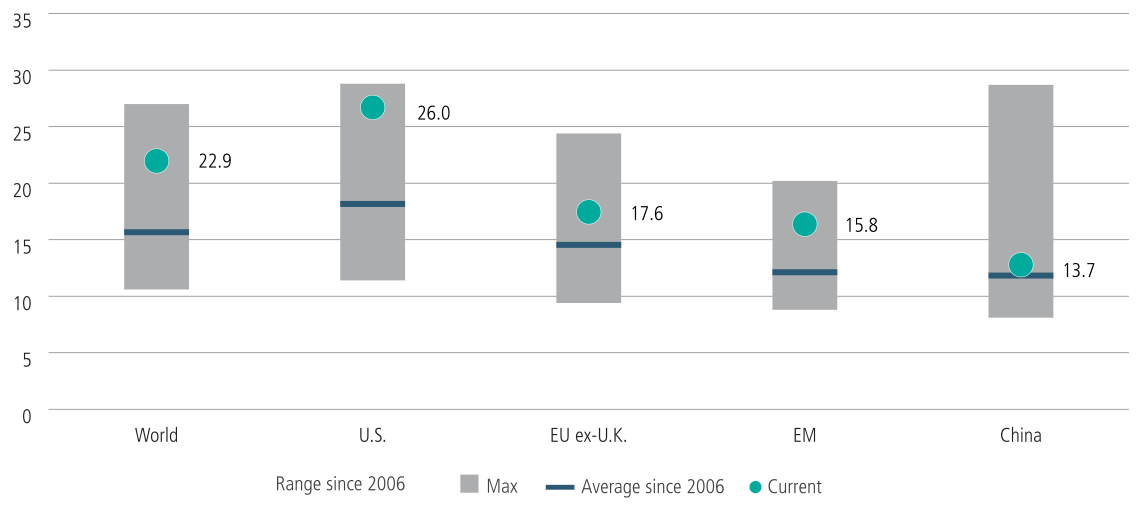
Whether to maintain an overweight to China or move back to at target was an important focus of the Committee’s discussion in the context of the upgrade to EM equities. Most members emphasized that China remains one of the cheapest major equity markets globally, especially versus U.S. mega caps, offering meaningful upside participation if sentiment and policy visibility improve. Large, innovative Chinese companies—particularly in technology and AI—are still deeply discounted relative to U.S. peers yet remain integral to global supply chains and the broader emerging markets growth story. China’s buildout in advanced manufacturing and infrastructure also continues to support activity in selected sectors, reinforcing its potential role in any broader EM rebound. At the same time, the Committee acknowledged that some valuation extremes have already moderated, and that structural challenges—from the property overhang to ongoing geopolitical and sanctions risks—warrant prudence. Against this backdrop, we ultimately see room for rotation within EM, including toward India and select peers with strong domestic demand and reform momentum. Overall, though, we remain constructive on China and see the potential for it to be part of the EM rebound under diversified allocation to the asset class.
Embracing Risk in a Shifting Macro Regime
While the Committee expects the strong momentum in risk markets to continue over the medium term, the balance of risk and reward has shifted—and portfolios need to shift with it. A more fragmented, fiscally driven and politically charged world is reshaping where investors are meaningfully compensated for taking risk, and where they are simply exposed without sufficient payoff. That is why the portfolio leans toward emerging markets, non-U.S. duration and an expanded mix of real and alternative assets: these are the areas where growth, valuation and policy divergence intersect most constructively. At the same time, we are deliberately stepping back from parts of U.S. fixed income where strong past performance, fully priced rate cuts and thinner premia leave less margin for error. The aim is to harness volatility—tilting toward regions and instruments with genuine upside optionality, while using commodities, private markets and absolute return strategies that are designed both to absorb shocks and capitalize on them.
Key investment implications
- Rebalance global equities toward emerging markets (notably India and Brazil) while keeping diversified exposure to U.S., Europe and Japan.
- Rotate fixed income risk from U.S. duration and credit into non-U.S. sovereigns and emerging markets debt, supported by selective FX overweights.
- Fund higher allocations to commodities, private markets and absolute return strategies as core building blocks of both return potential and downside protection.

Joseph V. Amato

Jeff Blazek, CFA

Maya Bhandari

Thanos Bardas, PhD

Ashok Bhatia, CFA

Timothy F. Creedon, CFA

Tokufumi Kato, PhD

Hakan Kaya, PhD

Erik L. Knutzen, CFA, CAIA

David G. Kupperman, PhD

Ugo Lancioni

Shannon L. Saccocia, CFA

Raheel Siddiqui

Robert Surgent

Brad Tank

Elizabeth Traxler

Anthony D. Tutrone
 Download Our Outlook